
Gen.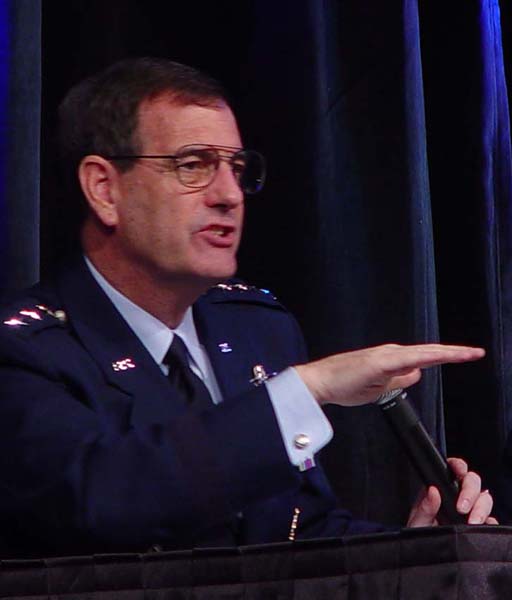 Stephen Lorenz, USAF’s top training official, wants his organization—Air Education and Training Command—to become even more adept at designing training programs in short order to meet the Air Force’s emerging needs. He told an audience Friday during a panel on combat support at AFA’s Air Warfare Symposium in Orlando, Fla., that AETC already executes its core competencies of recruiting, training, and equipping “very, very well.” But, he continued, “What we really need to be in everybody’s mind is 1-800-AETC.” Lorenz said this means that the training command “should be able to be responsive in a very swift time, as fast as we can, and build a training program” to meet whatever training or educational issue arises “whether it is in Afghanistan or Columbia or in Antarctica, wherever it is.” Lorenz said AETC doesn’t have to own or control the program, but rather just build the strategic umbrella under which it operates. An example of quick response, he said is the Air Force’s air advisor training program that “started basically from nothing.” So far that program has graduated 416 airmen, 162 of which are currently serving as air advisors in Afghanistan, he said.
A half-dozen pilots from one of the Air Force’s premier F-16 units, the 20th Fighter Wing at Shaw Air Force Base, S.C., have been awarded one of the service’s highest decorations for their role in Operation Midnight Hammer, the June 2025 strikes against Iranian nuclear facilities.