


The 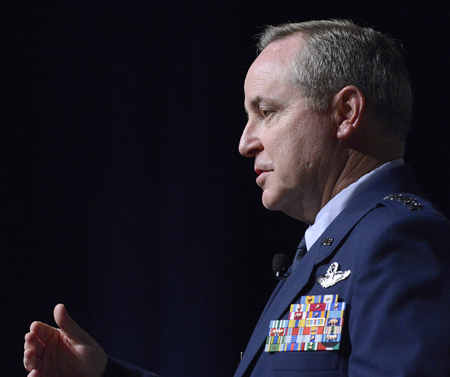 Air Force has set its priorities if the sequester kicks in on March 1, Chief of Staff Gen. Mark Welsh told AFA’s Air Warfare Symposium in Orlando, Fla., on Thursday. Starting on March 1, “we’ll continue to support Afghanistan and any other ‘named’ operations, continue to support nuclear deterrent activity; we’ll continue to do initial flight training. Virtually everything else is impacted,” he said in his symposium address. Active Duty units’ flight time will be curtailed by 200,000 hours, he said. “By mid-May, they’ll be below acceptable combat levels. About 70 percent of our [combat air forces] will be completely non-mission capable by July,” warned Welsh. At that time, the Air Force will close about 10 training ranges, “stop doing exercises like Red Flag and Green Flag . . . and Cope Tiger,” he said. Mobility forces may have to cut “as many as 21,000 training jumps” for Army paratroopers. Air refueling training sorties will be curtailed, as well. While the service will protect initial flight training, by April 1, Air Education and Training Command will have to halt all advanced flight training like instructor pilot upgrades and requalification training, said Welsh, and getting affected pilots back up to speed will “take a long time.”
US Space Command Should Always Be Led by a Guardian
Sept. 12, 2026
General Stephen Whiting took command of U.S. Space Command in January 2024, and if customary three-year tenures hold, his tour would end in January 2027. The question now before the President and Senate is who should follow him? Whoever they choose, it has to be a Guardian—and so should every successor…
