


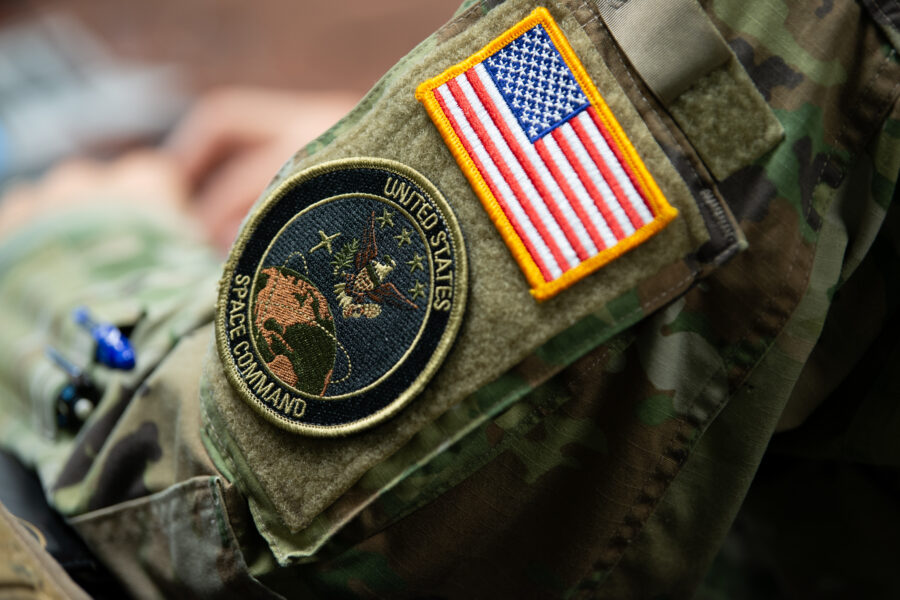
General Stephen Whiting took command of U.S. Space Command in January 2024, and if customary three-year tenures hold, his tour would end in January 2027. The question now before the President and Senate is who should follow him?
Whoever they choose, it has to be a Guardian—and so should every successor thereafter.
The reason is operational, not parochial: Guardians are the military professionals best prepared to integrate spacepower into global, multi-domain operations, and the Space Force exists to generate the nation’s combat-ready space forces.
Space is no longer an uncontested domain, merely enabling others; it is a warfighting domain and capable of delivering decisive effects. U.S. Space Command’s job is to secure space superiority to preserve access to space capabilities, and plan, execute, and integrate military spacepower into multi-domain global operations. Its commander therefore must be more than familiar with space-enabled capabilities. The position demands mastery of orbital warfare, space domain awareness, command and control, electromagnetic and cyber dependencies, counterspace threats, and the integration of space effects across every geographic combatant command. Guardians are the only service members who train from accession through senior command around that full mission set.
By law, the Space Force must provide freedom of operation for the United States in, from, and to space; conduct space operations; and protect U.S. interests in space. That statutory responsibility matters. Other services have space expertise to support their missions, but Congress made the Space Force uniquely responsible to organize, train, and equip forces for prompt and sustained space operations.
A Guardian commanding U.S. Space Command brings both the depth to fight for space superiority and the breadth to lead Soldiers, Sailors, Airmen, Marines, and allied forces as a joint team. Jointness is not achieved by rotating a command among services for the sake of balance; it is achieved by selecting the officer best prepared to accomplish the assigned mission.
When U.S. Space Command was re-established in August 2019, President Trump selected General John “Jay” Raymond, soon to be the first Space Force Guardian, as the commander. But this was a temporary one-year arrangement, as Gen. Raymond was also named the first Chief of Space Operations after the Space Force was created four months later. President Trump selected Army General James Dickinson to lead U.S. Space Command from August 2020 to January 2024. When Gen. Dickinson assumed command, the Space Force was still in its first year. No pool of seasoned Guardians existed to compete for the position.
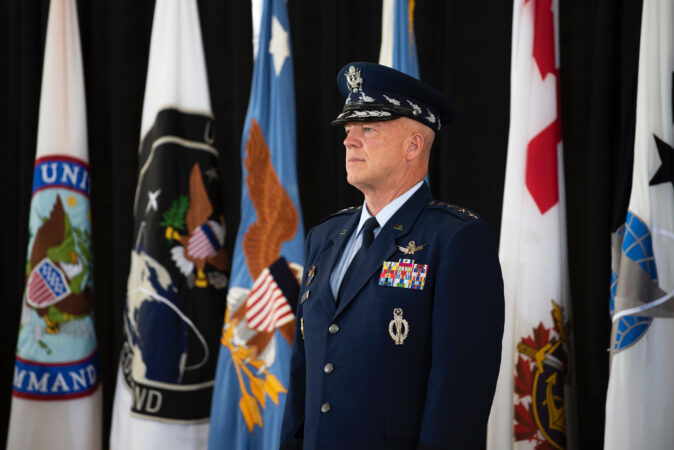
That’s no longer the case. In 2023, President Biden nominated and the Senate confirmed Gen. Whiting for the position. Since then, the Space Force has continued to develop Guardian leaders with the critical operational experience, expertise, and an unparalleled understanding of space as a warfighting domain. Gen. Dickinson’s selection was a sound transitional exception, not a precedent for an enduring Army-Space Force rotation.
The Space Force now has multiple positions and pathways to prepare its senior leaders for the responsibilities of Commander, U.S. Space Command.
First is Combat Forces Command, which traces its lineage to Space Operations Command and Air Force Space Command, where Gen. Whiting and Gen. Raymond, respectively, commanded before taking the reins of U.S. Space Command. Lt. Gen. Gregory Gagnon is, the current commander of CFC. His predecessor, Lt. Gen. David “Rock” Miller, is still serving, now as Deputy Chief of Space Operations, Strategy, Plans, Programs and Requirements on the Space Force staff.
Second are the Space Force’s component commands, which present the service’s forces to different combatant commands. These component commanders range in rank from colonel to 3-star general in Lt. Gen. Dennis Bythewood at Space Forces-Space. These positions build essential experience in integrating space effects into combat operations and provide Guardians with a distinct expertise in integrating space effects with those of all domains to achieve national objectives terrestrially and in orbit. That pipeline now produces leaders who have both commanded space forces and integrated their effects across the U.S. military, the precise combination U.S. Space Command requires.
The Army’s June 2026 decision to create its own Space Operations Branch, along with U.S. Space Command’s relocation to Huntsville will understandably fuel an Army case to lead Space Command in the future. But neither development changes the underlying command requirement: to deliver space superiority in support of national objectives in all domains.
The Army branch is designed to improve Army component access to space-enabled capabilities at the tactical edge; it does not displace the Space Force’s responsibility for space warfare or its much broader mission set.
Likewise, while Redstone Arsenal’s Army space expertise will be valuable to U.S. Space Command, that expertise is both technical and geographical. It has little to do with governance. Locating a combatant command on an Army installation does not justify an Army claim to command it.
Some might argue that a Guardian commander would somehow make U.S. Space Command less joint. This is specious. The command will continue to employ capabilities and personnel from every service and work with the intelligence community, allies, and commercial partners. But to ensure space superiority, the officer heading U.S. Space Command must be able to make time-critical decisions to protect, defend, and employ space combat power under attack. At that level, the domain expertise inherent to Space Force Guardians is not a mere parochial preference; it is an operational warfighting requirement. Jointness does not require rotation for rotation’s sake. It requires the right commander for the mission.

Photo by Jud McCrehin, Air & Space Forces Association
The President should make the institutional logic explicit: future commanders of U.S. Space Command should come from the Space Force. The Senate should reinforce that standard in confirmation.
Doing so would align operational command with the service Congress created to protect U.S. interests in space. It would also sharpen accountability for space superiority and preserve, rather than diminish, the command’s joint character.
The move to Huntsville should deepen U.S. Space Command’s and the Space Force’s partnership with the Army, but should not blur responsibility for leading the nation’s space warfighting enterprise. Gen. Whiting’s successor should be a Guardian. So should every commander who follows.