
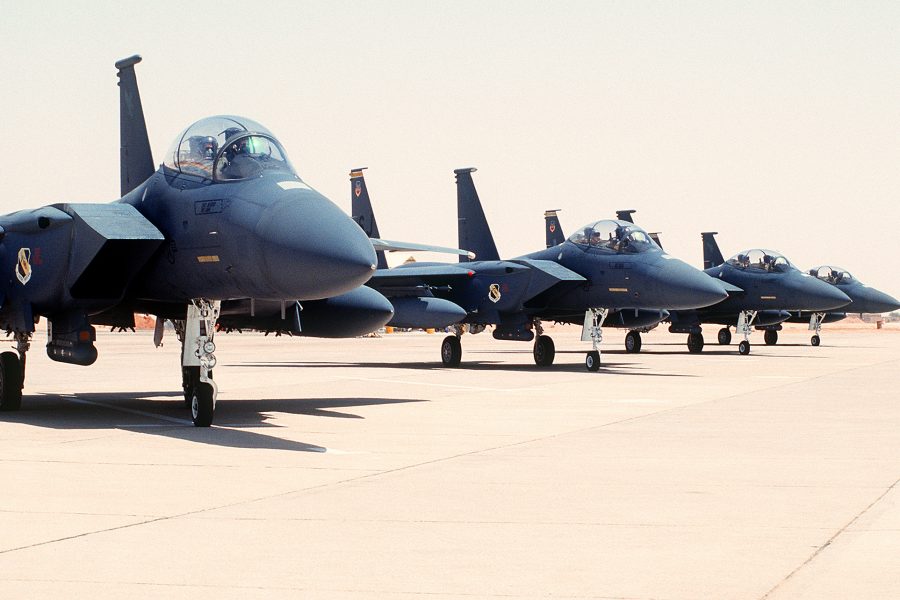
From the Lincoln Memorial to the Capitol Rotunda, and for miles in every direction, Washington, D.C., is stocked with physical reminders of heroism, sacrifice, and ingenuity.
Each memorial reflects unique circumstances in history. The World War II Memorial is a grand, classically inspired tribute to the more than 400,000 men and women who died fighting in the Europe and Pacific theaters. The Korean War Memorial conveys the stoic determination of troops slogging across the icy peninsula where more than 43,000 Americans died defending South Korea. The Vietnam Memorial is a shiny granite wall cut into the grass, displaying the names of 58,320 Americans who died for their service.
Now the time has come to honor the men and women who fought in Operation Desert Storm, the only major American war fought by an all-volunteer force, with their own memorial. The approved design is an ode to the final stage of that conflict, the last 100 hours of a 1,000-hour fight. And while artfully executed, this landscaped left hook fails to convey the unique contributions of this moment in history.
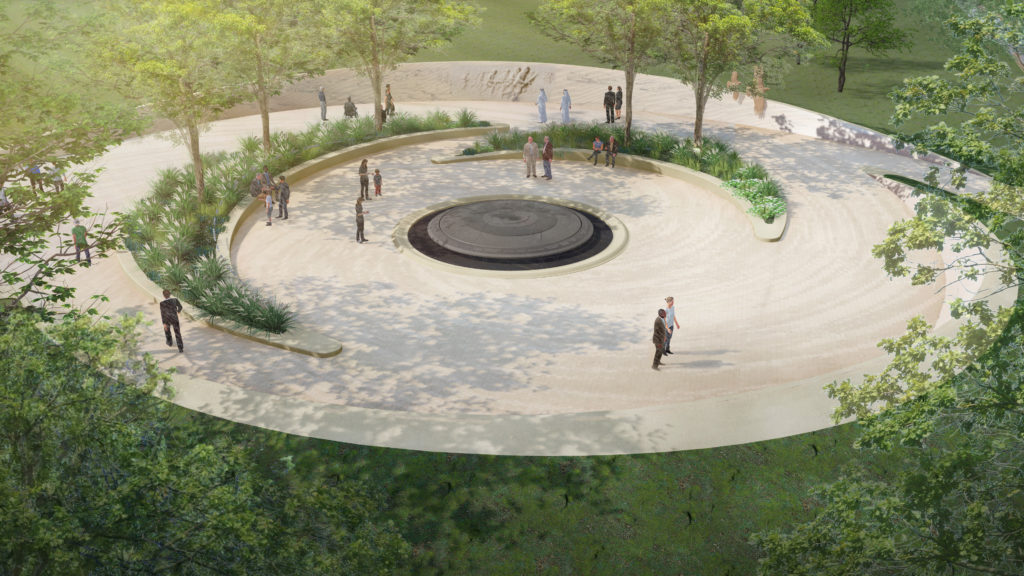
Unlike every war before or since, Operation Desert Storm is defined not by the enormity of its cost in American lives, but rather by the precious few lives lost in a stunningly executed military campaign: Only 148 Americans, the majority of whom died in training before the fighting began.
The so-called left hook that took the invading American ground forces around the eastern flank of Saddam Hussein’s army and cut off their route of escape was only a small piece of the brilliant war plan executed by Army Gen. Norman Schwartzkopf. Even more important was the 42-day air campaign that preceded it
Schwartzkopf, the operation’s commanding general, and his Air Force deputy, Gen. Chuck Horner, operationalized a host of nascent military capabilities and executed their plans so effectively that a force of more than half a million men and women went to war and returned home again having suffered losses of less than 0.03 percent. That’s never happened in any war before or since.
It is tempting to assume that this success was the result of a lopsided fight, a heavyweight bully beating up on a flyweight. But the reality is that Iraq possessed the fourth-largest army in the world when he invaded Kuwait in the summer of 1990. He had top-of-the-line Soviet-built T-72 tanks, sophisticated integrated air defenses, and battlefield experience, having fought Iran in a years-long-conflict in the 1980s. This was no pushover force.
Desert Storm was a triumph of technology, logistics, strategy, and diplomacy.
Technology meant stealthy F-117 Nighthawk jets that could fly undetected past air defense radars to strike deep into the heart of Baghdad’s power center. It included laser-guided weapons that enabled precision attacks unlike anything executed previously.
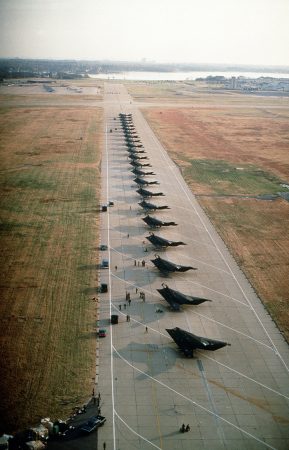
Logistics enabled the U.S. to assemble and feed half a million men and women, tens of thousands of vehicles, and thousands of aircraft in the middle of the desert, then position and maneuver them for maximum effect.
Strategy systematically broke down Saddam’s means of managing an army and fighting a war. Electricity, communications, command centers, fuel depots, and more were dismantled, blinding and disjointing the Iraqi forces so that they had no ability to fight in organized fashion. Feints and deception added to the allies’ advantage.
Diplomacy contributed mightily to the effort, an artfully orchestrated coalition of international partners that rallied to Kuwait’s defense and lined up behind American leadership.
A fitting memorial to such a success deserves something bigger and bolder than a left hook in the grass. Desert Storm marked a historic shift in the tide of warfare. It demonstrated that strategic targeting, clear objectives, and overwhelming force, properly applied, can deliver rapid and decisive effects. It proved that airpower did not just set the stage for victory on the ground but was the key force in rendering Iraq’s military impotent before coalition ground forces even engaged.
Airpower is the reason victory was achieved without the loss of tens of thousands of American lives.
Any memorial to Operation Desert Storm should celebrate the enduring truths that enabled victory: The power of strategic targeting, the value and utility of airpower, and the advantage of high-speed maneuver.
The well-intended and long-overdue memorial to those who fought and served in Desert Storm misses the mark. Congress should intervene and direct the National Park Service to rethink its inadequate design.