


Work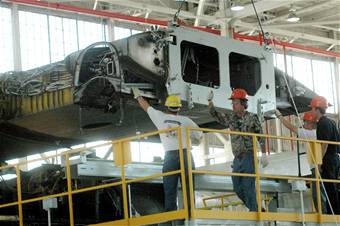 load at the Air Force’s three air logistics centers is projected to drop significantly in coming years. The Telegraph of Macon, Ga., reported April 24 that capacity utilization at these three depots (Ogden in Utah, Oklahoma City in Oklahoma, and Warner Robins in Georgia) likely will decrease from 87 percent in 2007 to about 75 percent by 2020. This is based on USAF figures in a six-page document provided by Maj. Gen. Herbert Carlisle, director of USAF’s legislative liaison office, to members of the House Armed Services Committee, the newspaper reported. In the document, Carlisle attributed the decline to several factors: current force structure plans that are tied to a largely static budget, the retirement of older weapon systems, and the increased reliability of newer replacement aircraft and components. While the depots will remain viable, the Air Force is updating its depot strategy, Carlisle said, according to the newspaper. The Telegraph stated that the issue is critical for the communities that support the depots because workload drives employment and economic impact. In the case of Warner Robins, about 25,000 people currently work on the complex, infusing $4.2 billion annually into the local economy. Avionics work for the F-22 and future demands to keep C-27 transports flying will not offset the decline for Warner Robins, the newspaper said, citing the document. Just last summer, one former lawmaker uttered the dreaded acronym BRAC and said he expected at least one more round of base closures and the demise of one of USAF’s three remaining depots.
US Space Command Should Always Be Led by a Guardian
Sept. 12, 2026
General Stephen Whiting took command of U.S. Space Command in January 2024, and if customary three-year tenures hold, his tour would end in January 2027. The question now before the President and Senate is who should follow him? Whoever they choose, it has to be a Guardian—and so should every successor…
