
Weekend Warrior? Wrong Answer
An Undisclosed Location, Southwest Asia—
The 386th Air Expeditionary Wing is in virtually the same business now that it was at the height of Operation Iraqi Freedom, according to the unit’s vice commander.
The wing’s passenger terminal is the gateway to the entire US Central Command area of operations—it saw nearly 10,000 passengers in September—and its C-130s are going to most of the same places, Col. Andrew M. Purath explained.
However, he said, things are also “completely different.”
Because Operation Inherent Resolve is “a different kind of fight,” the demands on the wing have changed, Purath noted.
“It’s fast moving. Before, … duration was more important,” he said. Now, because ISIS is constantly moving from one place to another, “we’re having to move all that stuff and move all those people pretty dynamically.”
The wing is working with more special operations forces than in the past, and in addition to the familiar places in Iraq, its planes have been operating out of a landing zone in Syria “for a while now,” he said.
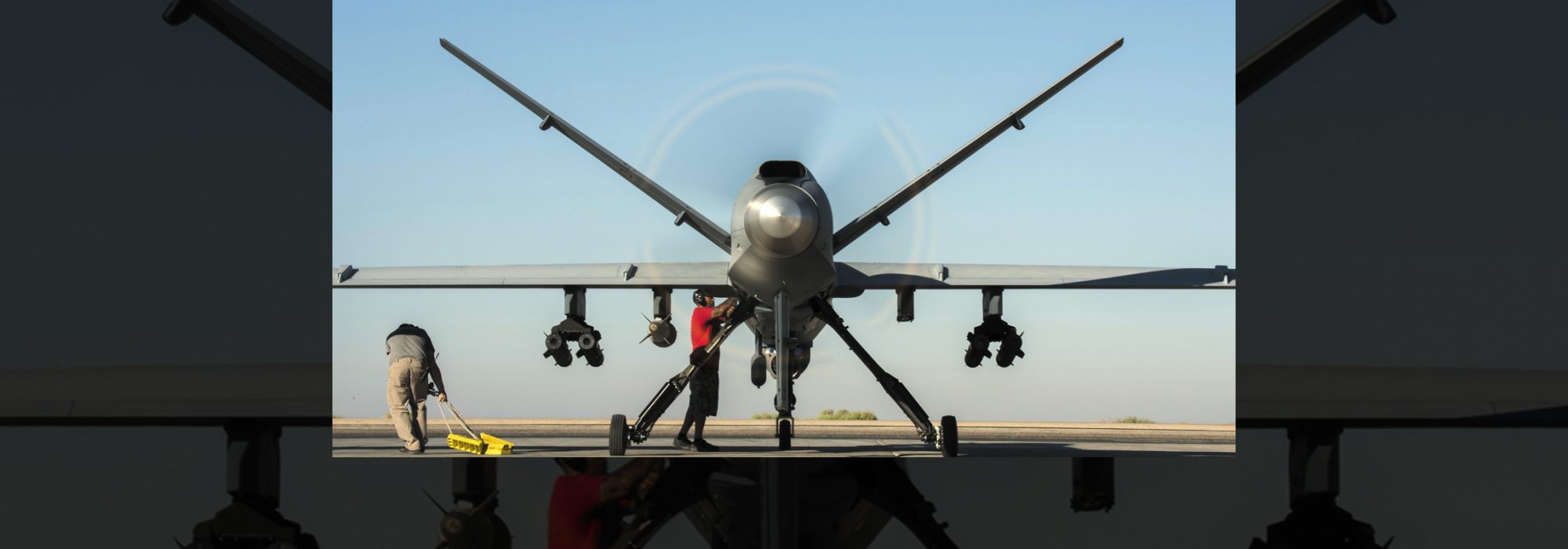
The 386th also has picked up “a more robust MQ-1 and MQ-9 mission than we’ve ever had before,” he said, adding that they made the transition at the end of September from Predators to Reapers.
The MQ-9 is a “larger, more powerful aircraft … [that] can carry more ordnance” and has upgraded cameras for a better picture, explained 1st Lt. Maria, a Reaper pilot with the 386th AEW’s 46th Expeditionary Attack Squadron (EATKS).
The changeover went smoothly, with the squadron meeting all of its assigned combat lines, but the maintenance team had to work extremely hard to make that happen, said Lt. Col. Jason, commander of the 46th EATKS.
Purath said the Predators were maintained by contractors, while the Reapers are maintained by uniformed airmen. Those airmen were tasked for the mission at the last minute, Purath said, and met the unassembled MQ-9s here.
“They had about 10 days from start to finish to unpack them, get them put together, get them flight checked,” Purath said. “To the point where the wing commander and I, after about four days, kind of told them they needed to go take a nap, because they were working so hard—and working straight through to get to the finish line.”
The changeover required getting new crews, as well as new ground support equipment, additional weapons, and ammunition troops, Jason said.
During an October visit, the squadron was also in the process of building new hangers, since the MQ-9s are bigger.
The wing’s cargo mission, passenger terminal, and RPAs make it critical to the region, but it has another distinguishing characteristic: the highest concentration of Air Guardsmen and Reserve airmen in the area, Purath said.
“We’re almost 55 percent,” he said, noting that the large number of Guard and Reserve airmen make for a “fascinating collection of people.”
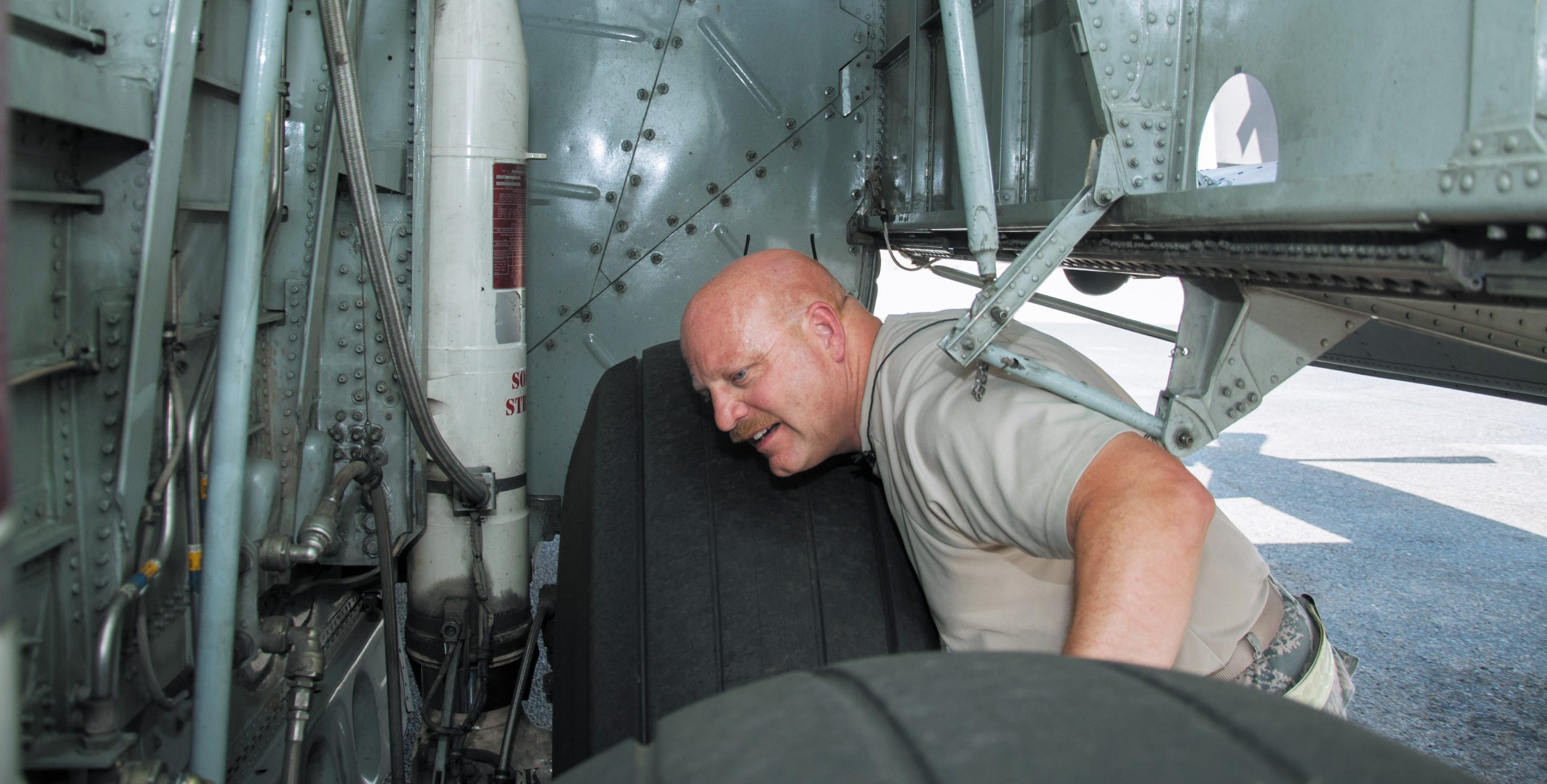
One of those people is MSgt. Norbert Feist, a C-130 crew chief from the Minnesota National Guard, who has been assigned to the same airplane since December 1996. He will have been with the airplane for 23 years by the time he retires.
Feist enlisted in 1987 in the Active Duty Air Force. He lived 10 minutes from the Minneapolis-St. Paul airport in Minnesota growing up, and he loved to watch the airplanes fly overhead—the C-130 was the first he learned to identify—but said that when he joined the Air Force, he “didn’t even realize that there was such a thing as the Guard.”
He discovered the Guard during an exercise in Korea and was very impressed, he said.
“I was like, ‘Holy cow, these guys know what they’re doing,’” he recalled. “When you’re Active Duty, you think they’re just weekend warriors. Wrong answer.”
Feist served in the Gulf War but “hated Active Duty,” he said, so he decided to get out of the military in 1991. He was on terminal leave, working as a baggage handler for Northwest Airlines, when he decided to join the Guard.
Aircraft 1004 arrived at the unit in October of 1996; Feist was slated to be a crew chief on the airplane from the beginning and was hired full time with the Guard in December 1996. Twelve years ago he became the head crew chief for 1004.
“I got lucky and never had to move,” he said with a laugh.
Through the years, Feist has gotten to know every detail of the airplane, from issues with the interphone to the crew door that’s always been difficult to close. The right paratroop door “doesn’t really pop open quite right,” he said, but he and three other crew chiefs have tried to fix it over the years, and no one has been successful yet.
“You catch on,” Feist said. “Twenty-one years of it … you get to know that stuff.”
Jennifer Hlad is a freelance journalist based in the Middle East and a former Air Force Magazine senior editor.