


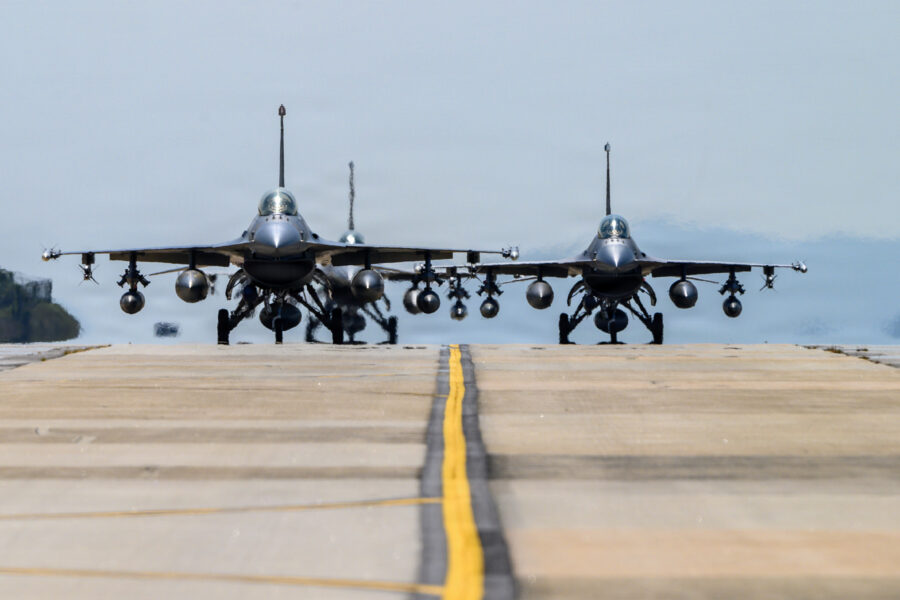
After a two-year experiment that created F-16 “Super Squadrons” at Osan Air Base just 50 miles away from North Korea, the U.S. Air Force has returned some of the fighters to its other base on the peninsula.
The 7th Air Force, which oversees USAF forces in Korea, announced the phased return of F-16s to Kunsan Air Base on Sept. 28. But captions for images released by the 7th state some of the jets returned in May and August.
After the return is complete, there will be two fighter squadrons at Kunsan and one at Osan. Kunsan is about 150 miles from the to the Demilitarized Zone that splits North and South Korea
“The decision to return the F-16s on the Korean Peninsula to a three-squadron structure leverages the strategic advantages of both Osan and Kunsan Air Bases while increasing operational flexibility,” Won Hee Kim, a spokesperson for the 7th Air Force, told Air & Space Forces Magazine in an email.
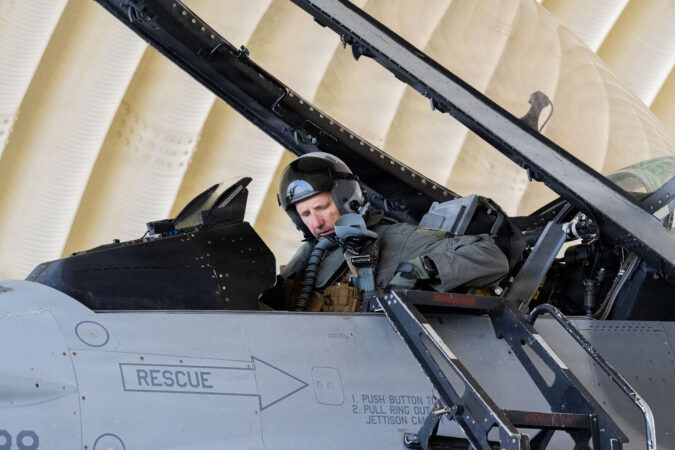
The Air Force launched its Super Squadron experiment in 2024, shifting F-16s and the associated personnel from the 8th Fighter Wing at Kunsan to the 51st Fighter Wing at Osan. As the experiment began, Osan was divesting its A-10 Warthogs and would have had only a single F-16 squadron left.
The experiment unfolded in two phases, each creating a jumbo squadron of 31 jets instead of the usual 24. It was slated to run through October 2026, but Pacific Air Forces commander Gen. Kevin Schneider announced in April that the test “was successfully completed” and the forces would “reset” to their bases.
Officials did not provide specific reasons for the experiment’s conclusion when they announced it in April.
Super Squadron Background
Under the three-squadron structure, the 7th Air Force has the 36th Fighter Squadron and the 80th Fighter Squadron at Kunsan, and 35th Fighter Squadron at Osan, with an estimated 72 F-16s spread between the two locations—F-16s from Misawa Air Base in Japan began transferring to Osan in a move separate from the Super Squadron experiment.
Those 72 Fighting Falcons represent a sizable chunk of the U.S. Air Force’s 826 or so F-16s: nearly 9 percent.
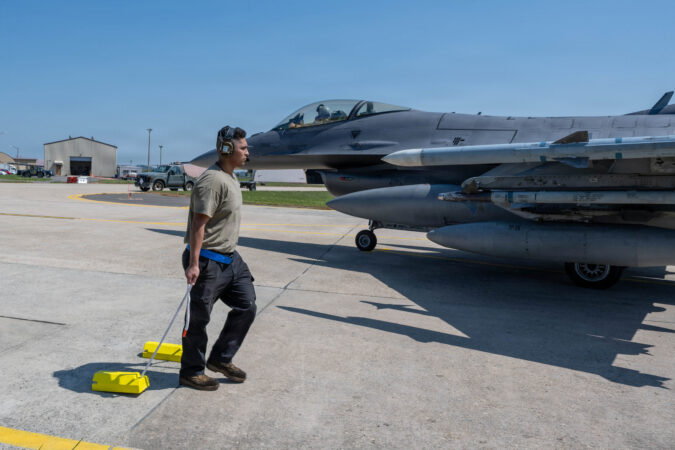
The fighter wings at Kunsan and Osan both operate F-16Cs and F-16Ds, primarily Block 40 Vipers, an aircraft with modernized features for Suppression of Enemy Air Defense, night operation, and precision strike capabilities.
The Super Squadron aimed to measure maintenance and combat generation efficiencies, commanders said at the time. Lt. Col. Karl Wiest, spokesperson for then-Chief of Staff Gen. David W. Allvin, said in 2025 that the move sought to improve readiness and training while “reducing manpower and logistical support requirements.”
Allvin also sought to reduce excess infrastructure and logistical requirements across the Air Force.
“The Super Squadron test provided valuable data and critical insights for F-16 operations across the U.S. Air Force,” according to an April release.
Neither the 7th Air Force nor the 8th Fighter Wing provided details on the lessons learned from the Super Squadron experiments.
“The Airmen involved in this effort demonstrated a culture of adaptability, innovation, and complemented the Agile Combat Employment model by enhancing flexibility within the force,” Kim wrote.