
U.S. and Canadian military aircraft are on their way to Greenland for a “long-planned” North American Aerospace Defense Command exercise at a time when the future of the Arctic territory’s sovereignty is in the spotlight.
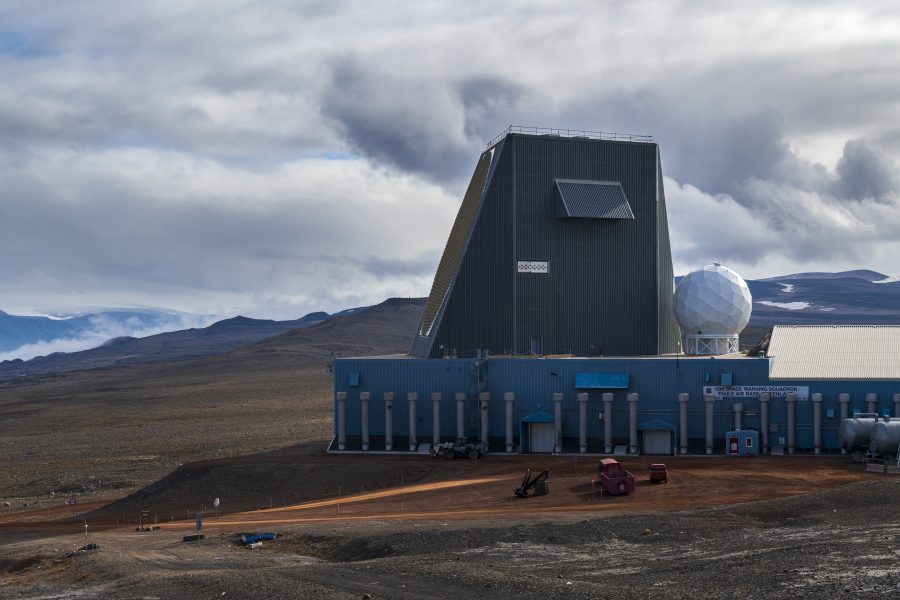
Currently less than 200 Space Force Guardians and Air Force Airmen are based at Pituffik Space Base in Greenland, but they perform a key strategic mission for protecting the U.S. homeland, experts told Air & Space Forces Magazine.
The NORAD exercise is a routine activity under the “enduring defense cooperation” agreement between the U.S., Canada and Denmark, which includes Greenland as an autonomous territory, according to a NORAD post on X. But it comes at a sensitive time; President Donald Trump is waging a pressure campaign to acquire the High North territory, creating tensions with other NATO countries. Denmark, a long-time ally of America, has offered to allow a larger U.S. military presence in Greenland, but Trump has insisted on fully owning the territory.
Against that backdrop, NORAD stressed the routine nature of the air exercise. A spokesperson would not comment on how many U.S. aircraft are headed to Greenland. “We regularly coordinate these types of activities,” the spokesperson told Air & Space Forces Magazine, adding that the exercise has been planned for roughly a year.
“This activity has been coordinated with the Kingdom of Denmark, and all supporting forces operate with the requisite diplomatic clearances,” the post states. “The Government of Greenland is also informed of planned activities.”
The U.S. already enjoys a broad security cooperation agreement with Greenland. U.S. military personnel have been performing two strategic missions “for decades” at the Greenland base, which was Thule Air Base before becoming Pituffik Space Base in 2023, said Charles Galbreath, a senior fellow at AFA’s Mitchell Institute for Aerospace Studies.
Pituffik is home to the 12th Space Warning Squadron, which operates a missile early warning system as part of Mission Delta 4, and the 23rd Space Operations Squadron, part of Misson Delta 6’s global satellite control network. Guardians operate ground-based radar that provides early missile warning to track potential inbound missiles launched at the U.S. homeland from an adversary such as Russia, Galbreath said. The same radar is also critical for tracking objects in space.
“So, if China launches a satellite or a fractional orbital bombardment system that goes over the North Pole, they’re going to see it,” he said. Pituffik is the northernmost U.S. military installation in the world.
The other strategic mission for the base is to operate the satellite control network that sends and receives command and control communications to satellites that support northern-tier operations involving aircraft and submarines, Galbreath said.
Before last summer, Pituffik’s mission fell under U.S. European Command authority. But in June, the Pentagon placed military operations in and around Greenland under U.S. Northern Command after Trump expressed interest in acquiring the Danish territory.
“I don’t care if its EUCOM, NORTHCOM, or SOUTHCOM; it supports missile warning, it supports command and control with our satellites,” Galbreath said. “It still has the same mission. The mission has not changed.”
In addition to its Space Force missions, Pituffik does also host Air Force aircraft on a semi-regular basis. In October 2025, NORAD surged two F-35s, two F-16s, and a trio of KC-135s there for a “dynamic operational exercise,” testing its ability to rapidly deploy forces in the Arctic. In February 2025, F-16s and KC-135s deployed there for Operation Noble Defender, braving subfreezing temperatures that got as low as -29 degrees Fahrenheit with a wind chill of -56 degrees. In January 2023, F-35s deployed there for a previous edition of Noble Defender.