
The Challenge of Funding Golden Dome
By Courtney Albon
HUNTSVILLE, Ala.—
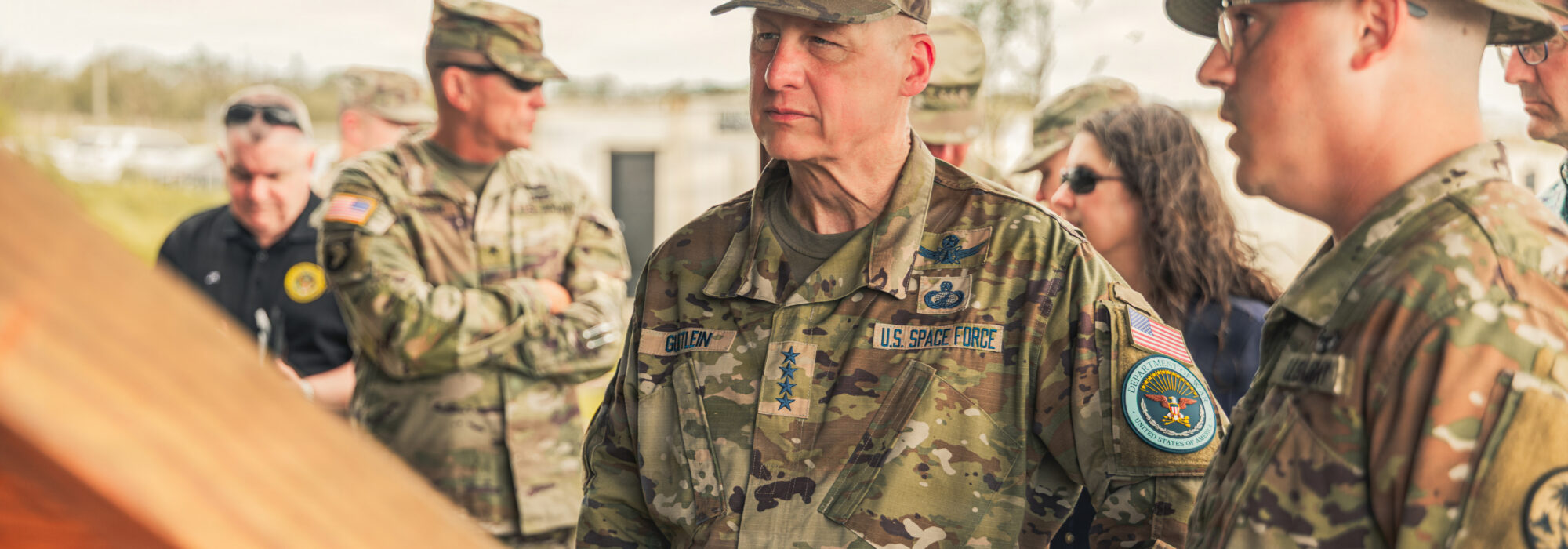
The four-star general in charge of the Pentagon’s Golden Dome program warned that uncertainty around the Pentagon’s $350 billion reconciliation request could slow progress on the homeland missile defense effort, a top priority for President Donald Trump.
To date, the Pentagon’s strategy for funding the $185 billion program has been to bypass the annual budget process and rely instead on a separate funding maneuver called reconciliation, which isn’t subject to standard appropriations rules and can be passed by a simple majority in both chambers of Congress.
That approach allowed the program to hit the ground running last year after Trump signed an executive order announcing the initiative, according to Golden Dome Director Gen. Michael Guetlein. As part of the One Big Beautiful Bill Act, which Congress passed in 2025, Golden Dome received $25 billion—90 percent of which it has since obligated, Guetlein told an audience Aug. 11 at the Space and Missile Defense Symposium.
This year, the Pentagon requested $17 billion for the effort as part of a proposed $350 billion reconciliation package and just $400 million in the normal “base” budget for fiscal 2027. This time around, though, there appears to be little political will to pass another spending bill via reconciliation, leaving Golden Dome without a clear path for near-term funding.
“We’ve got to figure out as a nation a different way of funding Golden Dome, at least for ’27,” Guetlein said. “Both sides of the aisle, as well as the House and the Senate, are working through the math about how do you do this in ’27. I will tell you that if they don’t figure it out, there is no Golden Dome because there is no funding.”
For now, the reconciliation process is stalled in Congress. The House approved a slimmed down $60 billion version of the White House’s proposal in July. It’s possible some Pentagon priorities initially included in reconciliation could be funded through a separate $67 billion Iran war supplemental, though that proposal is also in limbo.
Meanwhile, the prospects of passing a standard appropriations bill by the end of the fiscal year on Sept. 30 have also dimmed. The House and Senate have passed separate versions of a continuing resolution that would provide stopgap funding to avoid a government shutdown. Guetlein noted that the continuing resolution—which freezes funding at the prior year’s levels—doesn’t provide relief for Golden Dome.
“A CR doesn’t help me under Golden Dome because I don’t have a top line to fall back to to get that percentage of the continuing resolution,” he said.
Speaking with reporters after his speech, Guetlein said the department is discussing contingency plans should reconciliation fail. One option is for the military services to take over funding some elements of the Golden Dome architecture. He pointed to the Space Force as an example, which has already invested heavily in Golden Dome-enabling capabilities like the Space Data Network and space-based missile warning and tracking satellites.
“Several of the space capabilities that we are investing in are also being invested in by the Space Force,” he said. “So, if Golden Dome is not able to continue to invest in those type of capabilities, then the Space Force could decide at that time to continue the investments.”
He added: “Because we have diversified execution of a lot of these capabilities, and a lot of these capabilities are already requested by combatant commands, there are some alternatives that we can pursue. We have not made any decisions on any pathway.”
Guetlein said he’s hopeful the department and Congress will find a way to fund the program in ’27 given the urgency around bolstering U.S. defenses against missile threats and the capabilities he says the team has already proven.
During his speech, Guetlein highlighted recent milestones, which include breaking ground on the Golden Dome’s first operational site at Joint Expeditionary Base Fort Story, Va., and a major test event it conducted in June at White Sands Missile Range, N.M. Of note, Guetlein told reporters the Pentagon’s independent Director of Operational Test & Evaluation did not oversee the test; instead a “separate entity” is charged with leading validation efforts in close coordination with DOT&E.
Guetlein also reported progress on one of Golden Dome’s more ambitious technical lifts—demonstrating the integration of space-based interceptors (SBI) to defeat missile threats at various phases of flight. The Space Force is leading a prize competition among 12 companies to incrementally showcase SBI capabilities with the goal of an initial capability by 2028.
Contractors have completed the first of those increments, dubbed Gate One, which focused on solidifying a design and conducting component-level testing. Guetlein said it appears all of the providers will move to Gate Two, where they will build a prototype. Those that progress to Gate Three must prove the capability works in space and then the Gate Four providers must show their interceptors can be integrated with the broader Golden Dome architecture.
“We have not put in any operational requests for production capabilities until after they prove through the prize-based competition that those capabilities are effective, but more importantly, that they’re scalable and affordable,” he said. “At that point, we will then make a decision if we are going to move into production or not.”
USSF Awards New Tactically Responsive Deal
By Greg Hadley
The Space Force has tapped startup Impulse Space for two new tactically responsive space missions, the latest in a series meant to build the service’s agility in orbit.
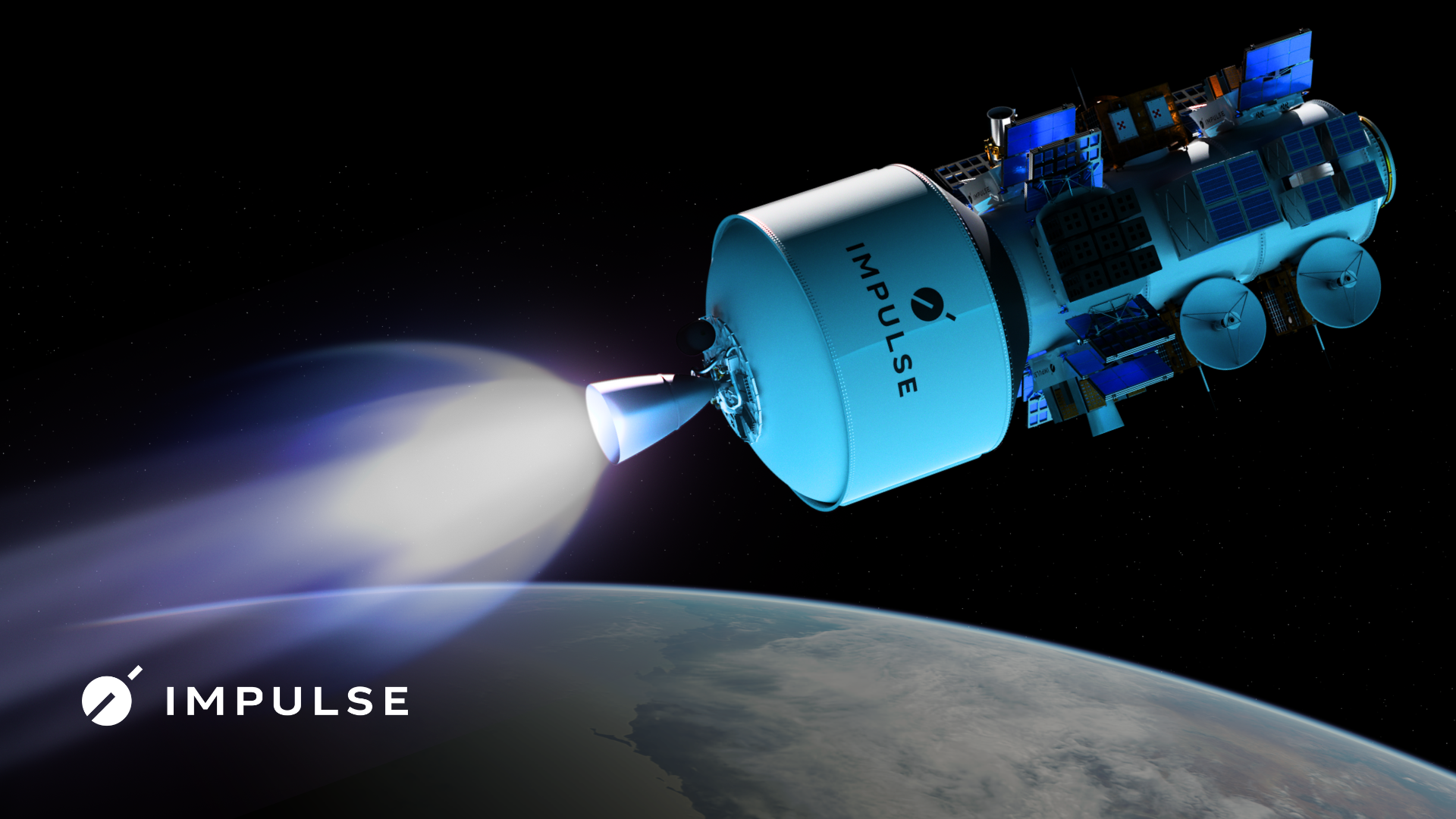
Impulse announced the $28 million contract award Aug. 12, saying it will provide two of its Mira spacecraft for missions in low-Earth orbit dubbed Victus Salo 2 and 3. The firm was already awarded a contract in October 2024 to provide a Mira for Victus Salo 1.
Mira is an orbital maneuver vehicle, or OMV; it is prepositioned in space to carry payloads or other assets from one orbit to another. All three Victus Salo missions will involve Mira spacecraft carrying government-provided payloads in low-Earth orbit, the firm said in its release.
The first Victus Salo mission is set for launch in 2027, Impulse said. When the Space Force announced the contract for that mission in 2024, it said it was hoping to launch in fall 2026. The second and third Salo missions have no public time frame.
Impulse is also working on another tactically responsive space mission, Victus Surgo, that will involve a Mira spacecraft launching into a geostationary transfer orbit, with an end goal of ending up in geosynchronous orbit.
Victus Surgo and the Victus Salo series are expanding the scope of the Space Force’s tactically responsive space effort. The initial mission, Victus Nox, focused on speeding up the process for preparing to launch a satellite, going from launch orders to liftoff in 27 hours in 2023. Victus Haze, which launched in June, cut the timeline to just 17 hours and added more maneuvers, as the Rocket Lab Pioneer satellite conducted rendezvous operations with a Jackal spacecraft built by True Anomaly and launched the month before.
These upcoming missions will focus less on rapid launches—Victus Salo 1 and Victus Surgo will hitch rides on SpaceX’s Falcon 9 rocket—and even more on the ability of spacecraft to quickly respond to developments once they are in orbit.
In space, maneuverability is often described as “Delta-V,” or a spacecraft’s ability to change its velocity. Mira has a Delta-V of 850 meters per second for a 100-kilogram payload.
“Mira’s agile, high Delta-V capabilities can support the United States Space Force’s work to increase the tactical responsiveness of assets on orbit through these missions,” said Eric Romo, Impulse Space President and COO, in a statement.
Impulse, founded by an early SpaceX employee, is growing its Space Force ties quickly. Just last month, the firm was added to the National Security Space Launch program. Its Helios vehicle, slated to fly in 2027, is a high-energy upper stage designed to transport payloads from low-Earth orbit to higher orbits—a first for the NSSL program. The company said in a statement that the plan is to partner Helios with a standard medium-lift rocket.
