
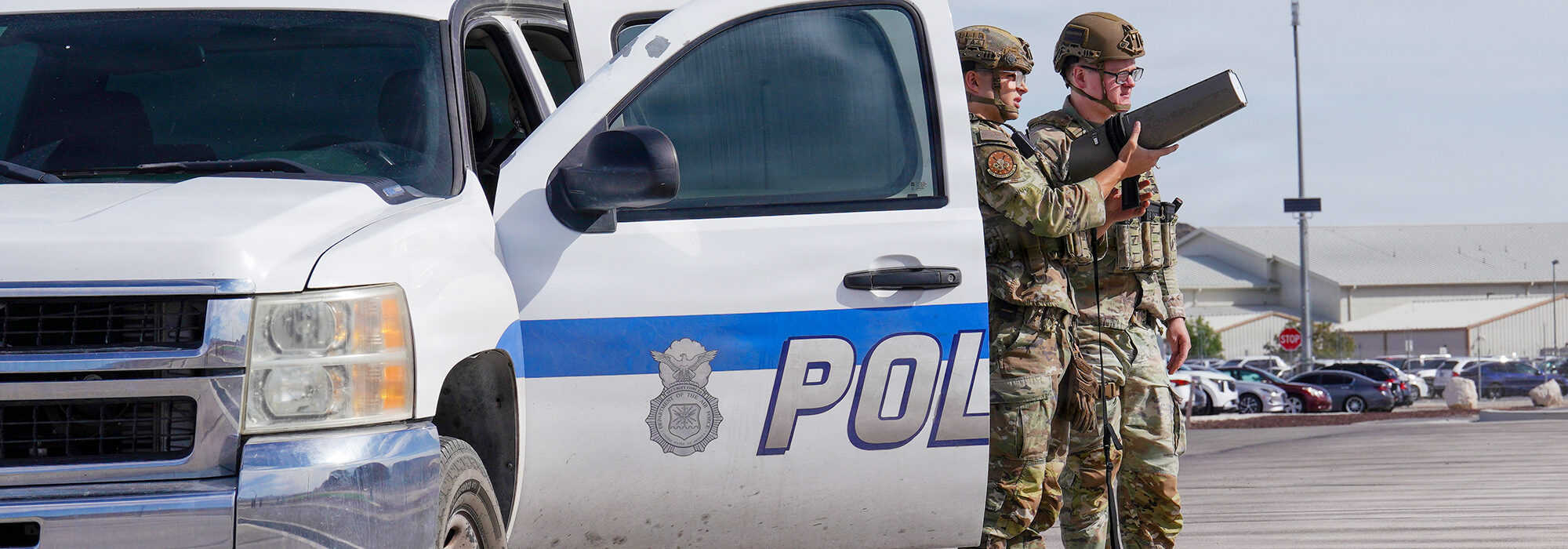
The Airman’s imperative to defend from small uninhabited aerial vehicles.
The air base has become a central target set. Small drones have become one of the defining air threats of modern warfare, representing a structural change in the character of air base defense—and, by extension, in the way the United States Air Force must think about generating combat airpower.
Since the end of the Cold War, American Airmen have consistently operated from expeditionary bases where flight lines, critical infrastructure, and parked aircraft were free from persistent air attack. Not anymore. In response, the Air Force must integrate multispectral detection, kinetic and non-kinetic defeat mechanisms, resilient command and control, and passive defense into a coherent system. At the same time, combat forces must attack the systems that generate the threat: production facilities, supply chains, storage sites, launch points, pilots, datalinks, and command and control networks. Offense and defense must become mutually reinforcing elements of the same campaign.
Brig. Gen. Houston Cantwell, USAF (Ret.) is a Senior Resident Fellow for Airpower Studies at AFA’s Mitchell
Institute for
Aerospace Studies.
Download the entire report athttp://MitchellAerospacePower.org
Crucially, Airmen must once again embrace the ability to survive and operate (ATSO). Generating aircraft while under attack is a demanding operational skill, requiring training, realistic exercises, clear authorities, real-time threat awareness, and rapid decision making through command and control. The base defense operations center must evolve from a ground-security node into an integrated air base defense hub to achieve this goal in the face of new UAV threats. Air base commanders must have the tools, people, and authorities to fight the base as a weapon system.
Mass, Adaptation, and Surprise
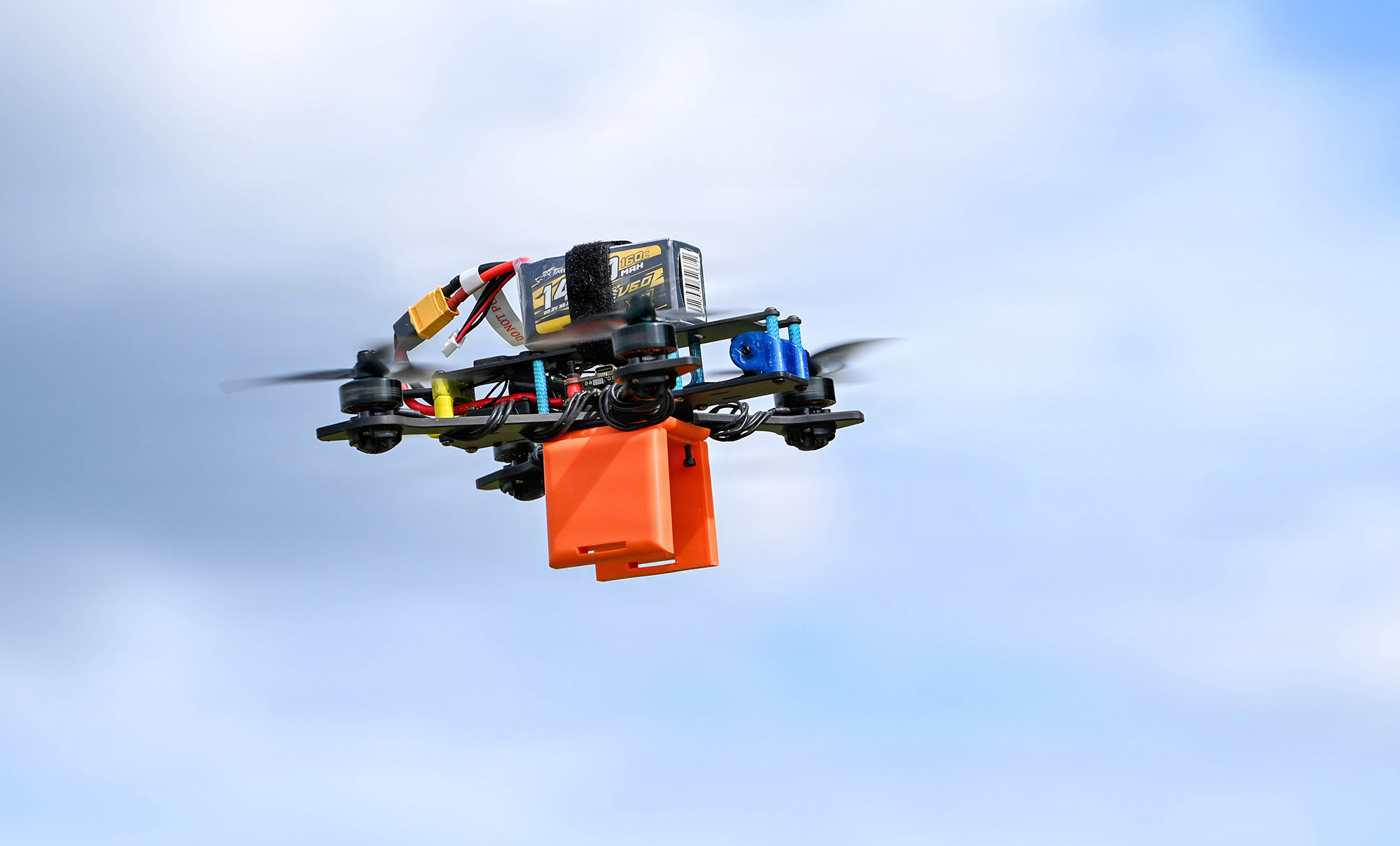
Small UAVs present a rapidly evolving and proliferating air threat. Rapid innovation cycles, massive numbers, low-altitude flight paths, and varied physical characteristics enable these small aircraft to evade detection; they can also overwhelm traditional air defense systems that were developed and optimized to defend against large aircraft and missile threats.
In July 2025, Russia attacked Ukraine with 741 small UAVs in a single day. Just two months later, however, that volume was becoming routine: Over the course of September 2025, Russia launched 6,900 drones against Ukraine. Six months later that volume had multiplied again, so that in March 2026, Ukraine reported having shot down 33,000 Russian drones.
Russia is maximizing its small UAV production, with estimates reaching up to tens of thousands of units per month. Ukraine has responded by ramping up its own production of defensive interceptor drones. President Volodymyr Zelenskyy stated in late 2025 that Ukraine expected its production of interceptor drones to reach 600 to 800 per day, if production was not disrupted. That’s far below replacement rate. Both sides are increasing not only the number of UAVs but also the types of UAVs used across the battlespace.
The same lesson has played out in the Middle East since the launch of Operation Epic Fury against Iran. Drones have played significant roles for both sides. The United States publicly acknowledged deploying one-way attack drones reverse-
engineered from those Iran has employed. Iran expended nearly 1,000 drones in its attacks on U.S. and allied targets in the first six weeks of the conflict. And on March 27, Iran destroyed a USAF E-3 Sentry AWACS command and control aircraft in a combined missile and drone attack on Prince Sultan Air Base, Saudi Arabia. The attack also injured at least 10 allied service members and damaged several U.S. refueling aircraft.
Even six weeks after the start of the conflict, Tehran retained the ability to conduct 60 to 90 drone attacks per day against U.S. and allied targets. Despite extensive U.S. layered defenses, Iran continued to inflict damage on personnel, aircraft, infrastructure, and U.S. and allied bases’ ability to launch aircraft.
The cost-exchange problem is a central element of the threat: First-person-view (FPV) drones can cost as little as a few hundred dollars each and are able to precisely strike targets from miles away. Shahed-class systems, which cost tens of thousands of dollars each, travel farther and carry a bigger punch, yet remain inexpensive compared with many of the systems used to defeat them. Long-range Shaheds can fly more than 1,000 miles and carry a warhead large enough to threaten aircraft, fuel storage, and command and control nodes. When launched in large numbers against single target areas, they can overwhelm defenses, enabling at least some to reach their targets.
Modern warfare has made clear that small UAVs are credible threats even to militaries equipped to defend against traditional fighters, bombers, and missiles. Traditional defensive systems still matter, but small UAVs add a new dimension to air combat. The United States must expand the scale and scope of its defensive arsenal to fill the gaps created by small UAVs. When it comes to new counters and traditional air defense assets, the answer is “and,” not “or.”
Why Traditional Air Defense Struggles
The physical characteristics of small UAVs—compact, plastic or Styrofoam materials, low infrared signatures, and low-and-slow flight profiles—present distinct challenges to traditional counterair detect, track, identify, and engage capabilities. They display small radar profiles and their electric motors generate comparatively little heat, reducing infrared signatures. Flying low to complicate detection, small UAVs can exploit radar blind spots, terrain masking, urban clutter, and slow airspeeds to resemble little more than birds or other wildlife, making detection among the hardest problems in the kill chain. If defenders detect a small UAV early, they likely have only minutes to classify it, warn the base, cue sensors, direct effectors, or take protective measures. If detection comes late, they may have only seconds. In a mass attack, time runs out quickly.
Small UAVs have proven highly adaptable. Antennas, receivers, datalinks, warheads, and software can be changed quickly in the field. Ukraine continually surveys the radio-frequency (RF) spectrum, identifying exploitable gaps, and adapting drones accordingly. Some UAVs are equipped with multiple receivers and antennas operating on different polarities to increase the chances of maintaining a secure datalink in heavy electronic warfare environments.
With both sides engaged in rapid innovation and counter strategies, the one that modifies its systems fastest gains the advantage.
Control methods are likewise evolving. Early FPV drones used radio-frequency datalinks, but as jamming increased and the spectrum was contested, operators negated jamming effects by switching to fiber-optically controlled drones, covering cityscapes and countryside with miles of spent and tangled optical cables. Other drones exploit commercial cellular networks, enabling control deep into enemy territory. Still others reduce dependence on GPS by integrating cameras, terrain recognition software, and artificial intelligence. The sheer variety of control methods complicates defense, requiring a system-of-systems approach for countering these threats.
The Air Base as a Weapon System
The Air Force must reconceptualize air base defense to defeat this threat. Army air defense forces historically have provided critical protection for forward-deployed air bases, and that mission still matters—especially against aircraft, cruise missiles, and ballistic missiles. But those defensive capabilities are inadequate given the scale and scope of today’s growing small UAV threat.
The Army’s traditional air defense model relies on four pillars: trained Soldiers, effective command and control, advanced radars, and interceptor missiles, all optimized to defeat high-speed manned aircraft and ballistic missiles, not small, slow, low-flying drones. Even for larger one-way attack drones, Patriot-class systems may be effective, but the cost differential is prohibitive at scale.
What the Air Force needs is a parallel set of pillars to counter UAVs that is aligned with counterair doctrine. Airmen must be trained to plan air base defense and operate defensive systems. The Base Defense Operations Center (BDOC) must become the command and control hub for air base defense, and the Air Force must acquire interoperable systems for airborne early warning, tracking, identification, and defeat. In addition, passive base defense measures must be integrated into the entire defensive scheme.
In effect, the air base must be viewed as a weapon system designed to generate combat power. Because small UAVs have the potential to disrupt aircraft maintenance, weapons loading, command and control, or aircraft launch and recovery, they can degrade airpower without defeating a single aircraft in the air. Air base defense, therefore, is not a separate force-protection task, but core to the base’s ability to generate airpower.
Rebuilding the BDOC
Central to this change is transforming the Base Defense Operations Center, which today is part of the Air Force base security forces enterprise. The BDOC traditionally focused on ground security, law enforcement, and installation defense, but today it must take on a broader role to include defending against airborne threats. Most importantly, the BDOC must develop the capacity to execute the kill chain in a timely manner against a robust and ever-changing small UAV threat. That means incorporating an airborne common operating picture into daily operations, fusing data from multiple sensors, understanding threat identification, and directing defensive action under tight timelines.
To make this transition, Airmen staffing the BDOC will require new skills. Counter-UAV operations require airspace control, three-dimensional battlespace awareness, threat-identification matrices, and intercept geometry—skills residing not in security forces, but among air battle managers (ABM) and weapons directors (WD), Airmen who typically serve on AWACS aircraft or in control and reporting centers (CRC). Any future air base C2 center will require similar expertise.
The fatal attack at Tower 22 in Jordan in January 2024 illustrates why this matters. The base’s radar systems detected inbound UAVs, but the Soldiers in the BDOC failed to identify the tracks as viable threats before the attack, resulting in the deaths of three Soldiers and injuries to dozens more. The official incident investigation found that Soldiers were distracted by the return of a friendly UAV and that battle drills were inadequate. Had the threat been recognized even a couple of minutes earlier, defenders might have been able to warn personnel to take cover.
Layered Sensing and Defeat
Successfully defending air bases against small UAVs will require weapon systems capable of rapidly detecting and intercepting large numbers of aircraft. No single sensor can solve the problem alone. A defense-in-depth architecture combining ground-based radar, airborne radar, radio-frequency detection, acoustic sensors, and electro-optical/infrared systems, all tied to data fusion tools that feed a common operating picture to the BDOC is required.
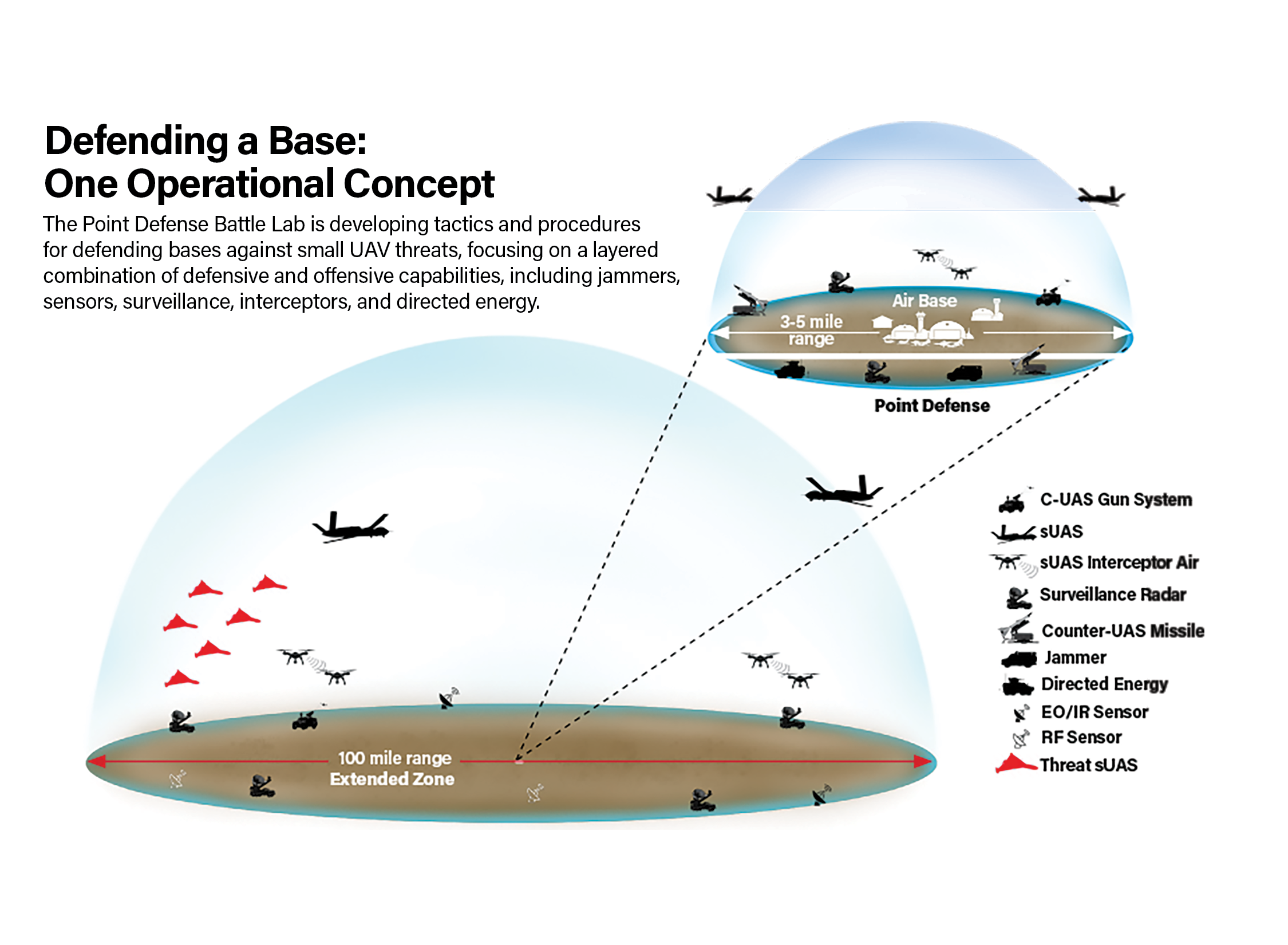
Each sensor type brings strengths and weaknesses. Ground-based radar can provide wide-area surveillance but is vulnerable to attack and often limited against low-altitude targets. Airborne radar can look over terrain and shift position, but is limited in number and expensive to operate. RF sensors can detect and sometimes geolocate drones and operators, but they are ineffective against nonemitting or fiber-optic systems. Acoustic sensors are low-cost and passive, but short-range and susceptible to noise. Optical systems can support visual identification but require line of sight and are affected by weather.
The answer is layered sensing. Multiple sensor types, distributed across depth and elevation, maximize detection time and reduce coverage gaps.
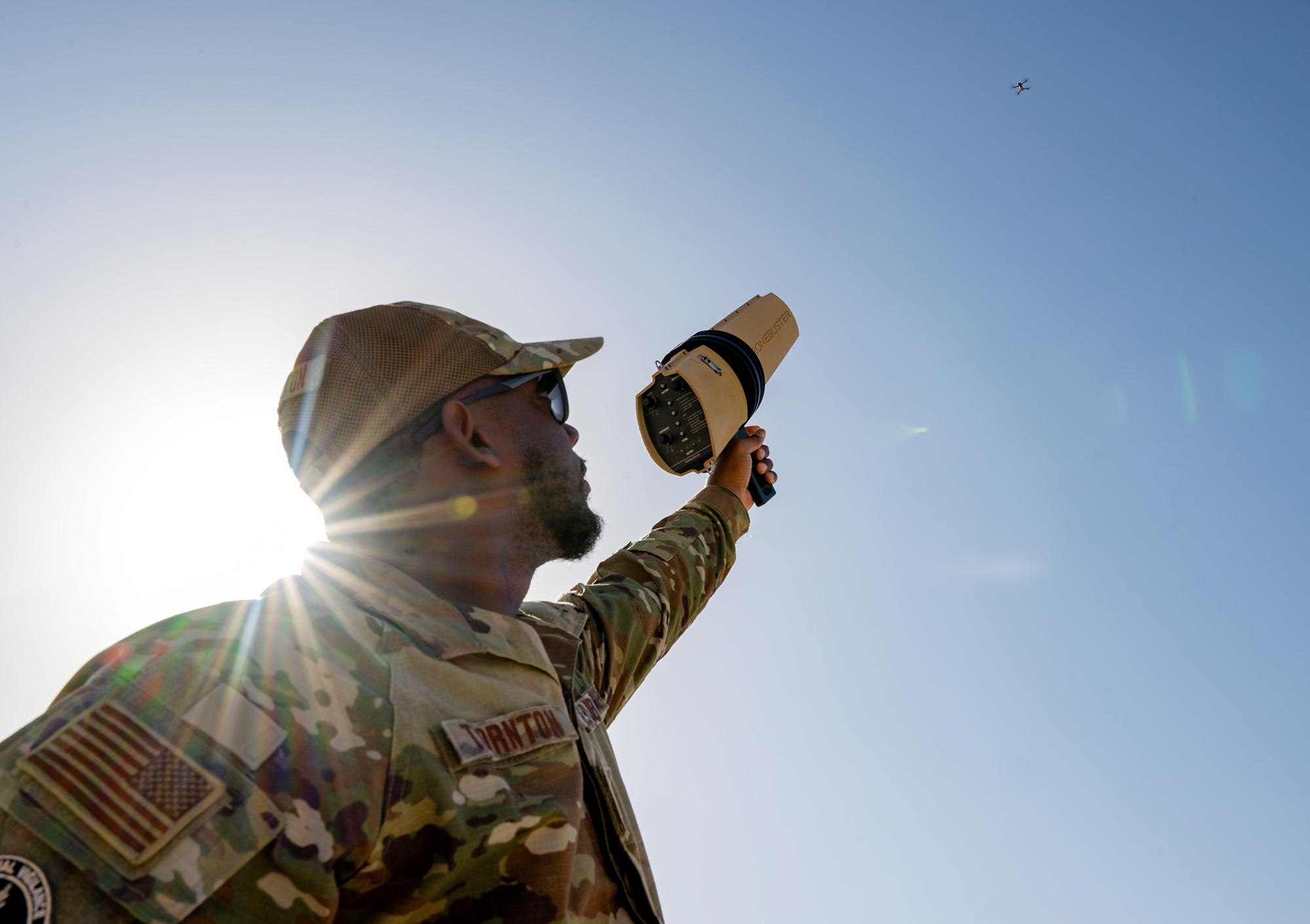
Airborne sensors deserve particular attention. Land-based sensors have limited effective range against low-altitude threats because of terrain and obstacle masking. During the war in Ukraine, both Russian and Ukrainian UAV operators learned to avoid fixed ground radars, delaying detection. Airborne sensors do not remain fixed, making them harder for adversaries to avoid. Medium- and high-altitude long-endurance aircraft such as MQ-9 or RQ-4-type platforms could host specialized sensors to provide forward early warning against inbound small UAV threats, especially in lower-threat airspace.
But sensing is only half the problem. Defeat requires a layered mix of effectors. No single defensive system can address every signature, flight profile, and attack method. Defenders must integrate kinetic, electronic warfare, directed energy, and low-cost interceptors across overlapping engagement zones.
Lasers offer low cost per shot and provide an almost endless magazine depth, but dust, smoke, and weather can degrade performance. High-power microwave systems can affect multiple drones simultaneously, but they are short-range weapons and require careful electromagnetic management. RF jammers are inexpensive and can be effective against many drones, but not against those that are preprogrammed or guided via fiber-optics. Guns can be relatively cheap, but they are difficult to aim precisely and risk creating collateral damage on base or to nearby civilians, in some environments. Surface-to-air missiles offer high probability of kill, but they are expensive and limited in magazine depth. Drone interceptors offer a promising combination of range and cost, but they require precise guidance through intercept.
The cost-exchange problem is central. The U.S. Navy’s experience in the Red Sea against the Houthis showed that successful defense is not necessarily sustainable. Intercepting hundreds of drone and missile attacks with high-end interceptors, aircraft, and guns came at massive cost. Many of the weapons currently used to intercept small UAVs are an order of magnitude more expensive than the drones they destroy, putting U.S. forces on the wrong side of the cost curve.
The military has begun to shift toward lower-cost, more plentiful alternatives, such as APKWS rocket systems, but ultimately drone interceptors, high-power microwave systems, guns, electronic warfare, and directed energy must also be part of the mix. High-end interceptors should be preserved for high-end threats.
Standardization matters as well. As the military services acquire defensive systems, standardized data sharing is imperative to create a joint common operating picture. The Department of Defense’s counter-UAV standardization efforts, including work through Joint Interagency Task Force (JIATF) 401, point in the right direction. Future Air Force systems must use standard data protocols and enable integration with sister-service systems.
Passive Defense and the Return of ATSO
Even the best active defense cannot stop everything. Some UAVs will penetrate active defenses, making passive defense essential.
Camouflage and deception can prevent adversary UAVs from finding intended targets. Hardening can protect valuable assets from attack. Dispersal makes targets harder to find and can limit damage to aircraft or equipment. Decoys complicate adversary targeting and absorb attacks. Netting and physical barriers can prevent small UAVs from reaching their targets. None of these measures are glamorous, but they are cheap by comparison, scalable, and can be effective. They all require prior planning.
This leads to a larger cultural requirement: Airmen must revive their ability to survive and operate while under air attack. For years, Airmen have generated combat airpower at expeditionary bases with limited concern for persistent air threats. Warning sirens sounded, personnel took cover, and operations resumed after the immediate danger passed. Small UAVs change that calculus. Airmen must be prepared to work, adapt, protect themselves, and continue generating sorties under an active threat.
The Air Force already has a model for tiered response: mission-oriented protective postures (MOPP). MOPP taught Airmen to perform their regular duties while balancing force protection against mission accomplishment under chemical and biological threats. A similar construct should inform Drone Defense Postures (DDP), which can divide the base into sectors and set protection levels based on the number, proximity, and nature of inbound or expected UAV threats.
At low threat levels, Airmen may continue normal operations with protective equipment available. At medium levels, they could monitor air threat systems, wear protective gear, implement passive defenses, and prepare quick-reaction responses. At high threat levels, personnel could seek shelter, aircraft could be moved to hardened shelters, and commanders could even direct immediate launch to “flush” aircraft from the base before an attack.
Through disciplined, rehearsed options, commanders could balance force protection with aircraft generation—and keep the force in fighting form.
Offensive Counterair
Point defense of bases is necessary, but insufficient. The best defense is to reduce the volume of small UAV threats by destroying the adversaries’ ability to launch in the first place. Sustained air base defense ultimately demands offensive counterair.
During World War II, Allied forces attacked aircraft factories, airfields, petroleum facilities, ball-bearing plants, and storage sites in a concerted effort to reduce the Luftwaffe’s ability to generate sorties. Offense was used as defense. Defensive counterair remained vital, but it was complemented by attacks on the enemy’s ability to generate airpower.
The same logic applies today. The joint force must target UAV production facilities, supply chains, warehouses, launch sites, pilots, and command and control networks. In Ukraine, both sides have targeted UAV operators and production infrastructure. Drone pilots have likewise become high-priority targets.
Ukraine has attacked Russian operating locations, factories, logistics hubs, and oil refineries connected to the drone enterprise. In the Middle East, the U.S. focused attacks on Iranian drone production and guidance facilities.
Factories and warehouses producing and storing batteries, motors, engines, circuit boards, composite materials, guidance systems, launch teams, and communication networks are all potential targets. Destroying or disrupting these nodes degrades the adversary’s ability to produce weapons and generate flights, slowing production, forcing dispersion, increasing cost, and reducing the number of UAVs that ever make it into the air.
The Airman’s Imperative
The Air Force must lead a reconceptualization of small UAV defense as a doctrinal, organizational, operational, and cultural imperative.
The consequence of failure is measured not only in damaged equipment or lost infrastructure, but also in lost sorties, lost initiative, and lost combat effectiveness. In the age of proliferated UAVs, the ability to generate airpower from impervious air bases can no longer be taken for granted.
The Air Force should pursue five priorities.
1. The Department of Defense and Congress must provide the Air Force with the resources required to develop and field essential counter-UAV capabilities, including air base point-defense systems, integration with Army missile defense where appropriate, and systems for early warning, tracking, identification, and defeat.
2. The Air Force must adopt a layered system-of-systems approach that combines ground and airborne sensors, RF detection, radar, acoustic sensors, electro-optical/infrared systems, electronic warfare, directed energy, guns, missiles, and low-cost drone interceptors. These systems must be modular, interoperable, and adaptable.
3. The Air Force must transform air base command and control, evolving the BDOC from a ground-security node into an air defense command and control hub capable of managing the complete kill chain.
4. Airmen must learn to generate aircraft while under UAV attack and adopt an ability-to-survive-and-operate (ATSO) mentality. Drone Defense Postures should help commanders balance force protection, sortie generation, passive defense, dispersal, sheltering, and emergency launch decisions.
5. The Total Force must apply the full logic of counterair doctrine to the small UAV problem. Defensive point protection must be paired with offensive counterair operations against production, supply chains, launch sites, operators, datalinks, navigation systems, and command and control networks.
Failure to prepare for the growing small UAV threat exposes expeditionary air bases to an unrelenting air threat and jeopardizes their primary mission: generating airpower. The Air Force must therefore prioritize a counter-UAV campaign composed of both defensive and offensive counterair efforts. Airmen must learn to survive and operate while under persistent UAV threat.
By adapting procedures, integrating new technologies, transforming command and control, and training Airmen to defend the air base while generating sorties, the Air Force can continue to provide decisive airpower to joint force commanders, ensuring continued advantage over future adversaries.
What the USAF Is Doing to Counter the UAS Threat
By Matthew Cox
The Air Force is racing to create a “Point Defense” force of Airmen, specially trained and equipped to protect air bases from unmanned attack more effectively than ever before.
With attack drones now a constant threat to U.S. forces in the Middle East and having long been the weapon of choice in the Russia-Ukraine war, the Air Force’s 2025 “Point Defense of Air Bases” doctrine gives air base commanders more freedom to identify threats and “secure air operations using organic PD capabilities.”
The Air Force also established a Defense Task Force and Point Defense Battle Lab to identify and develop new training, equipment, and tactics for the new mission.
Point defense flights of specialized Airmen are training to rapidly deploy in the event of emergencies to defend remote air bases and a new job specialty for base defense is planned.
“We’ve seen that the adversary is evolving … and we have to do the same,” said Michael Sheehy, director of future operations on the Air Staff. “We’re putting more emphasis into the point defense mission from an organize, train, and equip standpoint. One of the things that I’m driving after, from an organizational perspective, is to professionalize this mission set for our wings and for our deployers.”
The Air Force’s Point Defense Task Force (PDTF) is developing training curricula and holding exercises to identify new capabilities for the counter-drone fight. Air Force Col. Cody Moore, the first task force commander, said the ACC unit is responsible for figuring out the “foundational capability that the Air Force has … and how do we develop those tactics, techniques, and procedures.”
Moore, now chief of future operations at ACC, described the task force’s work as “running as fast as I can to make these solutions.”
“We’ve spent a little over two years working on some of that problem, and now the Air Force has come out and said, ‘Hey, this is going to be a flight underneath our operational support squadrons.’ That was a recommendation that came out of the Point Defense Task Force,” he said. “We did tabletop exercises. We did operational rehearsals, real-world experimentation [to determine] what kind of Airmen have these skills.”
The Point Defense flights will include enlisted Airmen with aviation, battle management, and command and control experience. They will complete a three-week course at the Joint Counter Unmanned Aircraft Systems University, at Fort Sill, Okla., to learn how to defend against enemy drone attacks and how to use counter-drone technology.
The Air Force is working with the Army school at Fort Sill on the formal technical training program. Eventually, the Air Force may need its own school, some observers say.
The PDTF has also created mobile training teams—one in the U.S. and one abroad—to travel to Air Force bases to provide point defense training to Airmen, Moore said. The two-week course, he added, is for “anybody that the wing commander deems would be involved with point defense.”
The mobile training teams include a command and control enlisted battle manager and an air traffic controller. “That’s one of the biggest points we hit with this mobile training team—you need airborne command and control understanding,” Moore said. “How do you deconflict airspace? Our air traffic controllers are heavily involved in that process.”
The teams also have a Security Forces Airman and an Airman that specializes in maintaining and sustaining radar, weather systems, and other air base equipment, Moore said.
Heather Penney, a former Air Force F-16 pilot and a senior fellow at Mitchell, applauded the Air Force’s recent moves to focus on training Airmen to take on this new mission but stressed that doing so demands a cultural shift across the entire service.
“This is about everybody needing to have this attitude to defend against and offensively preempt small UAS attack,” Penney said.
Resourcing is a major concern, she said. “It’s also about educating Congress about the resources that the Air Force needs. It’s time for Congress and the [Pentagon] to provide the resourcing to the Air Force, not only to get healthy, but to begin to expand its mission areas.”
SUADS
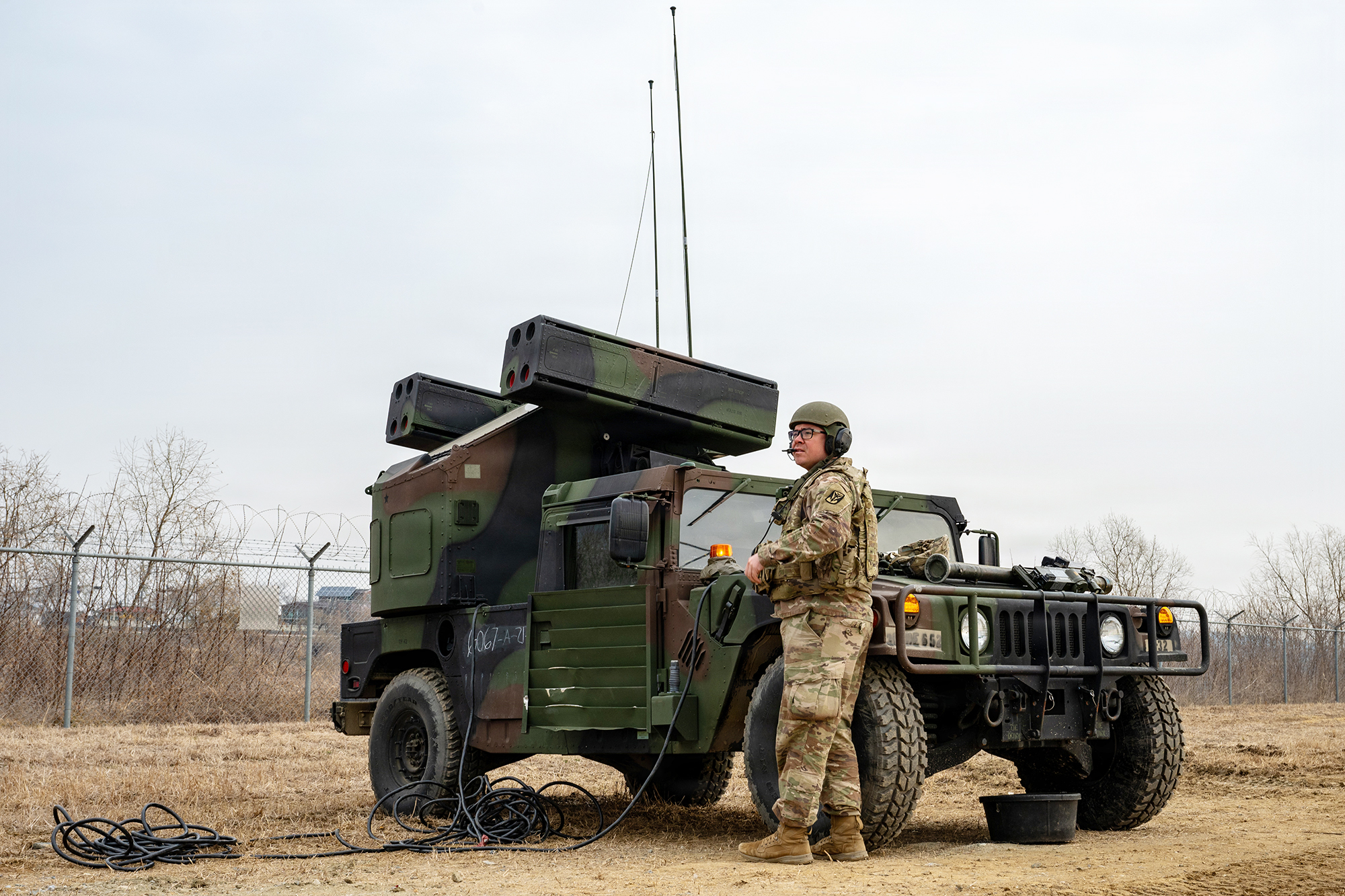
The Air Force’s Small Unmanned Air Defense Systems (SUADS) is its program of record for counter-UAS defense. The system identifies and tracks enemy drones of all sizes and is equipped with an electronic warfare effector. Available in two variants, one for fixed air bases and another that’s deployable on a single pallet. Congress included $51.8 million for SUADS acquisition in fiscal 2026, according to Air Force budget documents.
“We own that baseline system, and as we identify those new capabilities … I can go out and buy that high-power microwave and plug it into my SUADS,” Moore said. “I can go out and buy that kinetic interceptor from company X and connect it to SUADS. [Having built] that foundational capability with the electronic warfare, the command and control, and the detect, track, and ID capability—now all I’m building is additional defeat options based on the location that I need to be in.”
An Air Force spokesperson said the service is acquiring and fielding additional, commercially available systems.
