
The U.S. continues to position significant military assets closer to the Middle East as the Trump administration weighs whether to strike Iran.
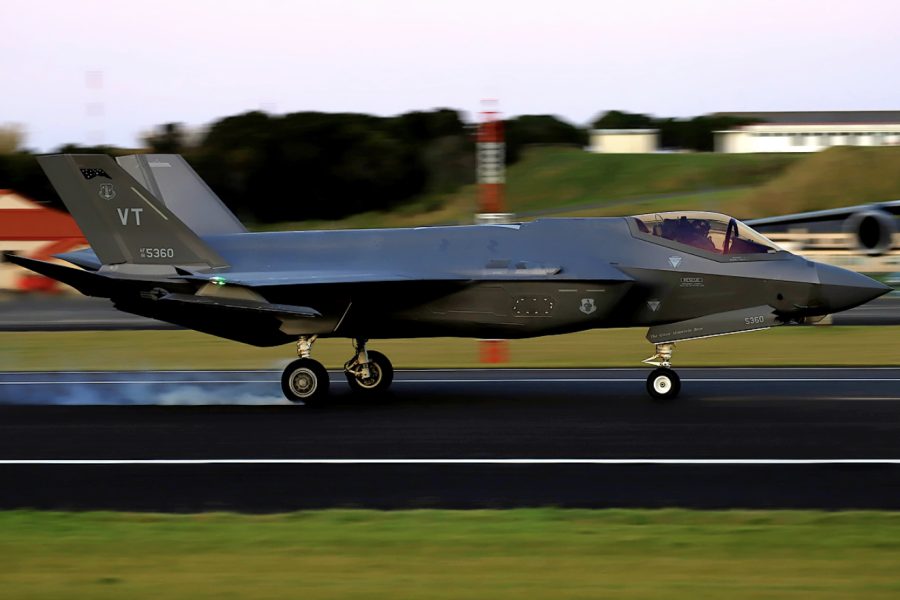
Six U.S. Air Force F-35A Lightning II stealth fighters landed in the Lajes Field in the Azores on Jan. 29 after crossing the Atlantic from Puerto Rico, images taken by local aircraft spotters and flight tracking data show. The Portuguese archipelago lies off the eastern coast of Europe and often serves as a stopover or staging point for U.S. aircraft en route to the Middle East.
The F-35s belong to the Vermont Air National Guard’s 158th Fighter Wing, which just over three weeks ago took part in Operation Absolute Resolve, the U.S. mission to capture Venezuela’s former president Nicolás Maduro. The unit, which specializes in suppressing enemy air defenses, is identifiable by the “VT” tailflashes painted on the aircraft. One local spotter, Andre Inacio, captured six jets landing in the Azores on Jan. 29 and shared photographs with Air & Space Forces Magazine.
Navy EA-18 Growler electronic attack aircraft also appear to have redeployed from the Caribbean to Spain in recent days, imagery and flight tracking data show, and there has been a steady flow of transport and refueling aircraft heading toward the Middle East.
Additional aircraft deployments are likely to be forthcoming.
U.S. Central Command, which oversees forces in the Middle East, declined to comment, and the press office for the 158th Fighter Wing did not immediately respond when asked about the unit’s redeployment.
Trump considered striking Iran two weeks ago after weeks-long anti-regime protests were met by a violent government crackdown. At one point, Trump assured protestors, “help is on the way,” and the U.S. quickly sent an extra squadron of F-15E Strike Eagles to the Middle East.
But the President chose not to attack at that point. More recently, however, Trump has stepped up criticism of Iran’s nuclear program, which the U.S. attacked last June in a one-off mission involving some 125 aircraft, spearheaded by seven B-2 Spirit stealth bombers, in what was dubbed Operation Midnight Hammer. The B-2s severely damaged the Fordo and Natanz nuclear installations, but substantial nuclear material survived the attack and is believed to be in Iran’s possession.
“Hopefully Iran will quickly ‘Come to the Table’ and negotiate a fair and equitable deal—NO NUCLEAR WEAPONS,” Trump wrote on his Truth Social platform Jan. 28. “Time is running out, it is truly of the essence! I told Iran once before, MAKE A DEAL! They didn’t, and there was ‘Operation Midnight Hammer,’ a major destruction of Iran. The next attack will be far worse! Don’t make that happen again.”
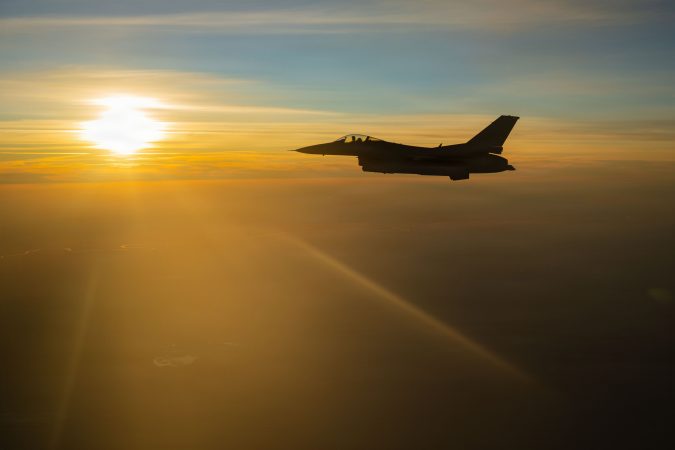
Midnight Hammer required a massive, days-long buildup of F-22 Raptors for air-to-air superiority, and F-35s and so-called Wild Weasel F-16s to suppress enemy air defenses. The U.S. also involved at least three B-2s used as decoys, flying in a different direction than the strike package. The result was a one-and-done raid that, along with cruise missiles fired from a submarine, severely damaged three of Iran’s highly fortified nuclear sites.
While Iran’s air defenses have been largely degraded, the U.S. would likely want more firepower than it currently has in the Middle East to strike again.
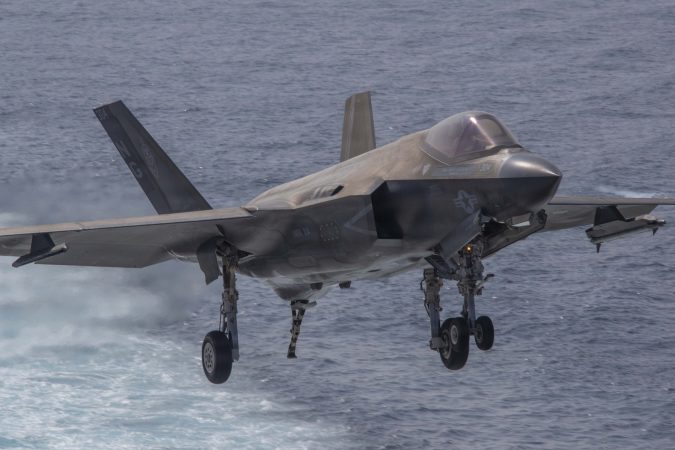
Those forces currently include three F-15E squadrons, one F-16 squadron, and one A-10 squadron. A deployed aircraft squadron today typically consists of 12 aircraft. Also in theater is the aircraft carrier USS Abraham Lincoln, which could provide additional firepower from its embarked airwing, which includes F-35Cs, F/A-18 Super Hornets, and EA-18 Growlers.
Midnight Hammer also came after days of punishing strikes by Israel that destroyed much of Iran’s air defenses.
“Midnight Hammer was a very specific” mission, said Lt. Gen. Jason Armagost, the deputy commander of Air Force Global Strike Command, on the sidelines of the Mitchell Institute Airpower Forum Jan. 29. “It was like a play in a game. It wasn’t the game writ large.”
“We could be ordered to do all kinds of things,” Armagost added. Ultimately, he acknowledged that U.S. airpower is not limitless. “Here’s what we think we can do, but we can’t do more, so that’s how we would advise the political decision.”
Armagost declined to detail specific U.S. military options.
Complicating a potential strike on Iran are U.S. allies Saudi Arabia and the United Arab Emirates, which have both said they would not approve operations against Iran right now from bases on their terrority or from aircraft transiting their airspace. Both countries have long hosted U.S. aircraft. CENTCOM also uses airfields elsewhere, including Qatar. The command has not disclosed where the planes currently in theater are based.
The UAE and Saudi Arabia have concerns about Iranian counterstrikes, as does Israel, which has long been the focus of Iran’s ire. The U.S. recently deployed additional Patriot and THAAD missile defense systems to the region.
“They should not pursue nuclear capabilities,” said Secretary of Defense Pete Hegseth during a televised White House cabinet meeting Jan. 29. “We will be prepared to deliver whatever this president expects.”
The U.S. military buildup could also be part of a pressure campaign to convince the Iranian leadership to make concessions on its nuclear and ballistic missile programs.
The U.S. announced new sanctions against six Iranian officials Jan. 30 for their part in the brutal crackdown against protesters.
“As the Iranian people protest 47 years of catastrophic economic mismanagement, the regime continues to choose funding terrorist militias abroad and its vast weapons programs over the basic needs of everyday Iranians,” State Department spokesman Tommy Pigott said in a statement. “The United States supports the Iranian people in their protests against the corrupt and repressive regime in Tehran.”