
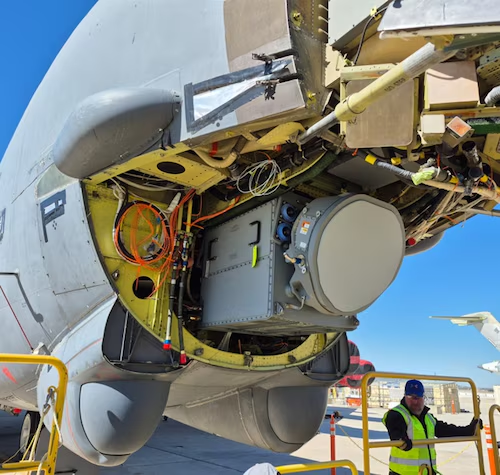
DAYTON, Ohio—A second B-52H Stratofortress is now being modified with a upgraded radar for testing after the first test bomber crashed in June, and work is expected to be completed by the end of the year, officials said July 27.
The development comes as the service is still trying to figure out how to keep the loss of the initial test B-52 at Edwards Air Force Base, Calif., from setting the Radar Modernization Program back.
The Air Force is working to heavily modernize its 75 Cold War-era B-52Hs, which have been flying since the 1960s, so they can continue flying into the 2050s. Those upgrades, which are so extensive the bomber will be redesignated the B-52J, will include a new complement of engines and the replacement of its legacy mechanical AN/APQ-166 radar with an active electronically scanned array AN/APQ-188 radar, which will be able to better navigate and target in all weather conditions.
But the radar upgrade effort has faced troubles, including rising costs that triggered a congressional notification process called a Nunn-McCurdy breach and led the Air Force to scale back the program’s scope.
The first B-52 to receive the new Raytheon-made radar flew from Boeing’s facility in San Antonio, Texas, where the work was done, to Edwards in December 2025. It crashed June 15 immediately after takeoff for a sortie to test the new radar, killing all eight crew aboard.
Col. Spencer Turner, B-52 system program manager, told reporters at the Air Force Materiel Command Life Cycle Industry Days conference in Dayton, Ohio, that the Air Force’s B-52 modernization plan always called for having two bombers to test the new upgraded radar. The second B-52 is also getting its upgraded radar at the Boeing San Antonio facility.
Radar installation work on the second bomber is ongoing, Turner said, and is expected to be finished in 2026, though he declined to offer more specifics about when the installation might be complete and when testing of the second bomber could begin.
But the crash of the first B-52 will put radar testing on hold for months, while the Air Force awaits the next test bomber. The B-52 team is now evaluating its radar modernization strategy and schedule in the wake of the June crash, Turner said. The team is supporting the accident investigation board looking into the crash, he said, and will adjust its modernization plans depending on the board’s findings.
“Obviously, the crash was not in our original schedule, so we need to look at our schedule and adjust as necessary,” Turner said. “The Radar Modernization Program is providing an important capability for our warfighter, for Air Force Global Strike Command, and so our focus is on ensuring safety first … but also providing on-time capability for warfighters. So we’re actually looking at those acquisition timelines and what we need to do to ensure on-time delivery.”