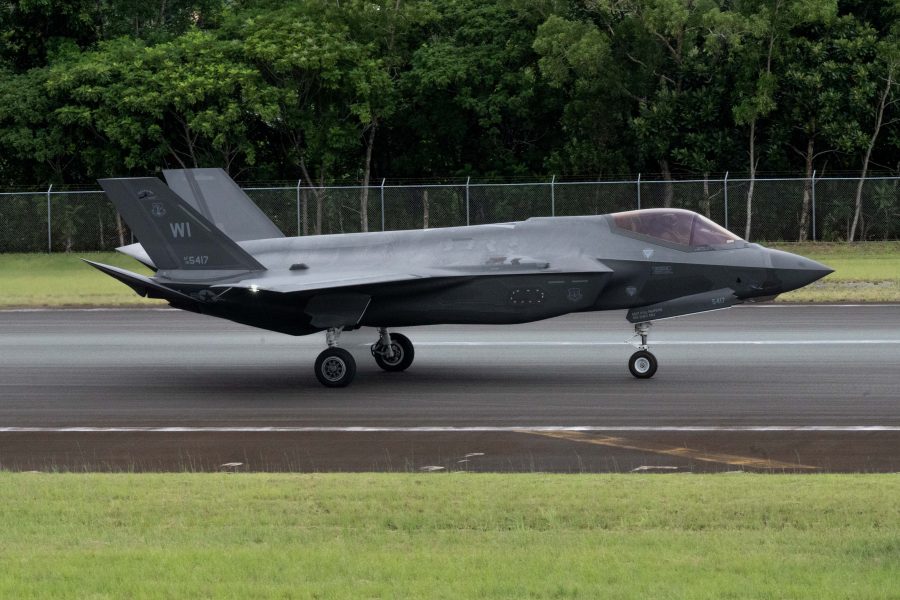
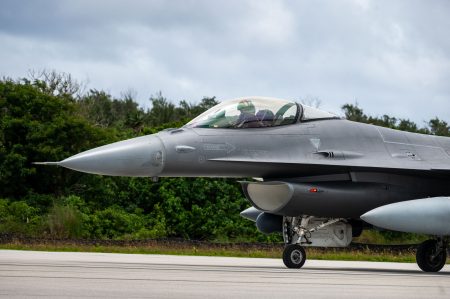
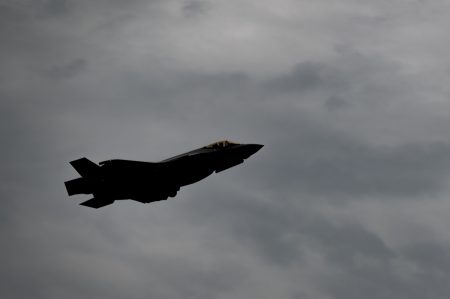
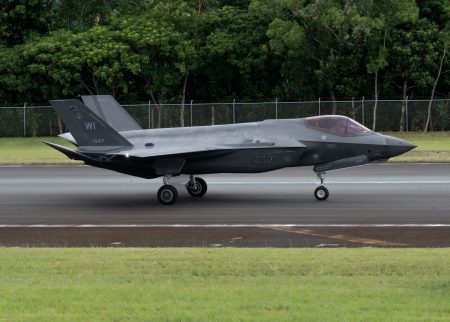
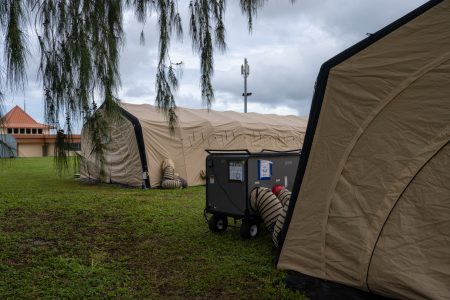
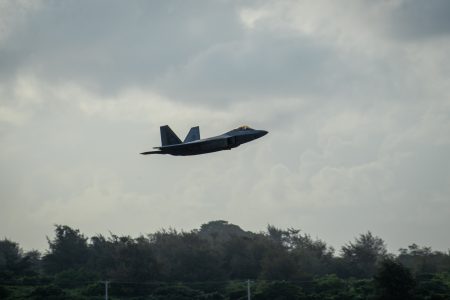
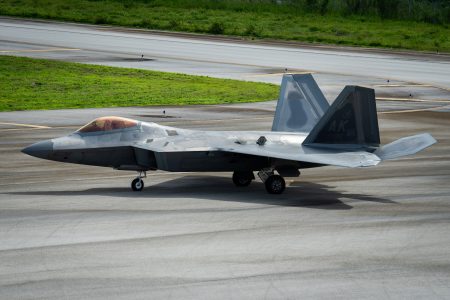
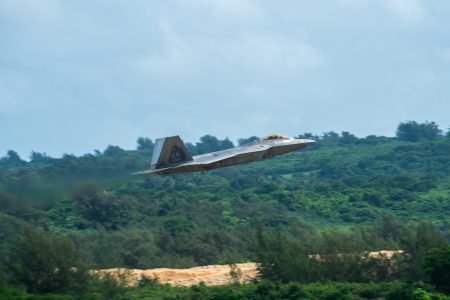
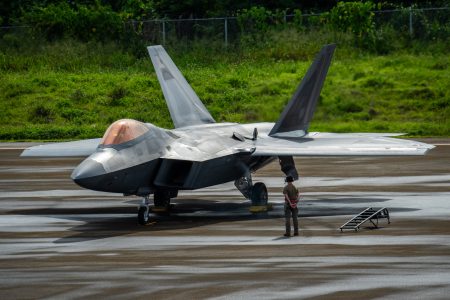
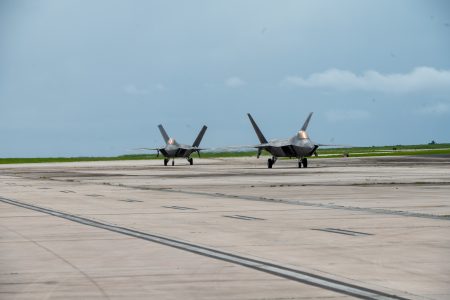
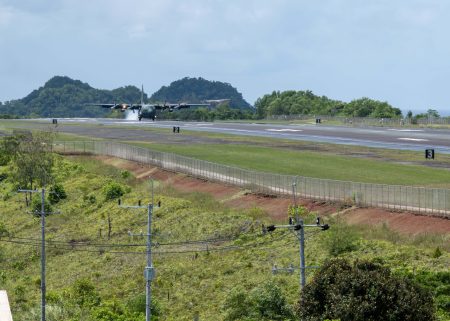
A U.S. Air Force F-35 Lightning II assigned to the 176th Fighter Squadron, Wisconsin National Guard, taxis during exercise Resolute Force Pacific 2025 at Palau International Airport, Palau, July 18, 2025. REFORPAC prepares USAF forces to respond swiftly and effectively to Indo-Pacific challenges by enhancing partnerships, sharpening capabilities, and strengthening regional security to protect joint interests. U.S. Air Force photo by Staff Sgt. Sarah Williams
Audio of this article is brought to you by the Air & Space Forces Association, honoring and supporting our Airmen, Guardians, and their families. Find out more at afa.org
Thousands of Airmen have poured into the Indo-Pacific region over the past few weeks for Resolute Force Pacific 2025, the Air Force’s largest-ever contingency-response exercise in the region. running July 10-Aug. 8.
REFORPAC, as the service calls the exercise, began July 10 and runs through Aug. 8. Officials have said it features more than 300 aircraft, making it one of the biggest exercises in recent Air Force history.
Chief of Staff Gen. David W. Allvin first announced the major Pacific exercise in February 2024, and planning started shortly thereafter. The event’s size and scale can be seen in all the different types of aircraft involved and the wide range of locations they’re operating from.
Air & Space Forces Magazine has compiled photos and a map showcasing them all:
Hawaii
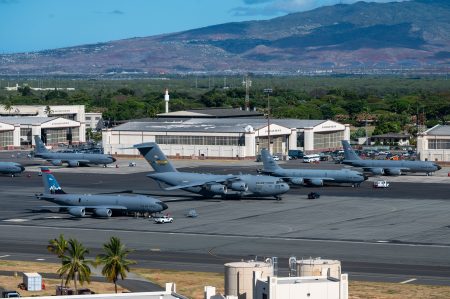
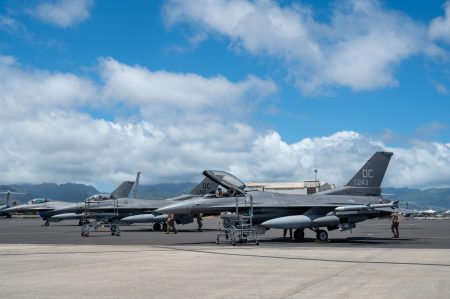
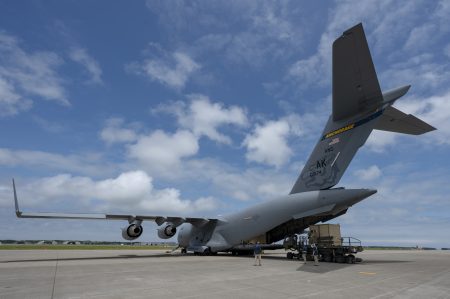
Many aircraft passed through Joint Base Pearl Harbor-Hickam on their way to the western Pacific. Those included KC-135s, a C-17, and D.C. Air National Guard F-16s.
Guam
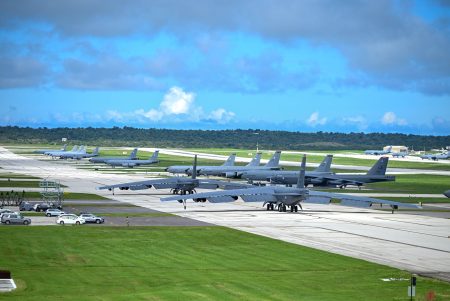
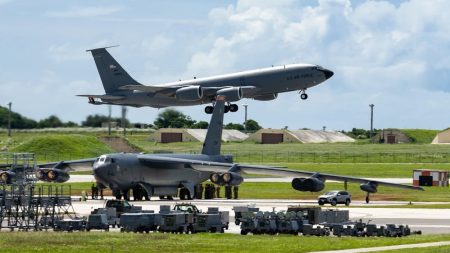
Andersen Air Force Base on Guam is a major hub for the exercise. F-35s from Eielson Air Force Base, Alaska; F-22s from Joint Base Elmendorf-Richardson; and F-16s from the D.C. Air Guard have operated out of Andersen.
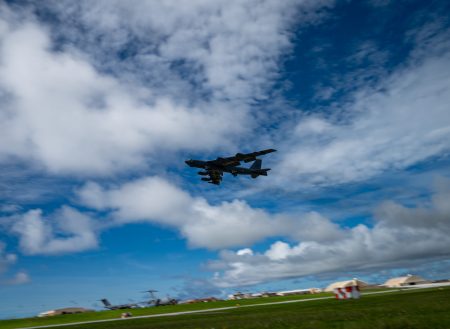
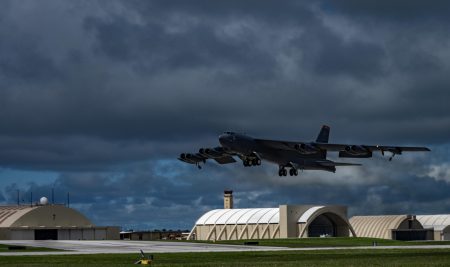
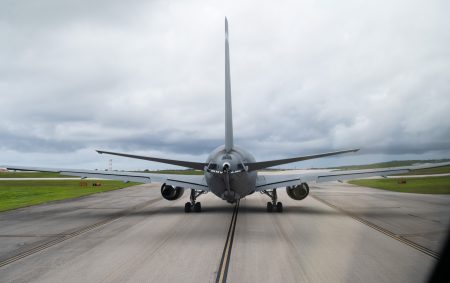
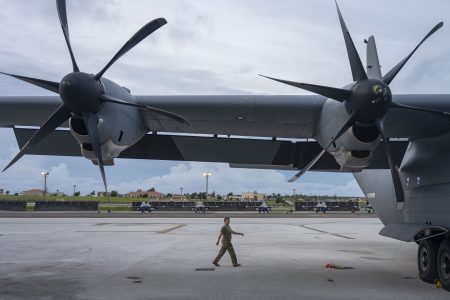
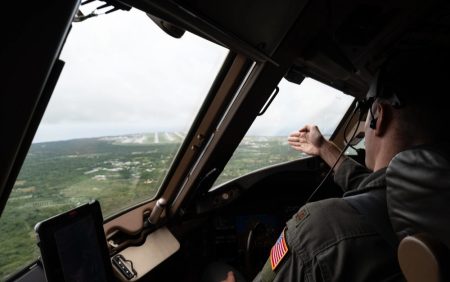
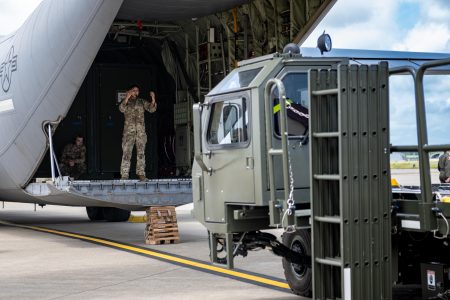
So have B-52s from the 5th Bomb Wing at Minot Air Force Base, N.D., which are visiting Guam for a bomber task force rotation. On the mobility side, KC-46s from the New Hampshire Air National Guard and C-130s from Dyess Air Force Base, Texas, are launching training missions out of Andersen as well.
Japan
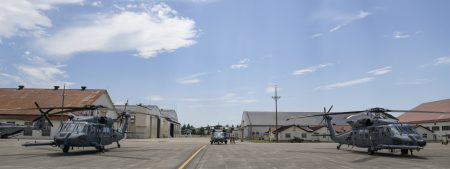
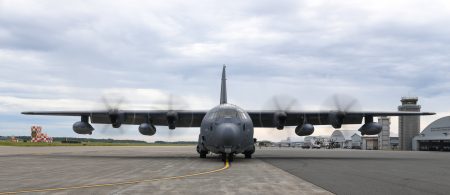
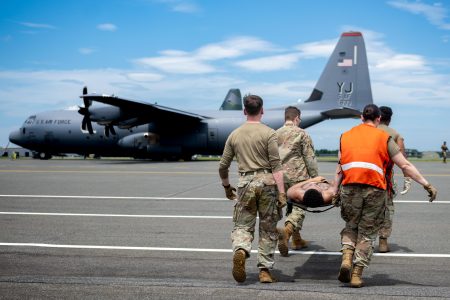
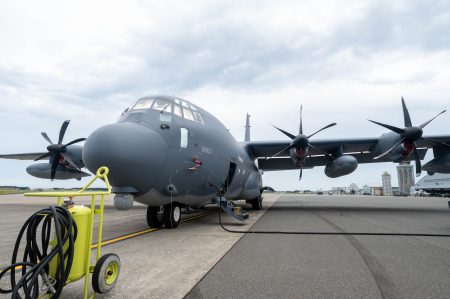
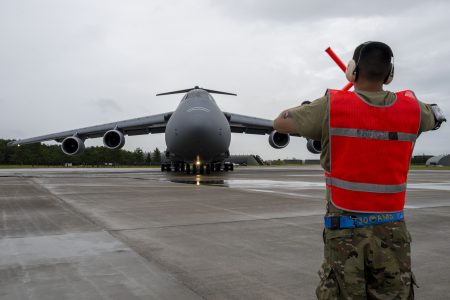
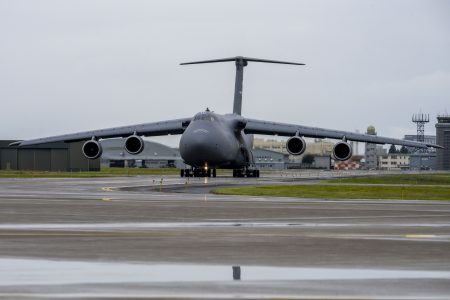
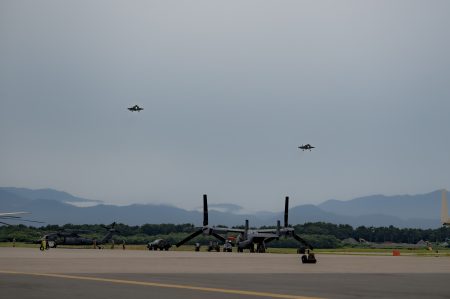
Misawa Air Base, located in northern Japan, is another of the exercise’s hubs. Among the visiting airframes are:
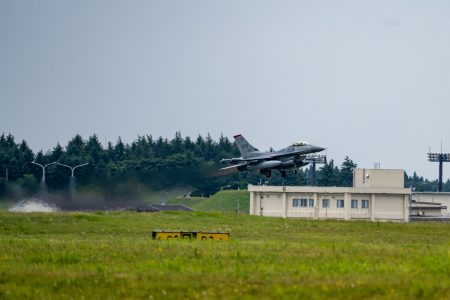
F-16s from the 35th Fighter Wing, Misawa’s host unit
F-35s from the 388th Fighter Wing at Hill Air Force Base, Utah
HH-60Ws and an HC-130J from the New York Air National Guard’s 106th Rescue Wing
A C-5M from the 436th Airlift Wing at Dover Air Force Base, Del.
A C-17 from the Alaska Air National Guard’s 176th Wing
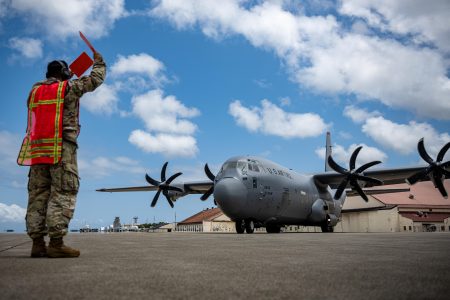
A C-130J from 374th Airlift Wing at Yokota Air Base, Japan
An MC-130J from the 353rd Special Operations Wing at Kadena Air Base, Japan
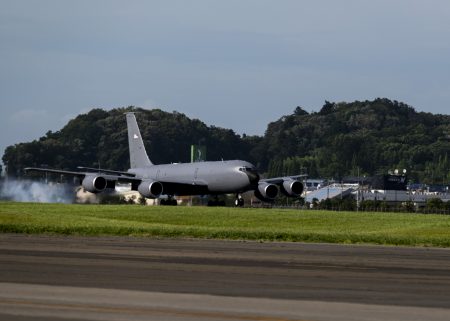
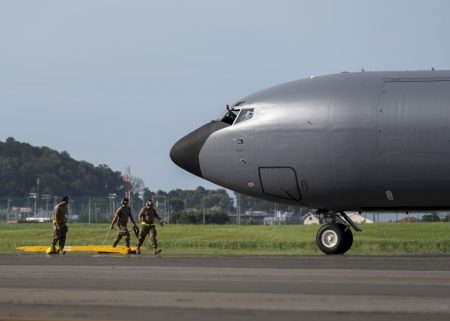
Yokota Air Base, near Tokyo, has hosted KC-135 tankers from the Ohio Air National Guard’s 121st Air Refueling Wing.
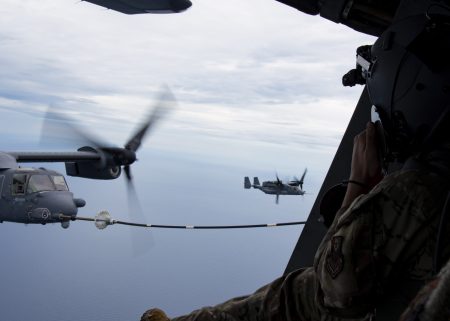
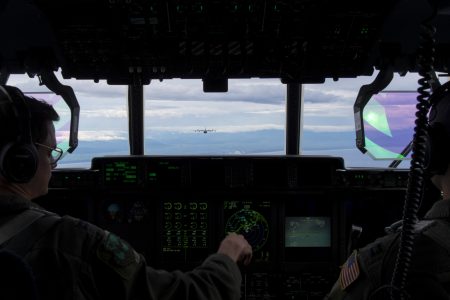
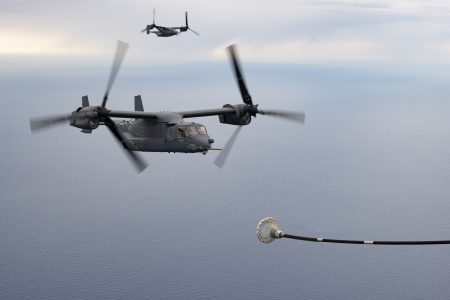
CV-22 Ospreys have also joined the exercise with flights over the Sea of Japan. The Ospreys are part of Yokota’s 353rd SOW.
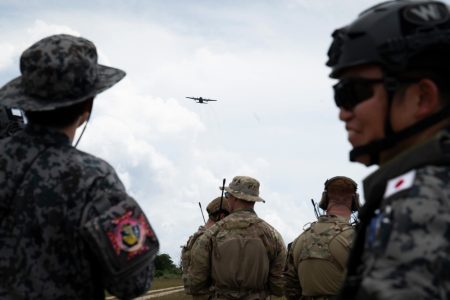
The event has used installations belonging to other branches of the U.S. armed forces, too: Naval Air Facility Atsugi, not far from Yokota, hosted KC-135s from the 18th Wing at Kadena. Meanwhile, Marine Corps Air Station Iwakuni in southern Japan has hosted F-16s from the 177th Fighter Wing of the New Jersey Air National Guard; a C-130J from Yokota; and a C-17 from the 437th Airlift Wing out of Joint Base Charleston, S.C.
To date, the Air Force has not published any photos of aircraft at Kadena Air Base on Okinawa, just 100 miles away from Taiwan.
Tinian, Saipan, and Palau
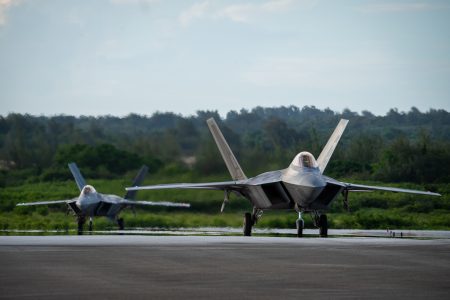
F-22 fighter jets based out of Joint Base Elmendorf-Richardson, Alaska, flying as part of the 3rd Air Expeditionary Wing, have operated from Tinian and Saipan, a pair of tiny isles that are part of the Northern Mariana Islands. Local media outletsreported that troops will also train on the island of Rota.
The Air Force has spent tens of millions of dollars on Tinian, in particular, to rehabilitate its World War II airfield.
About 500 miles away, F-35s from the Wisconsin Air National Guard flew from Palau, another small island.
Audio of this article is brought to you by the Air & Space Forces Association, honoring and supporting our Airmen, Guardians, and their families. Find out more at afa.org
An important U.S. Air Force E-3 Sentry AWACS command and control plane was among the aircraft damaged in a March 27 Iranian missile and drone attack on Prince Sultan Air Base, Saudi Arabia, people familiar with the matter told Air & Space Forces Magazine.
Multiple American service members were wounded and some aircraft were damaged in a March 27 Iranian attack on Prince Sultan Air Base, Saudi Arabia, people familiar with the matter told Air & Space Forces Magazine.
The 34th Fighter Squadron won the Raytheon Trophy for its air superiority performance in 2025 in two major Middle East operations and a series of responses in the Pacific. The F-35 Lightning II squadron received the honor following its role in Operation Rough Rider targeting Houthi rebel missile sites in…
Three additional B-1B Lancers arrived at RAF Fairford on March 26, bringing the total number of bombers stationed at the U.K. base to 21—one of the largest bomber deployments in recent history.
The Pentagon formally split the combined U.S. Forces Japan and the Fifth Air Force into separate commands, ending a dual-hatted arrangement that had been in place for more than 60 years. The separation means that the former combined commander, Air Force Lt. Gen. Stephen Jost, will remain head of U.S.…
The Air Force’s nascent Collaborative Combat Aircraft program is beating former Secretary Frank Kendall’s goal of producing drone wingmen at about one-third the cost of an F-35, an official leading the effort said March 25.
Audio of this article is brought to you by the Air & Space Forces Association, honoring and supporting our Airmen, Guardians, and their families. Find out more at afa.org A photo of a B-52 Stratofortress flying with an apparent pair...
The Air Force may have used a secretive intelligence, surveillance, and reconnaissance drone over Venezuela earlier this year. Now, observers think they may have spotted an even more classified aircraft amid operations in Iran.
The Pentagon’s top weapons tester noted progress on key munitions for the Air Force in his latest report, covering everything from dogfighting missiles to hypersonics.
✓
Thank You!
Check your inbox to verify your email address and finish setting up your AFA account.
★
Welcome Back!
An account with this email already exists. Please log in to continue.
Subscribe to the Air & Space Forces Daily Report
The latest news from Air & Space Forces Magazine, as well as news from other leading publications, delivered right to your inbox every morning!
We’re sorry, there has been an error. Please review your input or try again later.