
As the Penta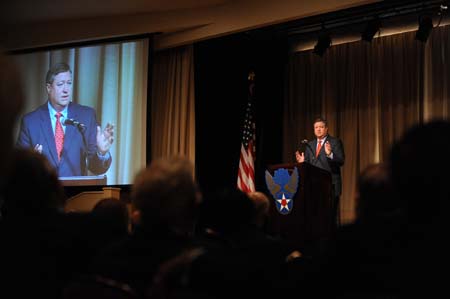 gon prepares for the transition to the new Administration, the nation’s national security space enterprise faces several key challenges in that consolidation is changing the space industry, consensus about the country’s space future “remains elusive,” and leaders “have yet to realize a vision for space,” Air Force Secretary Michael Donley said Nov. 21 during his address at AFA’s Global War Symposium in Los Angeles. But, with solid leadership and coordination of resources, the US will be able to maintain its space leadership, he said. “Moving forward, my sense is that we need to forge a new path,” said Donley. He added that, “Space-based capabilities constitute joint, interagency, and national interests. They are national assets.” Accordingly, there is the need to find ways “to streamline and strengthen interagency governance” of them, he said. Today airmen operate more than 120 satellites for the nation. These airmen are “the connective tissue” across the national security space enterprise, said Donley. (Los Angeles report by SMSgt. Matt Proietti)
As the threat of Iranian-made drones grew, the Air Force rushed last year to equip F-15E Strike Eagles in the Middle East with a cheap, cost-effective way of defeating them. The service fielded the new capability in roughly a week.
