
Space Force Names 9 New Acquisition Execs
By Courtney Albon
The Space Force has finalized a major reorganization of its acquisition structure, creating nine mission area-focused portfolio acquisition executives (PAEs) with broad authority over the service’s development and procurement programs.
The service announced its first two PAEs in January, followed by four more in March. It finalized the remaining three in a June 22 memo signed by Acting Assistant Secretary for Space Acquisition and Integration Thomas Ainsworth. The complete list, as follows:
- Space Access, which covers launch delivery and range operations and sustainment, led by acting PAE Col. Eric Zarybnisky.
- Space-Based Sensing and Targeting, which covers battlespace awareness and environmental monitory, led by acting PAE Col. Ryan Frazier.
- Missile Warning and Tracking, which covers missile warning, tracking, and defense architecture, led by PAE Gurpartap Sandhoo.
- Infrastructure, which covers data and personnel management, and test and training, is led by Col. Corey Klopstein.
- Battle Management Command, Control, Communications, and Intelligence, which includes Space C2, data, networks, and intelligence capabilities, led by PAE Shannon Pallone.
- Satellite Communications and Positioning, Navigation, and Timing, which includes SATCOM and PNT programs, led by acting PAE Erin Carper.
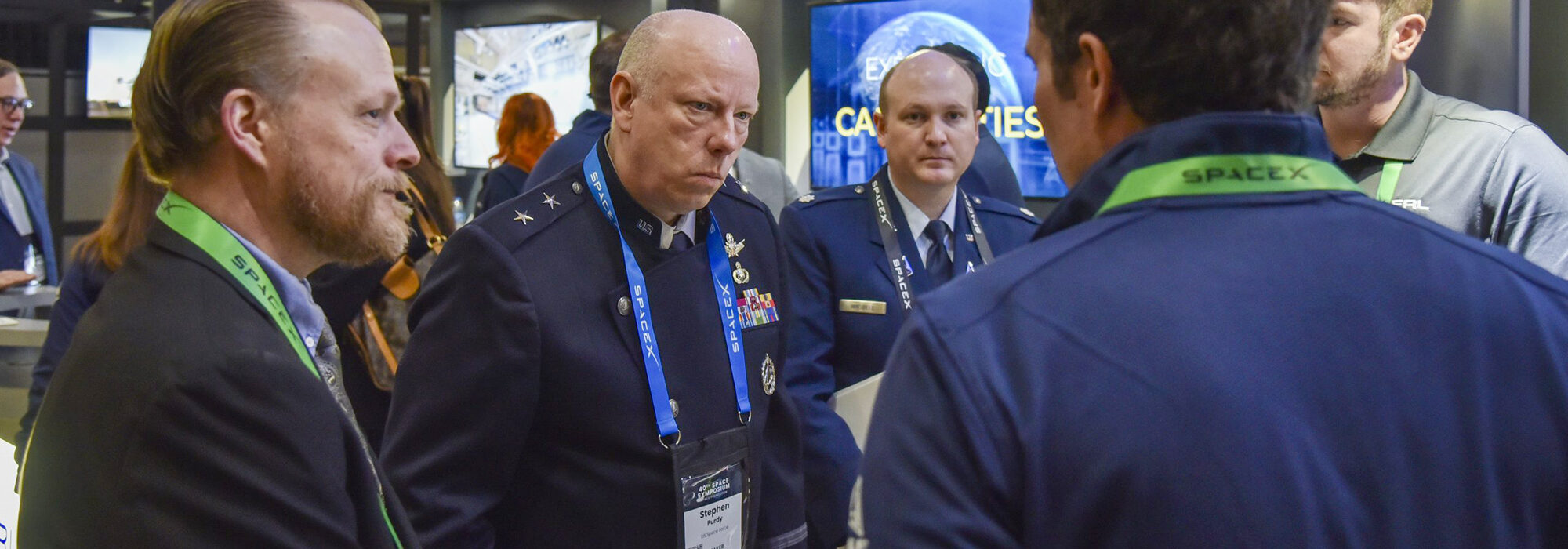
- Advanced Capabilities, presumably a largely classified portfolio that includes systems to “enable joint warfighting operations,” led by PAE Maj. Gen. Stephen Purdy.
- Electromagnetic Warfare and Cyber, covers systems that operate on the electromagnetic spectrum or in the cyber domain, led by acting PAE William Blauser.
- Space Combat Power, also a largely classified portfolio focused on “space warfighting” systems, led by acting PAE Col. Bryon McClain.
“These mission-focused PAE structures can and will cross all domains,” Ainsworth said in the memo. “Underpinning this construct, integration support to all PAEs remains essential to achieving success in delivering space capability consistently to the joint force for space warfighting.”
SpaceNews was the first to report on the final PAE structure.
The transition to this new organizational structure is part of the service’s plan to implement Defense Secretary Pete Hegseth’s sweeping acquisition reform agenda and transform the way the Pentagon buys, builds, and fields weapons and platforms. Part of that transformation is a push to reduce decision-making echelons and delegate more authority to acquisition experts.
Space Force PAEs will report directly to the service acquisition executive, and the intent is to empower them to make requirements decisions and shift resources between programs as technology changes and threats evolve. Congress has yet to formally give PAEs the full slate of authorities the Pentagon’s strategy envisions, but Ainsworth noted that the executives in charge of each portfolio have the ability to “pursue their assigned missions, build their organization, and drive accountability for results with the requisite authorities to capitalize on innovative technology and deliver capabilities.”
In a recent interview with Air & Space Force’s Magazine, Air Force Secretary Troy Meink said he’s already seeing positive results from the acquisition reform efforts.
“We’ve delegated probably 90 to 92 percent of contracting authorities down into what we call these portfolio acquisition executives, so that they can make the decisions there, not only for contracting decisions, but for hiring decisions,” Meink said. “Even though this acquisition transformation and this focus has only been a year or so in, we’re already seeing the benefits and we’re seeing really good performance across the board.”
From Orders to Launch in Less Than 17 Hours
By Courtney Albon
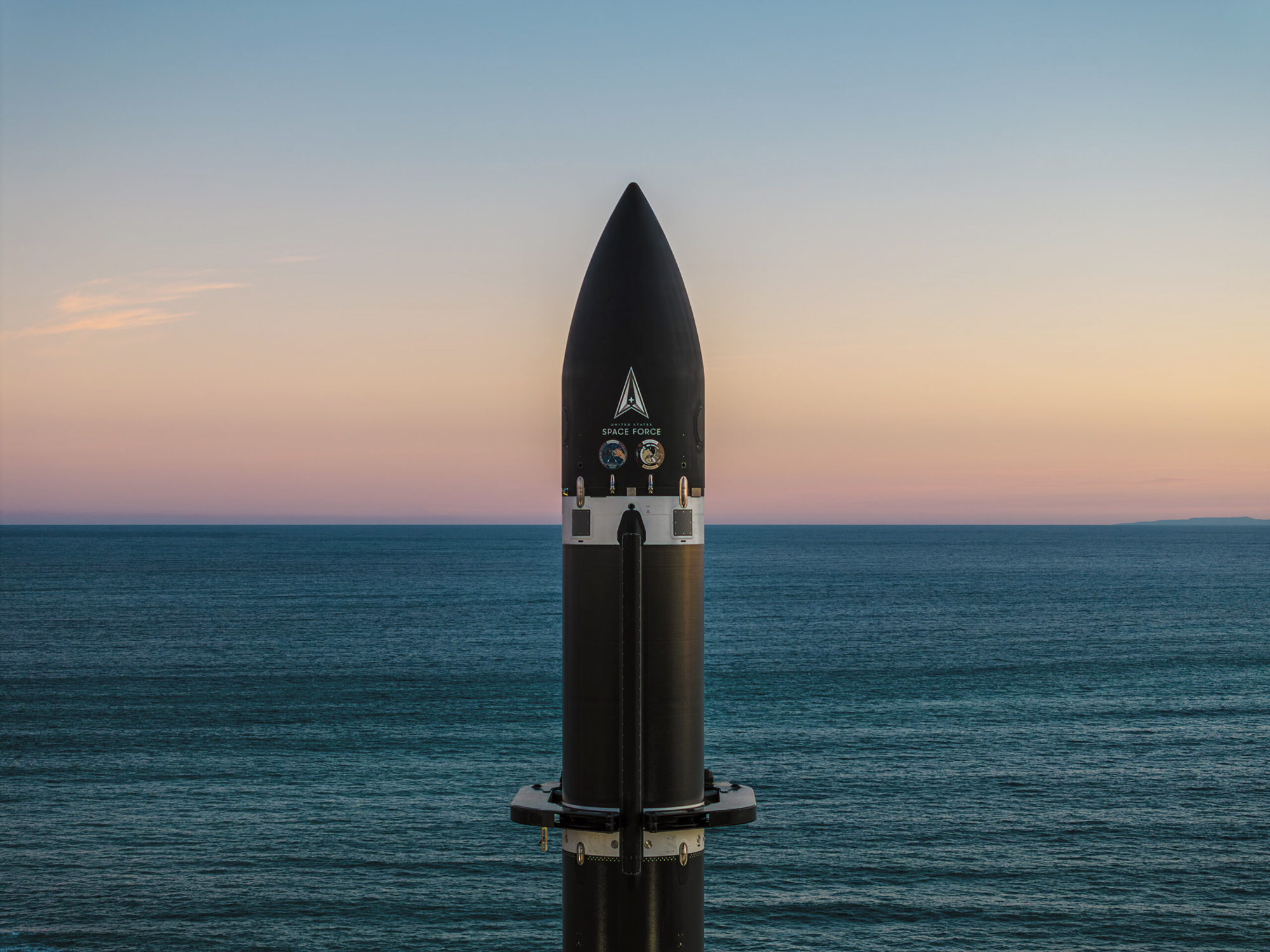
The Space Force started its second live Tactically Responsive (TacRS) Space mission June 19, working with a contractor to launch a satellite to low-Earth orbit in less than 17 hours. That spacecraft is now conducting a series of maneuver demonstrations with another vehicle.
The mission, dubbed Victus Haze, launched from Rocket Lab’s private spaceport on the Mahia Peninsula in New Zealand. In a release, Rocket Lab said its Electron rocket lifted off with its Puma satellite to low-Earth orbit early June 19, just 16 hours and 42 minutes after receiving launch orders from the Space Force—shattering USSF’s previous record of 27 hours.
Puma, which uses Rocket Lab’s highly maneuverable Pioneer platform, then began a multiphased rendezvous operation with a second satellite already on orbit—True Anomaly’s Jackal, which launched in early May on a SpaceX Falcon 9.
“With launch complete, the team will now complete on-orbit checkout and vehicle commissioning, after which RPO operations begin (Rendezvous, Proximity Operations),” Space Systems Command said in a June 22 statement. “During these operations, the teams operating both the Rocket Lab and the True Anomaly space vehicles will conduct a variety of scenarios, demonstrating space domain awareness and characterization capabilities, each in dynamic engagements with the other.”
Although the Space Force confirmed the mission days after it lifted off, the service’s own space object database reported the satellite’s arrival in orbit as soon as June 20, according to Jonathan McDowell, as an astrophysicist who closely tracks on-orbit activity. McDowell reported that Rocket Lab’s satellite appeared to pass within about 100 kilometers of the Jackal satellite on the evening of June 19.
In the days after the launch, both Rocket Lab and True Anomaly said their space domain awareness and maneuver operations are progressing faster than expected.
According to Rocket Lab, within 37 hours and 36 minutes of launch, Puma was fully activated and ready for its first orbital maneuver around Jackal. That timeline, the company said, was 34 hours ahead of the mission’s target of 72 hours.
Meanwhile, True Anomaly announced July 1 that Jackal completed its first operational Victus Haze sortie. The company also had a 72-hour deadline, which it met in 61 hours. According to the company, the mission included multiple circumnavigations of Puma, which was acting as a “noncooperative target spacecraft.” Jackal provided “multiaspect imaging and characterizations” to the Space Force and True Anomaly’s Mosaic software platform planned the sortie, commanded the satellite’s maneuvers, and processed the imagery.
“Jackal performed exactly as designed, demonstrating precise propulsion burns and nominal ingress, successful closed-loop tracking, precision pointing, imaging and characterization of the target before egressing to its base orbit,” True Anomaly said in a statement. “From a new target’s launch to finished imagery, the mission clock ran in hours, not months.”
The company also said Jackal demonstrated precise propulsion burns and target characterization before returning to its “base” orbit.
The Space Force hasn’t said how long Victus Haze will last. The service said it plans to use the satellites for live RPO training and that the successful mission could open the door to rapid satellite production contracts for both companies, but it hasn’t discussed those plans in detail.
Lt. Col. Lincoln Miller, system program manager for Space Safari, said the success of Victus Haze could lead to “rapid production and fielding of follow-on vehicles” from both companies. In the near-term, though, Space Force operators will have a chance to use the satellites for live training.
“Not only does this mission open the door for acquisition of follow-on vehicles that allow our warfighters to close critical gaps and seams in a conflict scenario, it also presents a more immediate value by giving our current operators a crucial opportunity to exercise and improve LEO RPO tactics, techniques, and procedures,” Lt. Col. Lincoln Miller, system program manager for Sapce Safari, said in the statement.
SpaceWERX and the Defense Innovation Unit awarded contracts in 2024 to True Anomaly and Rocket Lab to develop satellites for the mission. True Anomaly initially contracted with Firefly Aerospace to launch Jackal on its Alpha vehicle. The mission was scheduled for 2025 but was delayed after Firefly’s Alpha rocket experienced multiple anomalies last year. Although Alpha returned to flight in March, True Anomaly opted to launch Jackal on a SpaceX rideshare mission.
A Firefly spokesperson told Air & Space Forces Magazine the firm will participate in future TacRS missions with its upgraded Alpha Block II rocket, which incorporates modifications it developed following the mishaps last year. Firefly is already on contract for an effort called Victus Sol, but the spokesperson indicated it will fly Jackal on a separate mission in the future.
“Firefly continues to actively support the U.S. Space Force and, at the direction of Space Safari, is moving to a future Tactically Responsive Space mission that will utilize Firefly’s upgraded Alpha Block II launch vehicle and True Anomaly’s Jackal platform,” the company said. “This new mission will build on the lessons learned from Victus Nox, Victus Diem, and Victus Haze, and help shape the next generation of responsive space missions.”
The Space Force set records in 2023 with its first TacRS mission, Victus Nox, demonstrating that it could work with satellite and launch companies to deliver a spacecraft in a matter of months and deploy it to low-Earth orbit just 27 hours after receiving launch orders. Millennium Space Systems built the satellite, and Firefly launched it.
Beyond Victus Nox and Victus Haze, Space Systems Command has scheduled at least three more TacRS missions aimed at further pushing schedule boundaries as well as demonstrating concepts and fielding new capability. Slated to fly this year or next, they include:
- Victus Surgo, a mission cosponsored by the Defense Innovation Unit that will feature a SpaceX Falcon 9 launching a highly maneuverable spacecraft built by Impulse Space;
- Victus Salo, another Falcon 9-supported mission that will carry a payload built by the Massachusetts Institute of Technology; and
- Victus Sol, launched by Firefly’s Alpha, which will carry an operational payload.
The service also conducted a two-part tabletop exercise and field excursion called Victus Diem between summer 2025 and early 2026. The effort was designed to help solidify its responsive launch processes, like rapid payload processing.
SDA Cancels Planned Communications Satellites
By Courtney Albon
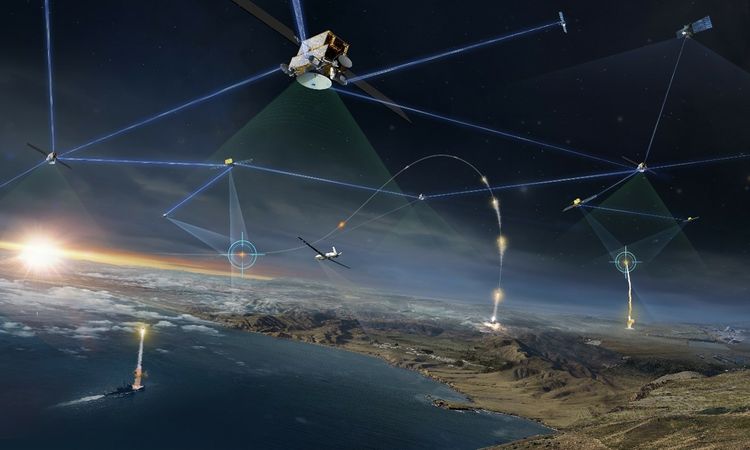
The Space Development Agency (SDA) last year quietly canceled plans to launch 11 satellites meant to conduct communications experiments in low-Earth orbit, Air & Space Forces Magazine has learned.
The agency made the decision to “descope” the Tranche 1 Demonstration and Experimentation System late last year, according to an SDA official, as a deliberate move to focus on operationalizing its first satellites.
The Tranche 1 Demonstration and Experimentation System, known as T1DES, was initially envisioned as a 12-satellite experiment to reduce risk for future SDA missions by demonstrating that capabilities previously performed in geosynchronous or other orbits could be conducted in low-Earth orbit. In 2022, the agency awarded York Space Systems a contract worth up to $200 million for the effort and planned to launch the satellites this year.
In 2024, SDA asked York to accelerate the delivery of one of those satellites and prepare it to launch about six months ahead of schedule, in June 2025. The company met the challenge and the mission—dubbed Dragoon—met all of its objectives.
While the plan had been to launch the remaining 11 T1DES satellites this year, the agency opted to cut the program short and instead apply lessons learned from that single satellite to future missions. While cost was a factor in that decision, the official said Dragoon’s success and the need to focus on SDA’s operational objectives were the primary drivers for scaling back the demonstration effort.
“We were able to achieve sufficient risk reduction for Tranche 2 with Dragoon, and we wanted to ensure all vendor efforts and components were tightly focused on delivering viable mission capabilities to the warfighter,” according to the SDA official.
The formal process to cancel T1DES began in December, and the official said the agency is negotiating the final details of the “award descope.” A York spokesperson said the contract is being modified so that the remaining satellites “can be made available to York for the rapid deployment of future missions.”
SDA was created in 2019 to develop a constellation of small satellites in low-Earth orbit—the Pentagon’s first major attempt to shift toward a more proliferated architecture. The agency’s focus has been on fielding data transport and missile warning and tracking satellites, with a strategy that emphasizes regular technology refreshes and competition. In 2023, it launched its first batch of satellites, Tranche 0, and it is now in the midst of putting its first operational spacecraft on orbit.
But the agency and its vendor base have faced challenges bringing those first Tranche 1 satellites online. After completing two launches last fall of what was supposed to be a steady 10-month campaign to field 152 satellites, the agency pressed pause on its launches. While that was partially driven by launch schedule issues outside of SDA’s control, Director Gurpartap Sandhoo has also attributed the slow-down to scaling challenges.
“I think the biggest thing we have learned in this whole journey of a proliferated architecture is all the choke points that we have in the way we used to buy things when you had onesie, twosies versus at scale,” he told Air & Space Forces Magazine in February. “You don’t realize the weak points until you actually do it.”
But perhaps looming larger than those growing pains are questions about SDA’s future. The House and Senate Armed Services Committees have passed draft fiscal 2027 policy legislation that, if approved in the final National Defense Authorization Act, would give the Space Force the greenlight to dissolve the agency amid a broader acquisition shakeup. Officials, including Air Force Secretary Troy Meink and acting Space Force acquisition executive Thomas Ainsworth, have said they want to move away from rapid acquisition offices separate from the main enterprise and instead incorporate SDA’s speed across all acquisition. Sandhoo was recently named as the head of the service’s missile warning and tracking portfolio, which will likely absorb the agency’s missile tracking mission. And the Space Force has said it doesn’t plan to fund additional SDA transport satellites beyond Tranche 2.
That plan is not yet finalized, and in the meantime, SDA continues to focus on bringing its first satellites into operations and launching the remaining Tranche 1 and Tranche 2 satellites. Dragoon will inform that work, the SDA official said, providing “actionable and meaningful risk reduction for Tranche 2.”
York—a key SDA vendor contracted to build 136 satellites over three phases of SDA’s data transport layer—announced June 24 the demonstration successfully proved that its satellite in LEO could send and receive tactical data via Ultra High Frequency, a mission traditionally performed from GEO. Dragoon conducted five demonstrations over a three-month period and will remain available for additional testing over the next few months, according to both SDA and York.
“Two-way connectivity between a satellite and ground forces is operationally essential, and we’ve now demonstrated it on orbit,” York’s General Manager and Executive Vice President Melanie Preisser said in a press release. “That opens doors to mission sets that matter deeply to national defense.”
China Going ‘Breathtakingly Fast’ with Space Weapons
By Todd South
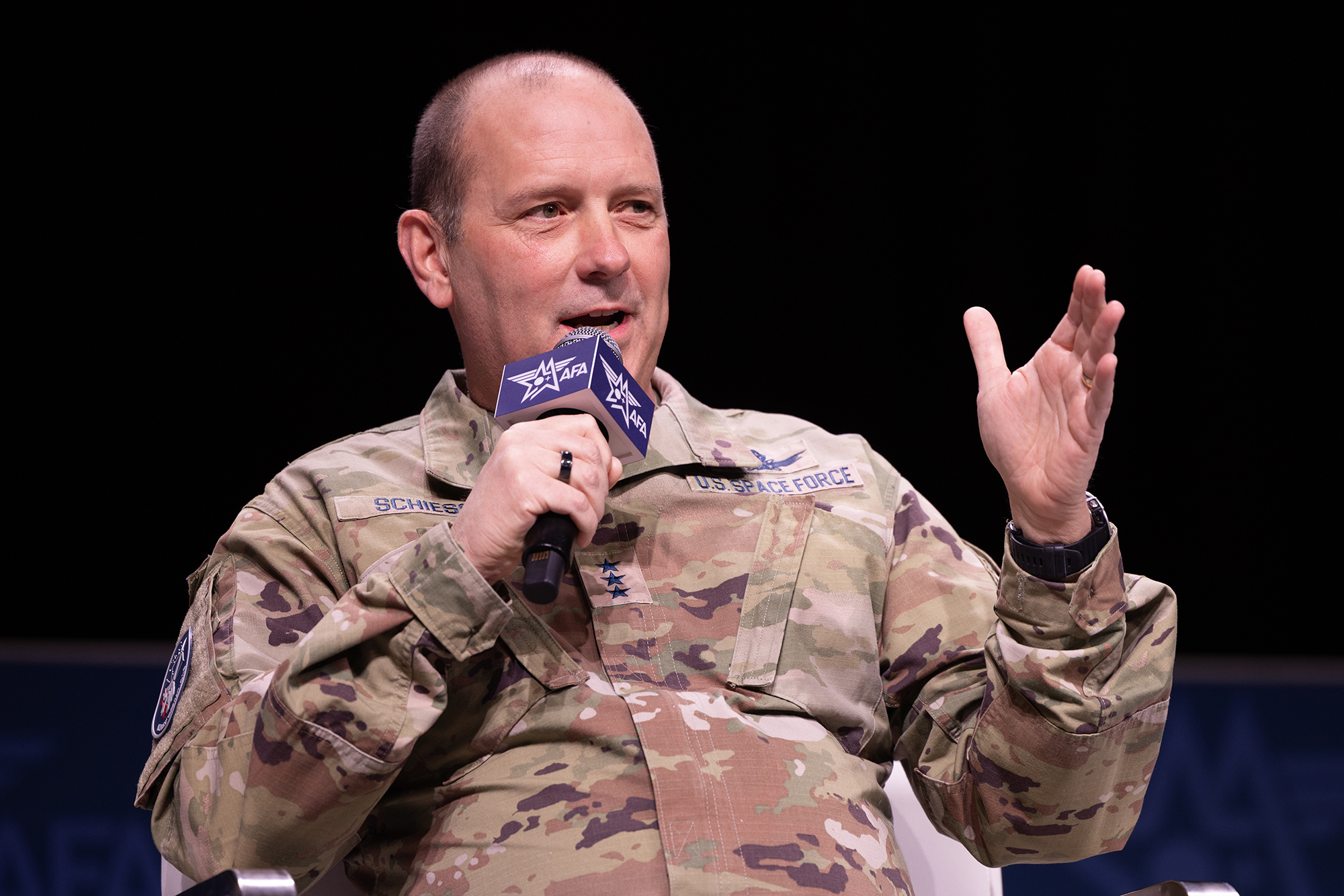
“What they are doing with what I’ll call counter-space and space superiority capabilities is breathtakingly fast,” said Lt. Gen. Douglas A. Schiess during his July 16 confirmation hearing.
Asked by Sen. Roger Wicker (R-Miss.) what space threats China poses to the United States, Schiess rattled off a list of developments: anti-satellite tests from the ground, space capabilities that hold U.S. satellites at risk, and “very worrisome” new electromagnetic jamming capabilities now under development.
China is also using intelligence, surveillance, and reconnaissance satellites to target “our forces much farther than they ever have,” Schiess sad. “They built a kill chain to be able to see our carrier strike groups, our bombers, at a much farther pace, speed, and distances, and they’ve also developed missiles and weapons systems to go after that. So the Space Force needs to be able to bring capability to deny [and] degrade that kill web to be able to protect the joint force.”
Golden Dome
Facing skeptical questions from Sen. Richard Blumenthal (D-Conn.) regarding the Pentagon’s ambitious Golden Dome missile defense shield, Schiess defended the program.
“Is there a way to do the Golden Dome at a scaled-down version?” Blumenthal asked, referring to a program estimated to cost some $185 billion.
“What I would say is a lot of the things that we are doing in Golden Dome also provide us capabilities for space superiority, whether that’s tracking, communications, data, those kinds of things,” Schiess said. “So I do believe that we will continue to get good things from Golden Dome.”
If confirmed, Schiess will become the Chief of Space Operations, following Gen. B. Chance Saltzman, who is to retire this summer, and the first Chief of Space Operations, Gen. John W. “Jay” Raymond, who led the force from it’s launch in 2019 until fall 2022.
Schiess is currently deputy CSO for operations at the Pentagon, and formerly led Space Forces-Space, the Space Force component to U.S. Space Command.
Commissioned as an Air Force second lieutenant in 1992 through Air Force ROTC at the University of California-Los Angeles, Schiess transferred into the Space Force in 2020.
The Space Force lost an estimated 780 civilian employees last year and is now trying to reverse some of those losses. “That was a significant cut to us, but we are working to bring those back,” Schiess told lawmakers. “As a matter of fact, Space Systems Command is trying to hire 100 civilians a month.”
“And are you able to find those hundreds?” asked Sen. Angus King (I-Maine).
“We are able to do that,” Schiess said. “Some of those are in different locations, but the Space Force doesn’t have a problem with people wanting to join. It’s just finding the right spot for them.”
If confirmed, Schiess faces the challenging task of continuing to grow the new force as it battles for budget dollars alongside its much larger, more well-established sister services.
Retired USSF Col. Charles Galbreath, director for Space Studies at the Mitchell Institute’s Spacepower Advantage Center of Excellence, noted that the goal of doubling the service’s size is “not a trivial matter.”
In commentary for Breaking Defense, Galbreath recommended that Schiess consider restoring members separated for nondisciplinary reasons, interservice transfers, integrating the Guard and Reserve forces, and direct appointments to meet the doubling goal.
Only a handful of senators attended the confirmation hearing, which lasted a brief 40 minutes.
“General, I think you should take heart from the fact that not all of our members are here today; that’s a compliment to you,” King said. “The fact that we didn’t have a large turnout is an indication, I believe, of the committee’s confidence in you.”