


Active-Duty Airmen and Guardians have until mid-October to update their personnel records with their religious preference using the Pentagon’s new consolidated list of Religious Affiliation Codes, according to a recent Department of the Air Force announcement.
The new list of codes—ordered by Defense Secretary Pete Hegseth—slashed the number of religions specified in the Pentagon’s HR systems from more than 200 to roughly 30. Officials said in June that the consolidation was necessary to streamline the number of religious preferences for service members and shape the chaplain corps to support them.
The consolidation process collapsed roughly 170 denominations of Christianity down to 21 and includes widespread non-Christian religions such as Buddhism, Hindu, Islam, and Judaism, among other faiths. It removes Wicca, paganism, and other nontraditional faiths from the list, replacing them with an “Other Religious” category.
The department directs all Active-Duty members of the Air Force and Space Force to select their new Religious Affiliation Code in the Virtual Military Personnel Flight system and certify their record of emergency data is accurate by Oct. 16, the announcement states. Members of the Air Force Reserve and Air National Guard have until Nov. 9 to update their records.
“Transitioning to these standardized codes ensures our chaplain corps has the accurate demographic data they need to provide tailored resources and support to our service members, while continuing to respect their individual convictions,” Richard Anderson, assistant secretary of the Air Force for manpower and reserve affairs, said in the announcement.
Airmen and Guardians who fail to update their RAC before the deadline will have their records automatically updated to a selection that aligns with the new RAC list. For example, paganism would likely fall under the “Other Religions” category, according to an Air Force official.
Individual Airmen and Guardians, however, will not be limited by the new RAC list for the purposes of identifying their religious preference on the ID tags or “dog tags” they wear around their necks. The tags can be vital for helping chaplains determine the religious needs of service members wounded in battle.
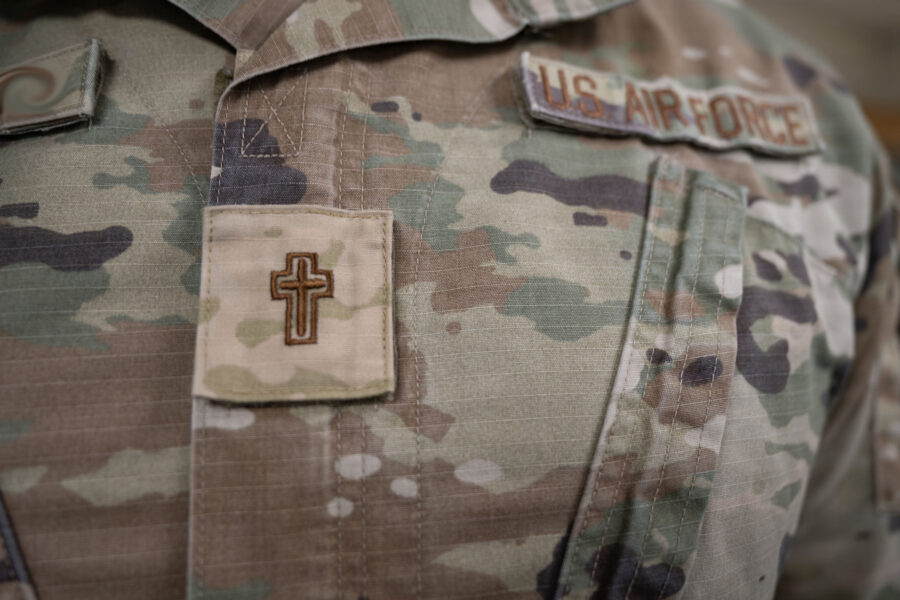
Hegseth announced the effort to consolidate the list of religious preferences in a March 24 video on social media, calling the older list of Faith and Belief Codes “impractical and unusable.” Hegseth also directed chaplains to replace their rank insignia with their appropriate religious affiliation insignia in an effort to make them more approachable to younger service members. The announcement came six months after Hegseth singled out paganism in September 2025 because some troops have petitioned for religious exemptions so they could grow beards.
“If you want a beard, you can join Special Forces,” Heseth told hundreds of general officers at Quantico, Va., last Sept. 30. “If not, then shave. We don’t have a military full of Nordic pagans, but unfortunately, we have had leaders who either refuse to call BS and enforce standards, or leaders who felt like they were not allowed to enforce standards.”
Pentagon spokesman Sean Parnell has argued the new consolidated RAC list is not intended to provide a list of “officially approved” religions. Rather it is “designed to allow chaplains to quickly look at the religious composition of their units and determine how they structure resources to best provide for warfighters of all faith groups,” Parnell wrote in a June 5 social media post.
The Pentagon did not provide the older list of Faith and Belief codes for comparison, but Airmen and Guardians can compare the 2026 codes list to an older list taken from a March 2017 memo from the Armed Forces Chaplains Board:
| Code ▲ | Description ⇅ |
|---|
| Code ▲ | Description ⇅ |
|---|