



The Air Force Office of Special Investigations is looking for a few good Airmen to swap jobs and become special agents.
No, they won’t get the 007 James Bond code—but they could learn to conduct counterintelligence and investigate procurement fraud and major crimes, OSI spokesperson Trevor Saylor told Air & Space Forces Magazine.
The office is looking to recruit agents from backgrounds other than law enforcement—it’s seeking Airmen with less than 11 years in service, with some exceptions, and is calling for applicants from other job fields in part because other areas of expertise can prove valuable in the unique types of investigations OSI conducts.
“A maintainer may understand an issue involving an aircraft or weapons system, while a contracting or acquisitions professional may recognize a process or irregularity relevant to a fraud investigation,” Special Agent Jennifer Holland, an OSI recruiter, said in a recent release. “Intelligence professionals may bring experience analyzing adversaries, identifying patterns and working with sensitive information.”
As threats to the Department of the Air Force cross traditional boundaries between criminal investigations, counterintelligence, cyber activity, and technology protection, that range of experience has become more relevant, Holland said.
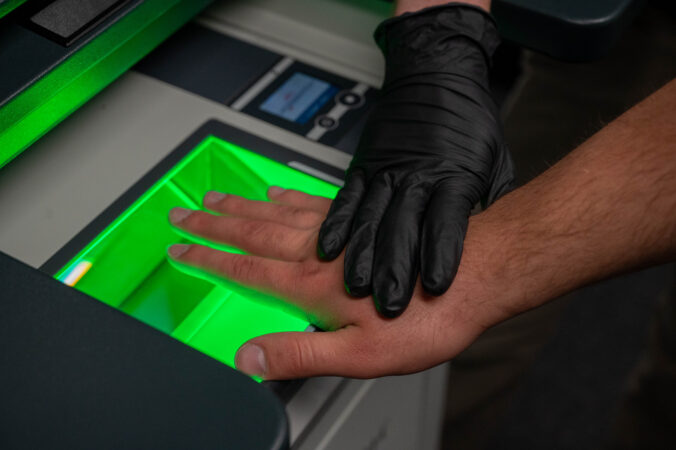
Current threats and demands placed on OSI have “placed a renewed focus on defending the homeland, strengthening deterrence, protecting critical capabilities and preserving military advantages to generate combat power,” according to the release.
Skills such as foreign language proficiency, cybersecurity expertise and advanced computing skills are helpful, but not required or all that is needed.
“We’re looking for Airmen capable of exercising independent judgment, communicating with people from different backgrounds, managing competing priorities and documenting investigative activity with precision,” Holland said.
The requirements include:
- Technical sergeants who exceed the 11-year limit may be considered on a case-by-case basis and should pursue a time-in-service waiver through their local AFOSI detachment before applying.
- First-term Airmen must also meet applicable retraining window requirements.
- First-term Airmen assigned within the continental United States who are serving four-year enlistments may generally apply from the first duty day of the month in which they complete 35 months of their current enlistment through the last duty day of their 43rd month.
- For Airmen serving six-year enlistments, the corresponding window is from the 59th through the 67th month.
- First-term Airmen assigned outside the continental United States generally must apply between 12 and 15 months before their date eligible to return from overseas. They must also enter their 35th month of service, or 59th month for six-year enlistees, on or before that date.
- Applicants on a current Control Roster or with a current Unfavorable Information File are not eligible.
- Applicants must be worldwide qualified and have a current passing fitness assessment without exemptions or a profile.
- OSI does not require enlisted applicants to have a college degree.
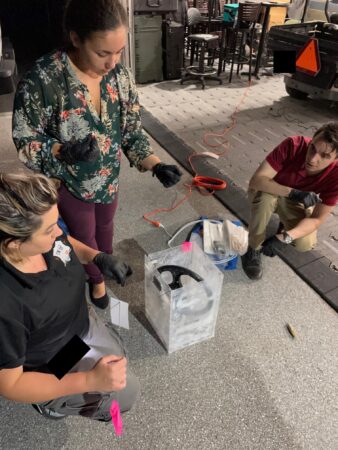
Diverse Experience
Traditionally, law enforcement, cyber defense, healthcare, and logistics Airmen have had success translating their skills into the special agent role, Saylor wrote.
The recruitment effort isn’t from any shortage or operational gaps, Saylor said. Instead, it is part of an ongoing effort to maintain a “highly credible, robust force” of agents.
“We remain fully postured and staffed to meet all operational requirements,” Saylor wrote in an email.
OSI isn’t targeting a specific job field, and the application process is open to all Airmen who meet the criteria.
The office evaluates using the “Whole Airman” concept, Saylor wrote.
The concept focuses on evaluating Airmen as well-rounded individuals across their military and personal lives, using tools such as Enlisted Performance Reports and special duty selections, with an emphasis on leadership, job performance, self-improvement, base/community involvement, and well-being aspects tied to Airman fitness.
If an Airman submits their application package correctly and follows the USAF Personnel Center windows to secure a release from their current job, their AFSC Career Field Manager will be the final authority to approve or deny their request to move to special agent selection and training.
Application Steps:
- Apply online, complete documentation, and secure your commander’s recommendation.
- AFOSI requests your career-field release, though approval is not guaranteed.
- Approved applicants undergo suitability screening at their local unit.
- Candidates complete interviews and background investigations before final selection.
- The application process takes about three to six months.

If selected, the Airman then gets a short-term Assignment Limitation Code while they go through vetting and onboarding for special agent training, Saylor wrote.
Newly retrained Airmen-turned-agents will train at the Federal Law Enforcement Training Center in Glynco, Ga., to learn the fundamentals of federal criminal investigations before completing OSI-specific training.
They’ll then be put into specialties such as counterintelligence, procurement fraud, and major criminal investigative roles once they join their units, Saylor wrote.
Then there’s cyber.
“For roles in AFOSI’s cyber defense positions, AFOSI vectors Agents who show promise in the field into the specialized cyber fields upon the completion of probation,” Saylor wrote.
Most agents will begin their 15-month probationary period working felony-level criminal investigations and counterintelligence operations.
While some may specialize in certain areas, all special agents are expected to work interchangeably in a variety of missions and types of investigations.
Special Agents often travel more than many in the Air Force as part of their job and sometimes work high-stress cases that involve violent crime, fraud, and national security threats.
To mitigate burnout, Saylor wrote that OSI proactively supports personnel through a structured career progression plan and uses embedded wellness resources.
“Upon completing an initial probationary period of approximately 15 months focused on general criminal and counterintelligence work, agents have the opportunity to transition into specialized investigative sections,” Saylor wrote. “This structural pathway provides variety in their assignments and a deliberate break from the initial high-tempo investigative grind.”
OSI also has its own embedded chaplain corps and psychologists to provide ready access to mental health support, he wrote.