


The Air Force and Space Force want approval from Congress to shift more than $900 million in fiscal 2026 funds to cover higher-than-expected personnel costs.
That move, laid out in a larger $4.3 billion Pentagon-wide reprogramming request submitted to Congress in late June, would draw funds from various Department of the Air Force accounts, most notably pulling close to $774 million from aircraft procurement programs like the F-35 and KC-46.
Those programs would essentially be billpayers for a variety of personnel costs “driven by higher-than-expected average strength” above the fiscal ‘26 budget, according to the document. For example, $711 million would cover Air Force enlisted pay equivalent to 7,200 work years. Another $50 million would cover Space Force officer pay equivalent to 260 work years.
The Pentagon asks lawmakers for permission to reprogram money several times each year and typically submits a larger “omnibus” request annually to account for unexpected costs and shifting priorities. And the DAF isn’t alone in its proposal to transfer funds to cover increased personnel costs, as the Army and Navy are making similar asks.
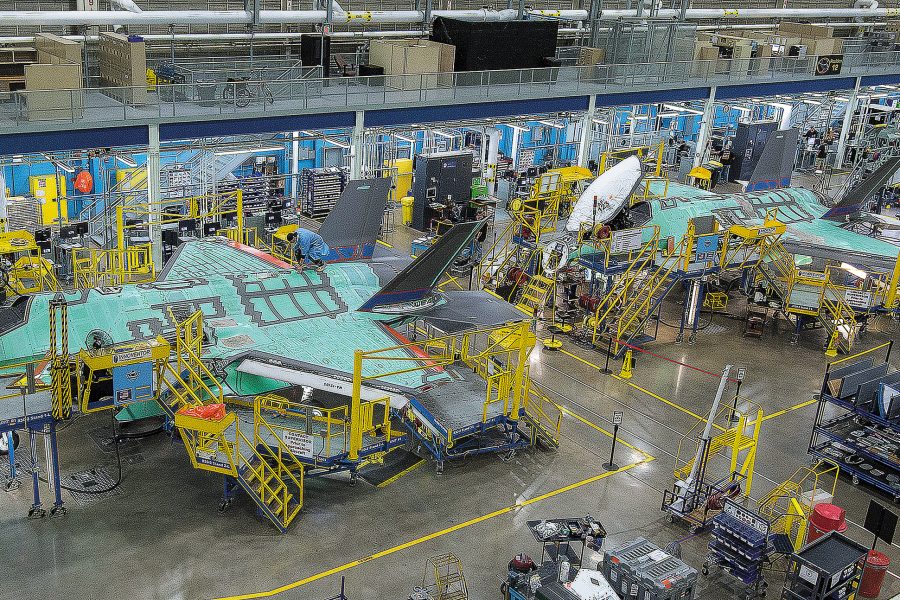
For the Air Force’s portion of the reprogramming request, about $191 million would come from F-35 procurement, specifically from nonrecurring engineering costs. According to the document, those funds are available due a delay that pushed the contract award from June of this year to December. Another $69 million would come from various KC-46 procurement efforts, including commodities activation and maintenance training systems. The document notes that the service opted to defer the efforts “to fund higher Air Force priorities” and says the move is reflected in the fiscal ‘27 budget.
About $118 million was deemed “early to need” from the T-6 Avionics Replacement Program, and the Air Force proposes shifting about $39 million from the F-35 Eagle Passive Active Warning Survivability System, saying it will push depot activation for test equipment and other items to next year.
The biggest proposed move for the Space Force would transfer $42 million from the National Security Space Launch program. The document notes most of that funding is available due to a decision to swap launch providers for some Space Force missions following an anomaly involving a United Launch Alliance Vulcan rocket. The service has opted to move some number of payloads originally slated to fly on Vulcan to SpaceX’s Falcon 9 rocket, saving about $40 million by doing so. It’s not clear how many missions were impacted, but one confirmed swap was a GPS III payload that launched on a Falcon 9 in April.
The Pentagon’s reprogramming request doesn’t appear to factor in funding to cover operations and maintenance costs incurred during Operation Epic Fury in Iran, which indicates the Defense Department is still counting on a $67 billion supplemental funding proposal it sent to Congress last month to cover those costs, according to Elaine McCusker, a senior fellow at the American Enterprise Institute. In a post this week, McCusker said a second omnibus request may follow if Congress doesn’t approve the supplemental request.
“The mix of sources the military departments are using to cover the military personnel shortfalls makes it clear that covering additional O&M gaps will require even tougher choices and sources from defense-wide priorities,” McCusker said. “Help from Congress on a supplemental is required—the sooner the better.”