


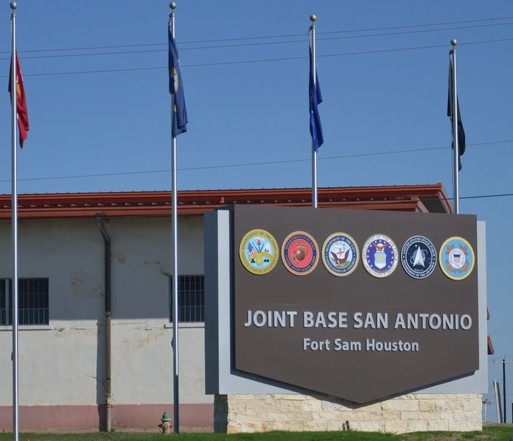
The Air Force is negotiating a potential $1.4 billion deal to replace five dormitories—reportedly suffering from mold, failing air conditioning systems, and foundational defects—that housed thousands of U.S. military medical trainees at Joint Base San Antonio-Fort Sam Houston, Texas.
The service selected the Layton/Gensler contractor and design team to construct five 400,000-square-foot dormitories at the Medical Education and Training Campus, or METC, on the sprawling joint installation, which is under Air Force command, according to an Aug. 18 Department of the Air Force press release.
The announcement comes after 5,200 enlisted medical students had to be relocated in late June because of “infrastructure degradation” that is beyond repair, multiple media outlets, including local TV station KSAT, reported.
Rep. Joaquin Castro (D-Texas) said in a July press release that the Pentagon expects the project to “cost over $1.4 billion in fiscal years 2027 and 2028.”
“Replacing these barracks, which hold 6,000 medical trainees for the Army, Navy, and Air Force, will cost well over a billion dollars,” Castro stated. “It’s critical that the Pentagon not repeat the construction mistakes of the past and provide quality housing that meets the needs of our service members.”
The Air Force and Layton/Gensler signed an Other Transaction Authority Agreement “with Progressive Design Build,” an alternative delivery method that uses a qualifications-based selection that onboards the contractor early in the project life cycle, according to the Air Force release.
Essentially, the agreement allows the effort to move forward even though the final cost for the project is still in the negotiation phase, an Air Force spokesperson said. The agreement will use “proven industrial offsite manufacturing technology” that is anticipated to result in a “20 percent reduction in overall project costs,” the Air Force press release states.
“Our top priority is ensuring our war fighters have modern, resilient and high-quality living spaces they deserve to maintain mission readiness,” Brig. Gen. David J. Wilson, commander of the 502nd Air Base Wing and Joint Base San Antonio-Fort Sam Houston, said in the release. “This step in the METC project represents a vital investment in that priority.”
Last fall, the Air Force directed its leaders across the service to inspect every Airman’s dorm room as part of the Pentagon’s new effort to improve barracks conditions for all service members.
But problems such as faulty air conditioning at METC are common knowledge to students that have trained at the school in the past, according to an enlisted Airmen who trained at METC in 2024
“I remember some of the guys in our hallway would have to leave their door open throughout the entire day … just to kind of like let it air out, and even then, it was still super warm in there,” the Airman, who asked to remain anonymous, told Air & Space Forces Magazine.
The Airman added Army and Navy personnel attending the school complained about conditions more than Air Force members seemed to. “I think the biggest complaint was black mold, on the ceiling tiles,” the Airman said.
The Air Force did not offer details of existing dorm conditions in its press release.
But Castro said the Pentagon’s Barrack Task force identified the five barracks on the installation as a priority to demolish and replace “due to severe mold, humidity, and construction issues,” according to the release from his office.
Dale Marks, assistant secretary of defense for energy, installations and environment, called the effort a “massive achievement” for the Barracks Task Force.
“Our people deserve quality living quarters that are clean, safe and comfortable, delivered at speed, so they can focus on their work,” Marks said in the release.
Marks added that the deal marks a fundamental change in the Pentagon “procures and delivers infrastructure to meet mission timelines.”
It’s unclear how long this project, which involves demolishing existing dorms and building new living quarters, has been planned, but the new agreement is slated to “accelerate the previously planned construction timeline by approximately 70 percent, targeting completion within 24 months,” the release states.
Preliminary design activities, demolition, and construction are expected to start this calendar year, according to the release.