


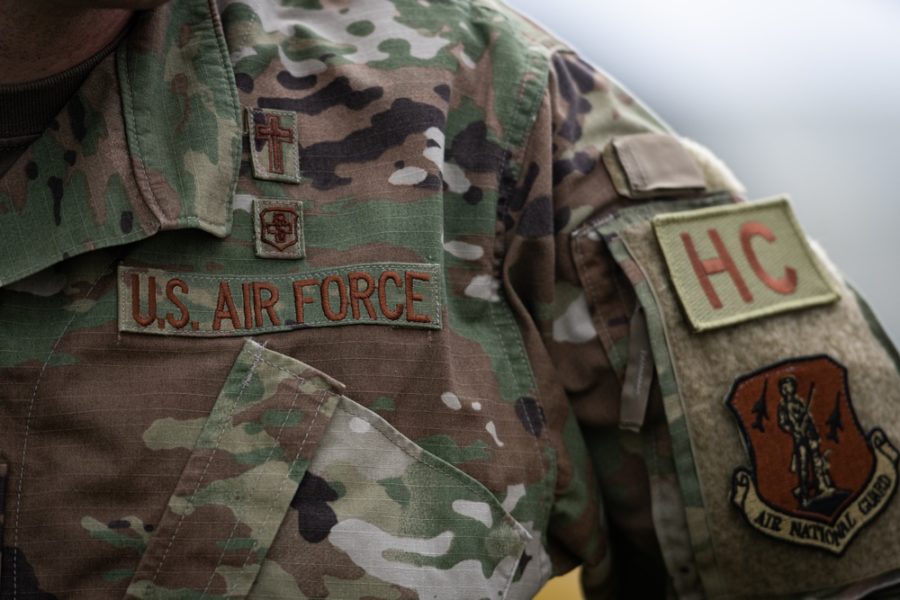
The Department of the Air Force issues a new policy on requests for religious accommodation, raising the bar for such requests as it implements guidance from Defense Secretary Pete Hegseth. The new policy emphasizes the role of commanders while limiting that of chaplains. It also eliminates special boards designed to advise leaders.
The May 14 memo updates DAFI 52-201, Religious Freedom in the Department of the Air Force, and covers members of both the Air Force and the Space Force. The policy governs all categories of religious accommodations, including requests to grow beards, wear religious head coverings, or seek exemptions from immunizations.
Hegseth’s March 11 memo laid out the Secretary’s objective to have military members submit new requests for accommodation that include a “sworn written statement affirming that the requester’s belief is sincerely held and religious in nature.”
The new policy disbands Air Force Religious Resolution Teams, which had included members of the Chaplain Corps, medical providers, judge advocates, and others to advise commanders when such requests came up. The resolution teams reviewed religious accommodation requests and made recommendations to unit commanders, according to the June 23, 2021 policy, which the new rules replace.
Now, commanders “will directly obtain chaplain, legal, and subject-matter input to build their assessments without convening a formalized board,” the announcement states.
The update also states that “chaplains will no longer assess the sincerity of a member’s belief.” Now they will advise the chain of command “exclusively on the religious nature of the belief,” according to the announcement.
In the past, chaplains could conduct an “in-person or telephonic interview of the applicant to assess whether the requested accommodation is in keeping with the applicant’s sincerely held religious beliefs,” according to the old policy. But under the new rules, commanders must submit “comprehensive written assessments detailing both the sincerity of the request” while also detailing any operational impact of granting the request. The guidelines require “specific evaluations of Airmen and Guardians’ current and anticipated work environments, upcoming deployments, and the expected use of personal protective equipment,” such as helmets, protective masks, and respirators.
Under the new guidance, commanders and other decision authorities must also consider the following information for each religious accommodation request:
- Context, such as circumstances existing at the time of the request, contradictory or inconsistent statements and conduct, and any evidence suggesting that the request may be based not on religion but on personal preference or convenience;
- Input from the first-line supervisor on the character of the individual and adherence to service values;
- Input from other sources at the unit commander or decision authority’s discretion.
Religious accommodation requests to wear beards now falls under the Air Force deputy chief of staff for manpower, personnel, and services and Space Force deputy chief of space operations for personnel. In most cases, the applicant’s direct reporting unit, commanded by a colonel or above, is the decision authority for religious waivers such as immunization exemptions and wear of hijabs, Kufis, and other special head coverings. A full list of approval authorities for specific religious accommodation requests is outlined in the May 14 memo.
“This updated guidance ensures a critical balance between accommodating the sincerely held religious beliefs of our Airmen and Guardians and maintaining the rigorous safety and readiness standards required for operational superiority,” Richard Anderson, assistant secretary of the Air Force for manpower and reserve affairs, said in the announcement. “By streamlining this process and empowering unit commanders to conduct these assessments, we are ensuring equitable application of standards across the force without compromising our warfighting capabilities.”
The military-wide crackdown on religious accommodations—mainly focused on beard requests—began when Hegseth told a group of high-ranking generals senior non-commissioned officers last September, that the “era of rampant and ridiculous shaving profiles is done.”
Sikhs, Muslims, and other religious groups have been permitted to wear beards in uniform under religious accommodations since 2010. But Hegseth argued that those accommodations have spiraled out of control.
Alex Wagner, who served as assistant secretary of the Air Force for manpower and reserve affairs in the Biden administration, said in March that the Pentagon’s new requirements “seem purpose-built to make the process more burdensome” for service members seeking legitimate religious accommodations.
But former Chief Master Sergeant of the Space Force Roger A. Towberman said at the time that Hegseth’s crackdown is likely the result of individuals finding ways to “game the system” to acquire religious exemptions such as “publishing how-to guides” to get around requirements of a policy.