
MACDILL AIR FORCE BASE, Fla.—The U.S. is moving to surge firepower over Iran, including its capital of Tehran, defense officials leading the campaign said March 5 at U.S. Central Command headquarters here.
Bomber strikes are being stepped up and additional fighter squadrons are being deployed.
“We’re not just hitting what they have,” Adm. Brad Cooper, CENTCOM’s commander, said. “We’re destroying their ability to rebuild. And so as we transition to the next phase of this operation, we will dismantle Iran’s missile production capability for the future.”
In the 72 hours prior to the 5 p.m. Eastern Time briefing, Cooper said, U.S. bombers struck 200 targets. Some of those strikes were carried out just before his remarks by B-2 Spirit stealth bombers, which struck deeply buried ballistic missile launchers with dozens of 2,000-pound bunker-busting bombs—apparently GBU-31 JDAMs. B-1B Lancer and B-52H Stratofortress bombers have also carried out strikes inside Iran, including near Tehran.
A decision by the U.K. to allow the U.S. to use its bases at Diego Garcia in the Indian Ocean and RAF Fairford, U.K., will facilitate the increased strikes. Access to those bases halves the mission times compared to the round-trip flights bombers had been making from the U.S.
The U.S. has also struck an Iranian drone-carrying ship, which Cooper said was roughly the size of a World War II aircraft carrier.
Cooper said that there has been a 90 percent decrease in Iranian launches of ballistic missiles since the opening day of the conflict.
Iran responded with new threats.
“Iran has warned, through relevant intermediaries, the countries hosting the ground stations and companies providing uplink services transmitting anti-Iranian terrorist networks,” Tasnim, an Iranian semi-official news agency, quoted a source as saying. The Tasnim piece said that Iran “appropriate action will be taken,” an apparent escalation in space-related targeting.
CENTCOM has struck Iran’s equivalent of U.S. Space Command, Cooper said, which “degrades their ability to threaten Americans.”
Iran’s retaliation has backfired to a large extent. Gulf countries, which had sought to stay on the sidelines, have been struck by Iranian missiles and drones.
“Those 12 countries are none too happy, and I look forward to working with all the partners who are willing to join us in this,” Cooper said.
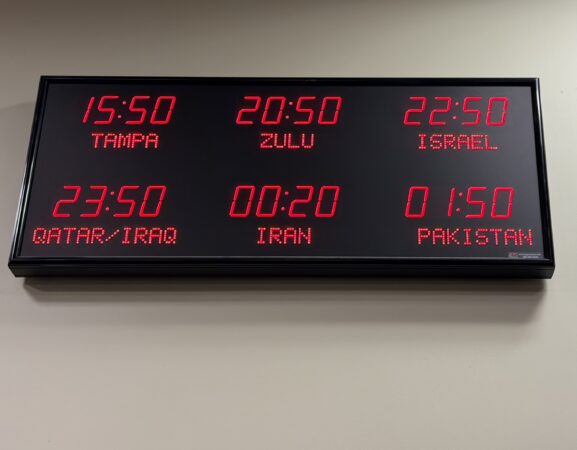
Defense Secretary Pete Hegseth declined to name some Gulf nations that have allowed increased basing and overflight of U.S. aircraft, but said the countries were now working more closely with the Pentagon.
“If anything, what Iran is doing by targeting allied countries that would otherwise want to stay out of this, they’ve actually pulled them into the American orbit,” Hegseth said. “Now you’ve got UAE and Qatar and Bahrain and Saudi [Arabia] and Kuwait and others saying, ‘Hey, we’re with you. We’ll shoot with you. We’ll fly with you. We’ll defend with you. We’ll allow you more basing’—a lot of which we can’t talk about and won’t talk about—but it’s actually firming up the unity of the resistance in order to focus exactly where we need to.”
Many countries in the region use American-made Patriots and THAADs, and they have also stepped up fighter patrols.
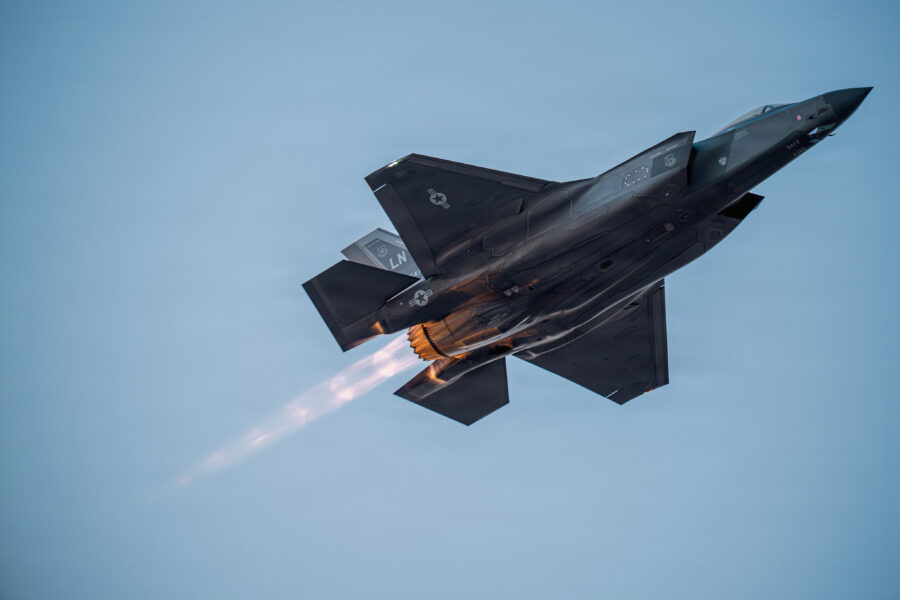
The U.K. has expanded its defensive presence in the region. That resulted in the Royal Air Force’s first operational air-to-air kill, when an F-35B aircraft shot down a drone over Jordan. Qatar shot down two Iranian Su-24 bombers and an Israeli F-35 downed a Yak-130, the first known air-to-air downing of a crewed aircraft by an F-35.
Cooper said it was “the most integrated air defense network in Middle East history.”