


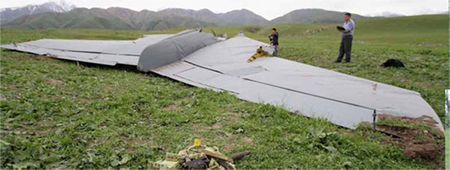
 A flight control malfunction exacerbated by the flight crew’s response overstressed a KC-135 last year, ripping its tail off and causing it to explode in flight over Kyrgyzstan, investigators determined. The Accident Investigation Board determined that the tanker’s flight control augmentation system malfunctioned, causing lateral oscillations shortly after takeoff from the Transit Center at Manas on May 3, 2013. Recordings revealed the aircrew noted the problem, but did not disengage the yaw-damper or boosted rudder control, leading to a combined lateral and horizontal oscillation, known as “Dutch roll,” according to the report’s executive statement, released March 13. The pilot responded with rudder input, which intensified the oscillations, causing the tanker to break into three sections, and killied the three crew members aboard. The AIB stated that insufficient crew training, inexperience, and “cumbersome procedural guidance” contributed to the mishap. Loss of the aircraft is estimated at a $66.3 million. (Air Mobility Command release) (AIB report; caution, large-sized file.)
Looking to make a quick start on Defense Secretary Pete Hegseth’s sweeping “FORTRESS America” program to make every military base in the U.S. more self sufficient, the Pentagon is dialing up its efforts in an area the Air Force has been working for several years: energy resilience and independence.