
The Pe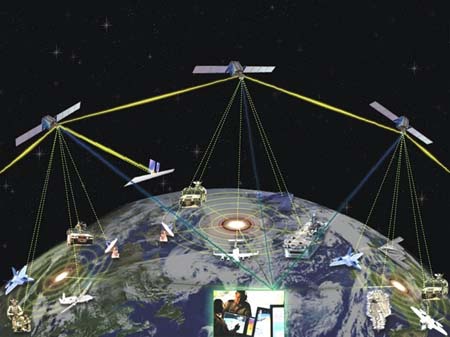 ntagon’s push to send more and more unmanned aerial vehicles to satisfy ever-growing battlefield demands for intelligence-surveillance-reconnaissance capability is exacerbating the problem, according to a newly released joint Defense Science Board-Intelligence Science Board report. As directed, USAF has been rapidly increasing its UAV capability, however, the report says that, instead of just throwing more UAVs into the mix, the Pentagon must expand its satellite communications resources (i.e. deploy the transformational communications satellite (TSAT) “as soon as possible”) and invest in more ground terminals. According to the report, “such large demand growth [for satellite communications capacity], especially in support of UAVs, cannot be sustained without deployment of additional communications satellite resources.” The report’s authors say DOD must ask the obvious question: “If it is adequately questioning the validity of the rapid increase in sensors given the inability of the communications system to support them?” TSAT has been moving through a risk reduction phase, given some early technology maturation issues, but Pentagon acquisition guru John Young has just told the Air Force to scale it back to get the first sat up by fall 2019. The DSB-ISB report does consider TSAT a key element, but the report also emphasizes that DOD and the Intelligence Community must “accelerate the transition” to a shared and easily accessed data storage and retrieval capability, and that DOD must speed its drive—begun around 2003—to implement meta-data tagging of sensor-collected data.
The Space Force is looking for industry feedback on its plans to create a new “Mission Development Zone” at Vandenberg Space Force Base, Calif., to support launch providers with space for additional payload processing capacity, test and assembly facilities, and potentially rocket and spacecraft manufacturing infrastructure.