
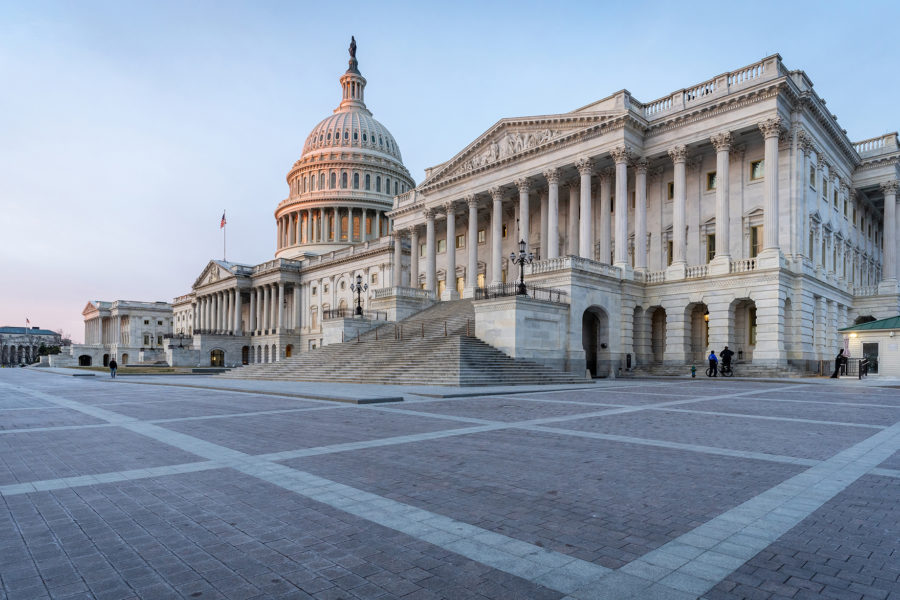
Congress officially passed the fiscal 2026 defense spending bill Feb. 3 after a House of Representatives vote, approving $839 billion in Pentagon funding and sending the package to President Donald Trump for his signature.
The appropriations package is $8 billion more than the Pentagon’s budget request.
The funding cleared the House in a 217-214 vote as part of a larger “minibus” that included full-year funding for five other agencies. Its passage is a key step toward ending a brief, partial shutdown and delivering the Pentagon its first full-year appropriations since fiscal 2024.
The House originally passed the spending package Jan. 23, ahead of a Jan. 30 deadline to avoid a funding lapse. However, controversy over Department of Homeland Security funding, which was included in the original bill, picked up in recent weeks, slowing the bill’s move through the Senate.
The final bill, which passed the Senate on Jan. 30, included a two-week continuing resolution for DHS. Because that change required a second vote in the House, which didn’t reconvene until early this week, several agencies were forced to operate through a four-day shutdown. That temporary pause was short compared to the record-long 43-day shutdown last fall, during which the Pentagon furloughed 334,000 civilian employees.
The defense funding deal puts billions toward key Air Force modernization efforts like the F-35, F-47, B-21, and the Sentinel intercontinental ballistic missile. It includes $440 million for spare part for the F-35 and its F135 engine, $474 million for the service to buy two more Compass Call aircraft, and $976 million for six C-130Js for the Air National Guard.
For the Space Force, the bill funds 11 National Security Space Launch missions, and provides $4 billion for continued development of missile warning and tracking satellites and sensors. The final deal also includes $13.4 billion to “augment and integrate” space and missile defense systems as part of Golden Dome. The Pentagon didn’t include funding for the effort in its base budget request, planning instead to rely on $25 billion in reconciliation funding Congress passed last year.