
Congress is looking to add $900 million to save the E-7 airborne early warning and control aircraft from cancelation and $500 million to address “emerging needs” for the F-47 Next-Generation Air Dominance fighter in the fiscal 2026 appropriations bill released Jan. 20.
The bill also funds the Air Force to buy a dozen or so more airplanes this year, including six C-130Js, two Compass Call electronic warfare aircraft, and one more F-15EX fighter, along with some $401 million to address “economic” factors impacting the F-35 program.
The appropriation is envisioned as part of a “minibus” comprised of several spending bills that Congress must pass by Jan. 30, when the current continuing resolution expires. It includes a total $17 billion over and above the Pentagon’s topline request of $832 billion for defense, according to analyst Byron Callan of Capital Alpha Partners, not counting $156 billion approved last year by Congress as part of the Big Beautiful Bill Act reconciliation package.
If passed and signed into law, Air Force procurement would increase by $3 billion to $57.3 billion, from its request of $54.2 billion. But funding for operations and maintenance would decline by $1.4 billion and investment in research, development, test, and evaluation would decline by $887 million. Personnel spending would also decline, by $373 million, for a net increase of $401 million.
Wedgetail and Fighters
Lawmakers successfully protected the E-7 Wedgetail program, which the Trump administration had sought to cancel in the 2026 budget. Furious pushback from former Air Force leaders and the Air & Space Forces Association appear to have swayed lawmakers, who included $900 million for E-7, bringing total 2026 investment to $1.1 billion, to “continue E-7 rapid prototyping activities and transition to engineering and manufacturing development aircraft,” according to the joint congressional statement.
Lawmakers did not increase the number of Air Force F-35As to be purchased, as they have in years past, instead funding the Air Force request for 24 F-35As and 23 F-35B and C-models for the Navy and Marine Corps. The “economic factor” appears to address projected “price increases in the Lot 18 production contract” tied to supply chain issues. The F-35 Joint Program Office and contractor Lockheed Martin finalized Lot 18 and 19, covering 296 airplanes between them at a total cost of $24.29 billion. Negotiations on Lot 20 are ongoing.
The Air Force’s request for 24 F-35As in ’26 was its smallest ask in years—half as many as requested in 2025. The thinking when the ask was made was to limit procurement until the forthcoming Block 4 upgrade is ready, and Congress went along with that plan. Separately, however, lawmakers added $140 million for spare parts for the jets’ F135 engines and $80 million more for airframe parts in an effort to increase readiness. Congress also includded $531 million in advance procurement to support future buys in its spending bill.
Lawmakers added $115 million to pay an additional F-15EX Eagle II, increasing the 2026 buy to 22 jets.
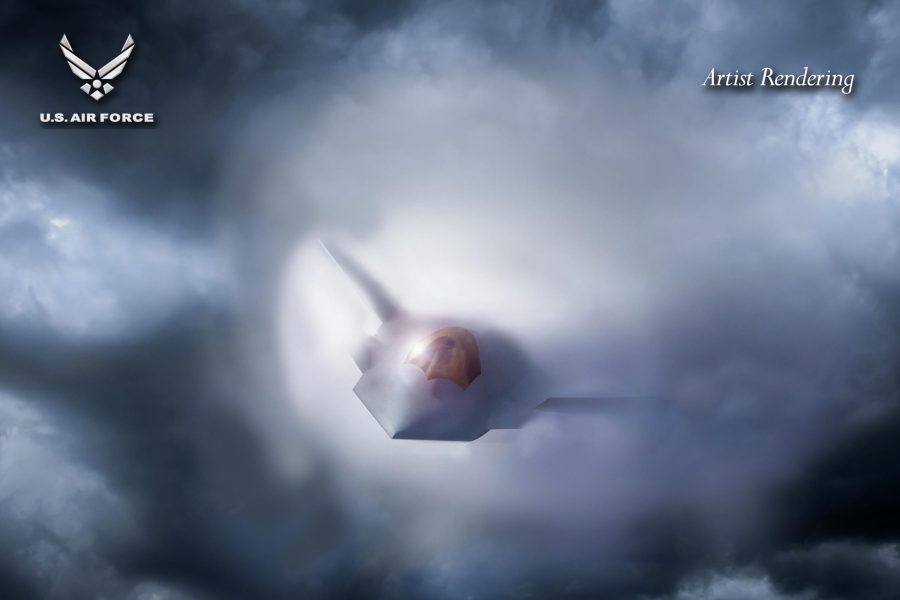
Still, the biggest spending increases in the fighter jet category were reserved for the sixth-generation F-47. Lawmakers raised spending by $500 million, from $2.57 billion to $3.08 billion, as part of a package of plus-ups it said were “to address Department-identified needs after passage of [reconciliation] and emergent requirements.”
They also added $897 million in funding for the Navy’s next-gen fighter, the F/A-XX. In a joint statement accompanying the bill, appropriators directed the Navy to use the funds “to continue F/A-XX development” and award an engineering, manufacturing, and development contract “to achieve an accelerated Initial Operational Capability.”
More New Aircraft
Congressmembers put up $976 million to acquire six new C-130J transports for the Air National Guard and $194 million to buy a new LC-130J “Skibird,” a C-130 adapted for landings in the Arctic and Antarctic to replace old H models.
Also added: $494 million for two EA-37 Compass Call electronic warfare aircraft, which would bring the total fleet size to 12, matching the original program requirement, and $250 million to buy a new C-40 executive transport jet. Finally, the measure adds $100 million for an unspecified number of additional HH-60W helicopters. Air Force budget documents suggests that would cover two aircraft at $40 million per airframe, plus other costs.
Congress is under pressure to pass the bill fast. The Jan. 30 deadline looms now, and lawmakers seem deterred from risking another partial government shutdown in the wake of last fall’s shutdown, which led to the current CR.
The Senate is not in session this week, and the House is out the next week, meaning legislators must work quickly and minimize changes to ensure the bill passes. The so-called “minibus” includes funding for the remainder of 2026 for the departments of Defense; Homeland Security; Labor; Health and Human Services; Transportation; and Housing and Urban Development.