
In 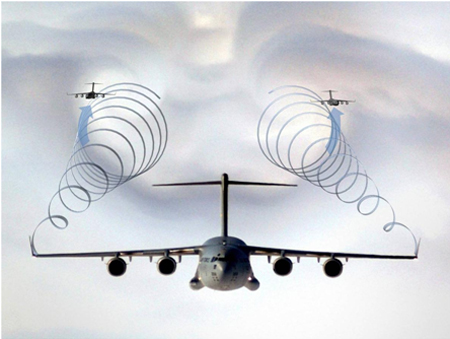 a recent series of trials at Edwards AFB, Calif., two C-17s probed the fuel-savings potential of long-distance formation flying using automated control software to maintain position. This Air Force Research Lab-sponsored project is known as Surfing Aircraft Vortices for Energy, or $AVE, states an Oct. 11 AFRL release. It “involves two or more aircraft flying together for a reduced drag effect like what you see with a flock of geese,” explained Donald Erbschloe, Air Mobility Command’s chief scientist, in an Oct. 10 command release. The software allow pilots to “surf” the vortex of a lead airplane for long distances, thereby conserving energy, according to AFRL. “The autopilot held the position extremely well, even close to the vortex,” noted test pilot Capt. Zachary Schaffer. The tests ran from Sept. 6 to Oct. 2. Analysis of initial data indicates that the trailing C-17 cut fuel burn by almost 10 percent while flying no closer than 4,000 feet from the lead aircraft, according to Edwards officials. This type of formation flying holds the promise of reducing fuel consumption by “millions of gallons” annually, according to AFRL.
A new think tank report calls for a buildup of U.S. drones and munitions needed for a potential fight against the Chinese military over Taiwan, thought other experts argue the report is missing some nuance in the munitions equation.
