
Space Force Accelerates On-Orbit Refueling
By Courtney Albon
As the Space Force makes plans for two on-orbit refueling and maneuver demonstrations in 2027—and closely watches similar government and commercial endeavors—the service official overseeing the effort says he want to take these capabilities from demo to operations in short order.
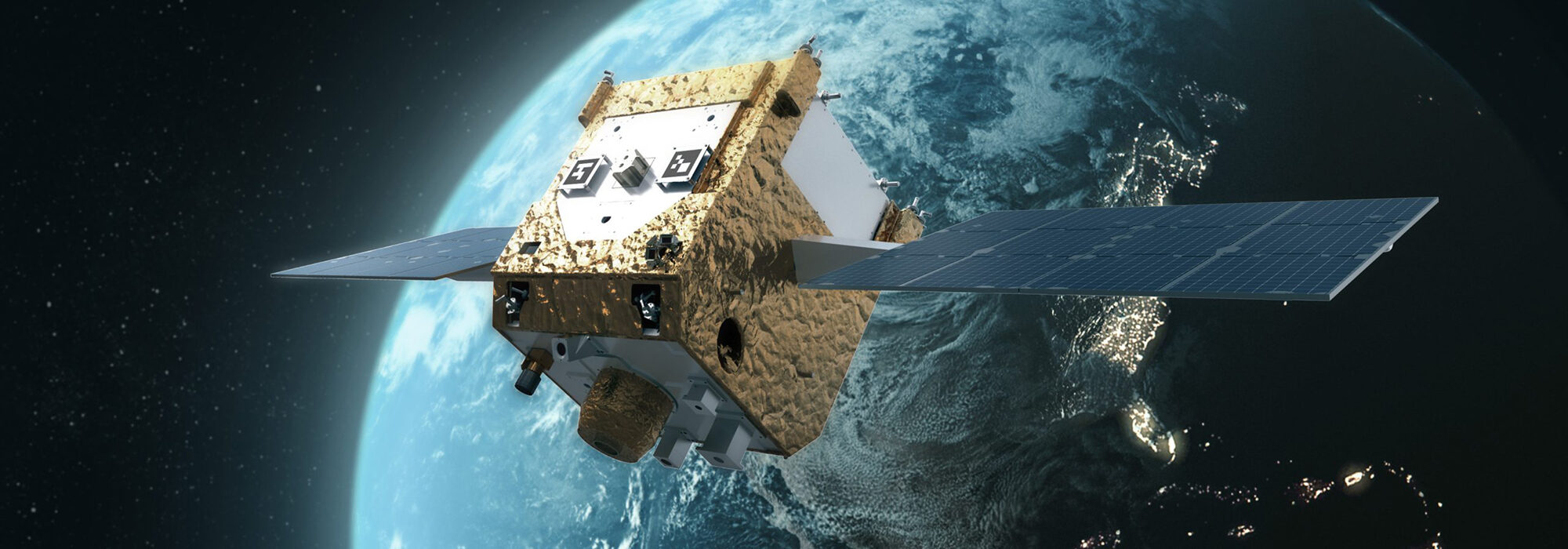
Both of the upcoming demonstrations will fly on the Space Force’s USSF-23 mission, which is targeted for launch early next year. For the refueling effort, the service is working with the Defense Innovation Unit (DIU) and the Air Force Research Laboratory (AFRL) to demonstrate the ability for a commercial servicing vehicle—in this case Astroscale’s Provisioner spacecraft—to mate with and refuel a spacecraft, then refuel itself at a pre-positioned fuel depot, and then return to the original spacecraft to refuel it a second time. AFRL developed the Tetra 5 satellite that will be used for the mission, and DIU is leading the tanker effort with contractor Orbit Fab providing the depot. The second effort is focused on maneuver, and specifically the ability to tug a spacecraft to different locations within the same orbit. Starfish Space’s Otter vehicle will serve as the tug for this mission and will mate with a nonoperational Space Force satellite.
The demonstrations are meant to inform the Space Force’s road map for on-orbit servicing and refueling, helping it close the loop on questions around the feasibility and affordability of these capabilities and the operational impact of satellite life extension. They will also help the service craft a longer term plan for how to build an in-space logistics architecture.
But the missions have near-term implications, too, according to the director of Space Systems Command’s servicing, mobility, and logistics office, Col. Scott Carstetter. He told reporters May 20 he hopes to be able to leverage the experimental satellites for operations once they’ve completed their initial demonstration activities.
“The first vehicle that we’ll mate with is a nonoperational vehicle that we’re going to move to a disposable orbit,” Carstetter said. “And once we demonstrate that capability, then we can mate with operational satellites to conduct things like life extension and those sorts of things.”
Later this summer, the Defense Advanced Research Projects Agency and Northrop Grumman subsidiary SpaceLogistics will launch a different robotic servicing spacecraft called the Mission Robotic Vehicle (MRV) to geosynchronous orbit.
It will take MRV about a year to reach orbit via its electric propulsion system. Once it arrives, the vehicle will use robotic arms built by DARPA and the Naval Research Laboratory to install jetpack-like Mission Extension Pods built by SpaceLogistics on the satellites now low on fuel.
The company invited reporters to see the MRV on May 19 at its Sterling, Va., facility before it ships to Cape Canaveral Space Force Station, Fla., in the coming months. After it performs the contracted pod installations, the MRV, which can operate on orbit for at least 10 years, will be available to service other satellites in a variety of ways—repositioning a spacecraft, repairing it, or upgrading it with a new sensor.
Rob Hauge, president of SpaceLogistics, said the company has had conversations with several potential government and commercial customers about other operational missions it could perform once in orbit.
“We’re spending a lot of time right now educating the government as well as industry on the capabilities of the MRV, so that they can start planning and thinking about what that capability could do for them,” he said.
Carstetter said his office is closely watching the initial MRV operations as well as other upcoming demonstrations, whether government-led or commercially derived, and looking for opportunities to put those capabilities on contract.
“We’ll be looking to set up some level of contracting that we’ll be able to access those resources while they’re on orbit if the need arises from our operational community,” he said.
The Space Force didn’t request funding for the servicing, mobility, and logistics office in its fiscal 2027 budget request. For now, Carstetter said, they’re relying on prior-year funding to run the planned demonstrations and other efforts the office is managing. He said he expects that to change in the coming years as the service solidifies its plans to operationalize the capability.
The Space Force’s RG-XX program will be the first in the Space Force to have a requirement for satellites to be refuelable. The program is still refining its acquisition approach for refueling and is weighing whether to pursue a dedicated vehicle or a contracted service, Carstetter said.
USSF Lays Out New Officer Career Path
By Todd South
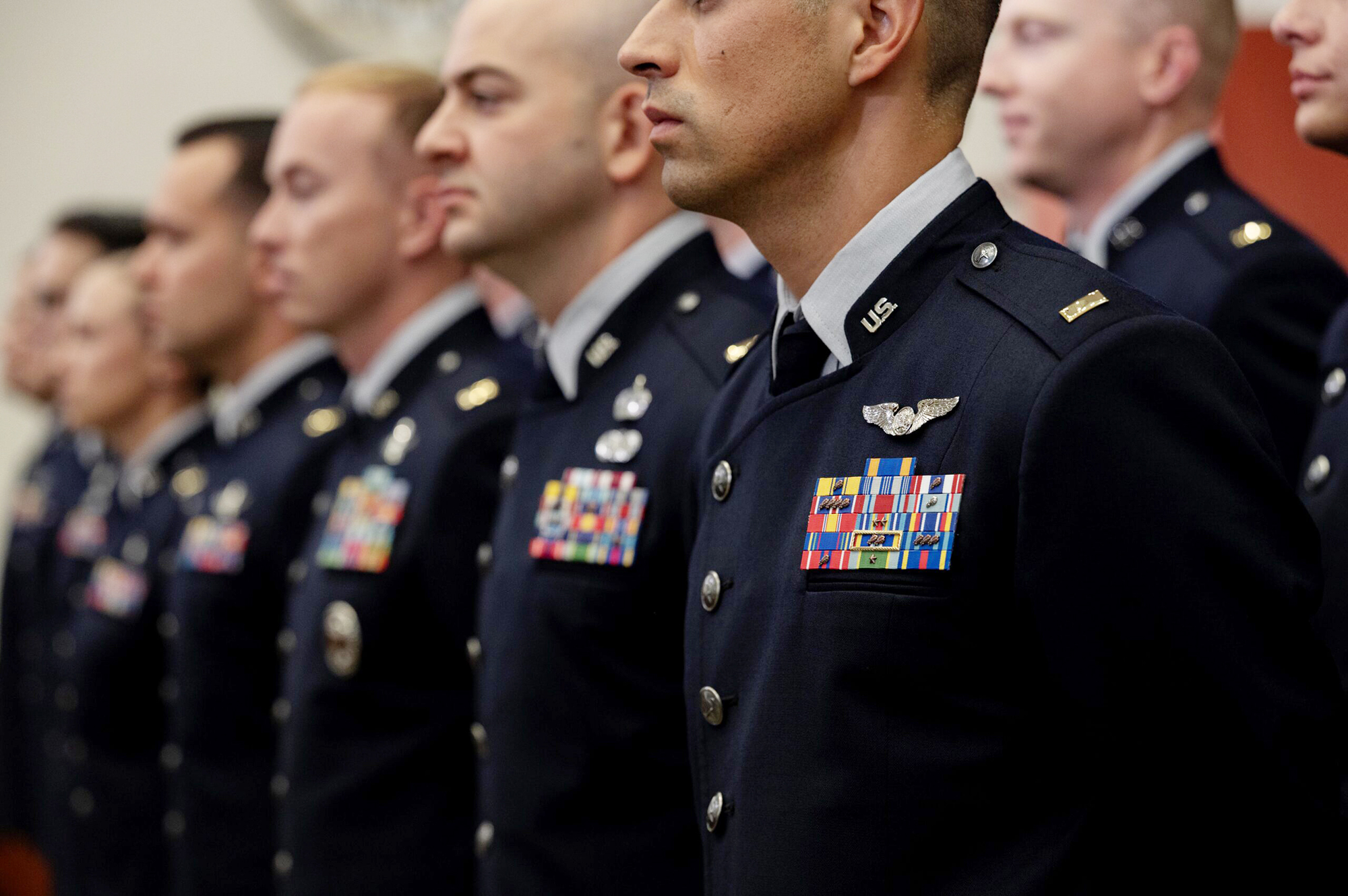
Guardian officers must master their job specialty but also have a strong all-around understanding of the service and the joint force, the Space Force detailed in a new officer career document.
The Officer Career Development Path, released May 8, lays out a 20-year “career delta” path showing how newly commissioned officers can chart their way to success regardless of their chosen specialty.
“First and foremost, Guardian officers are leaders and planners,” Chief of Space Operations Gen. B. Chance Saltzman said in a release accompanying the new development path. “Prevailing in the contested space domain requires officers to have experience across space disciplines, mission command, and joint planning.”
Guardians have flexibility in how they climb the ranks; the release stresses that instead of a “rigid sequence,” USSF officers will progress according to performance and experience.
The holistic approach to career development follows on the work the service has done with its new officer training course, which saw its first 84 graduates in August 2025. The service has now graduated a total of 300 officers from OTC, held at Peterson Space Force Base, Colo., a Space Force spokesman said.
Saltzman told Air & Space Forces Magazine at the time that the service took “ownership” of its officer training with a fresh approach, not based on other military branches, which can focus tightly on a job specialty.
“We designed the training course the way the Space Force needs it to be done to meet Space Force needs,” Saltzman said then. “We’re too small to really specialize and gain the benefits. … We don’t have the same scale; our officers have to do a lot more.”
The Space Force had 9,985 total Guardians in fiscal 2025. Nearly half, or 4,649, were officers.
The yearlong course starts with fundamentals training, including joint doctrine, Space Force doctrine, leadership, and planning skills. That’s followed by stints immersing Guardians in each of the service’s major career fields: cyber, intelligence, space operations, and acquisition.
The goal, Saltzman and other leaders say, is to develop “Guardians first, specialists second.”
The new officer career path doubles down on that push by calling career-broadening assignments, such as instructor, recruiting, or talent management, “essential” to develop the force.
“Officers will be expected to seek opportunities to broaden their understanding of the Space Force by applying for career broadening/special duty positions that align to the skills and experiences gained at that point in their career,” according to the document.
Retired Space Force Col. Charles Galbreath, now with the Mitchell Institute Spacepower Advantage Center of Excellence, said that including career broadening as part of the foundational development of the service’s officers is a “step toward normalizing the Space Force officer progression with those of the other services.”
Joint billets give officers a “better sense of how space integrates with other services into joint operations,” Galbreath said.
As the service continues to grow, more of those joint jobs will be available for Guardians, Galbreath said, noting that Lt. Gen. Steven P. Whitney now serves as the director of force structure, resources, and assessment on the Joint Staff in the Pentagon.
While not exhaustive, the career-broadening opportunities extend beyond joint billets, and the list is long:
- Officer Instructor & Recruiter Special Duty
- Education with Industry
- Space Test Course
- Weapons Instructor Course
- Regional Space Advisor
- Intermediate Level Education; Senior Level Education
- Acquisition Exchange Program
- Deployments
- Special Experience Exchange Program
- Joint Assignments
- Junior Officer Cryptologic Career Program
- Junior Officer Geospatial Program
- Legislative Liaison
- Advanced Studies Groups
- Computer Network Operations Developmental Program
- Expeditionary Warfare School
- Space Intelligence Intern Program
- Advanced Academic Degree
Leader Development
For Guardians who choose to pursue a career in force modernization, which includes acquisition and developmental engineering, the framework gives insight into how they can time their careers and assignments to be competitive for promotions.
The Space Force plans to hold an annual board to select Guardians for the force modernization track, which Guardians can learn about from their senior leadership and mentors, according to the document.
Another unique feature of the Space Force, Galbreath noted, is that roughly half of its officer billets are associated with acquisition due to the highly technical nature of the service’s mission.
Specific guidance in the framework spells out how time outside of an officer’s job specialty might impact their eligibility and future leadership opportunities, according to the release.
The document also notes that all officers will start their careers in full-time status, though they may have the option to work part time, depending on what’s available and their qualifications.
The Space Force is unique among the services in that it does not have a Guard or Reserve, and full-time and part-time Guardians are all in one component. While other services allow individuals to enlist or be commissioned, complete their training, and immediately join the Guard or Reserve, at least for now, the USSF mandates that its officers start full-time.