
By Stephen Losey
The B-52H Stratofortress that crashed at Edwards Air Force Base, Calif., on June 15 was testing a new radar planned as part of a major renovation of the six-decade old bomber. The cause of the crash remains under investigation.
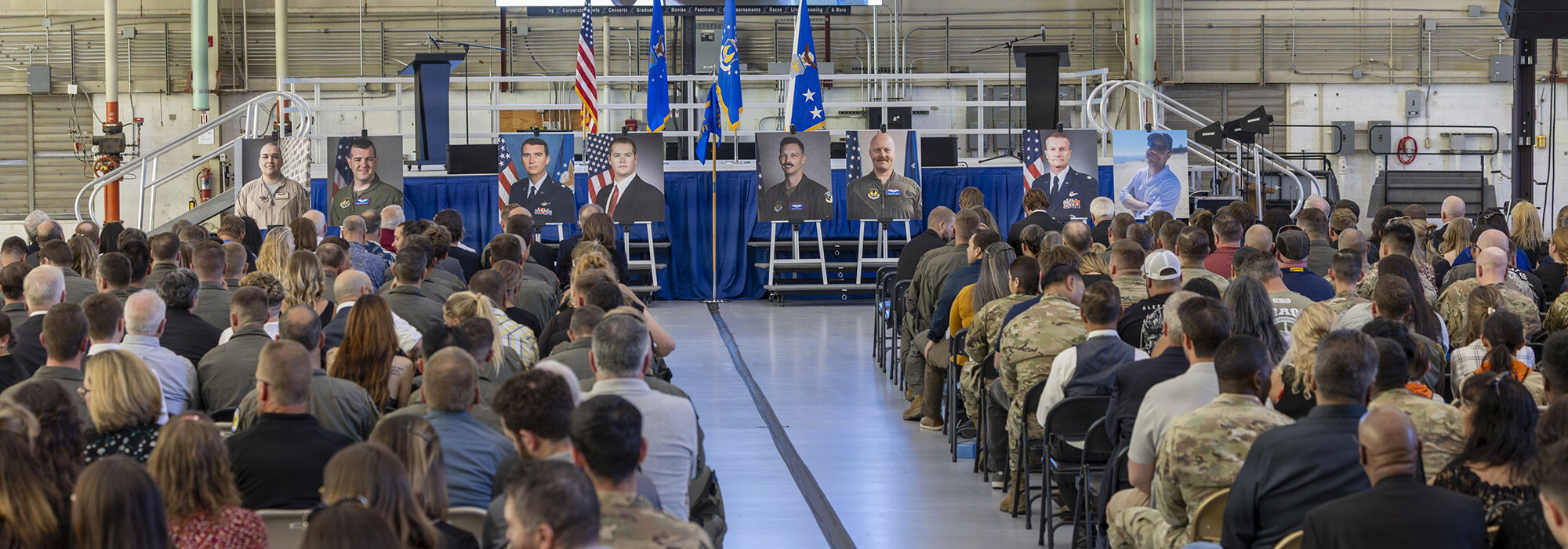
Col. Thomas Tauer, commander of the 412th Test Wing, recalled the lost Airmen and civilians as “dedicated professionals, beloved family members and irreplaceable teammates.”
Killed were:
- Col. Gregory Watson, 53, a weapon systems officer. Watson was one of two Boeing contractors aboard the bomber and usually worked in Shreveport, La., where Barksdale Air Force Base and its B-52s are located. He was also an Air Force reservist who was assigned to the 10th Air Force at Naval Air Station Joint Reserve Base Fort Worth in Texas.
- Lt. Col. Gabriel Estrella, 40, a weapon systems officer. Estrella was assigned to the Air Force Operational Test and Evaluation Center, Detachment 5, at Edwards.
- Retired Lt. Col. Miles Middleton, 50, a pilot. Middleton was the other Boeing contractor aboard, who worked in Tehechapi, Calif.
- Maj. Alexander Davis, 34, a weapon systems officer at the 419th Flight Test Squadron at Lancaster, Calif., near Edwards.
- Maj. Robert Dee, 40, a pilot assigned to the 419th.
- Maj. Brad Hovey, 35, another pilot assigned to the 419th.
- Jeromy Smith, 32, a flight test engineer at the 419th in Rosamond, Calif..
- Christopher Rischar, 41, a flight test engineer and contractor with JT4 in Lancaster. JT4 provides engineering and technical support to Air Force, Space Force, and Navy test ranges.
“These Airmen were more than coworkers,” Tauer said. “They were friends, mentors, teammates, and valued members of our Edwards and Air Force family.”
The B-52 crashed immediately after takeoff at around 11:20 a.m. local time and burst into flames that consumed virtually the entire aircraft. Edwards officials said the same day it was clear that the crash was not survivable.
The bomber was meant to fly a test sortie supporting an effort to upgrade the B-52 Radar Modernization Program, which aims to replace the mechanical AN/APQ-166 radar with an active electronically scanned array AN/APQ-188.
Combined with other upgrades, including replacing the legacy engines with new Rolls-Royce powerplants, modern avionics including an all-digital cockpit, new weapons, enhanced communications, and more. The planned updates will ultimately deliver a future configuration designated the B-52J.
The radar upgrade has been challenged by technical integration issues, rising costs and delays, triggering congressional notice and delaying projected initial operational capability by three years.
The crash leaves the Air Force with 75 B-52s in its fleet; it is unclear if another plane will be restored from inactive storage. Originally projected to fly for 20 years, the B-52 fleet is now on track to fly up to 100 years. The bombtrucks can haul as much as 70,000 pounds and remain the workhorse of the bomber fleet, with critical roles in the Gulf War, the wars in Iraq, Afghanistan, and against the Islamic State in Syria, and most recently in Operation Epic Fury against Iran.
The Commercial Engine Replacement Program, or CERP, is the biggest component of the modernization effort, and will replace the bombers’ original Pratt & Whitney TF33 engines with Rolls-Royce’s new F130s.
So far, no new F130s have been mounted on B-52s, and the biggest work on the engine replacements is still to come.
The Air Force announced in May that the CERP program had passed its critical design review, which finalized the program’s design. Next, Boeing will modify the first two B-52s with new engines and other upgrades at its San Antonio facility, with the first arriving there later in 2026. Once upgrades on those two B-52s are done, the plan is to fly them to Edwards for extensive testing.
The crash at Edwards was the first loss of a B-52 since May 2016, when a B-52 skidded off the runway during an aborted takeoff at Andersen Air Force Base, Guam, following a suspected bird strike. In that incident, the crew safely evacuated, but the bomber caught fire and was a total loss.
Another B-52 crashed into the ocean northwest of Guam in 2008, killing all six crew members. The subsequent investigation concluded that the B-52’s rear stabilizers malfunctioned.
Air Force Plans to Convert WSOs into Pilots
As 2027 Bed Down Approaches, Operational Testing Begins.
By Stephen Losey
The Air Force’s next bomber will begin to form its first operational unit in early 2027, and as the force begins to ramp up its operational plans, it’s expanding the pool of potential B-21 Raider pilots to include converting some Weapons Systems Officers (WSOs) and Combat Systems Officer (CSOs) into pilots.
Anticipating a need dozens of pilots to begin with—and hundreds over time—to man the B-21’s two-pilot crew, officials said in July they are establishing a transition program to train WSOs and CSOs to fill some of those jobs.
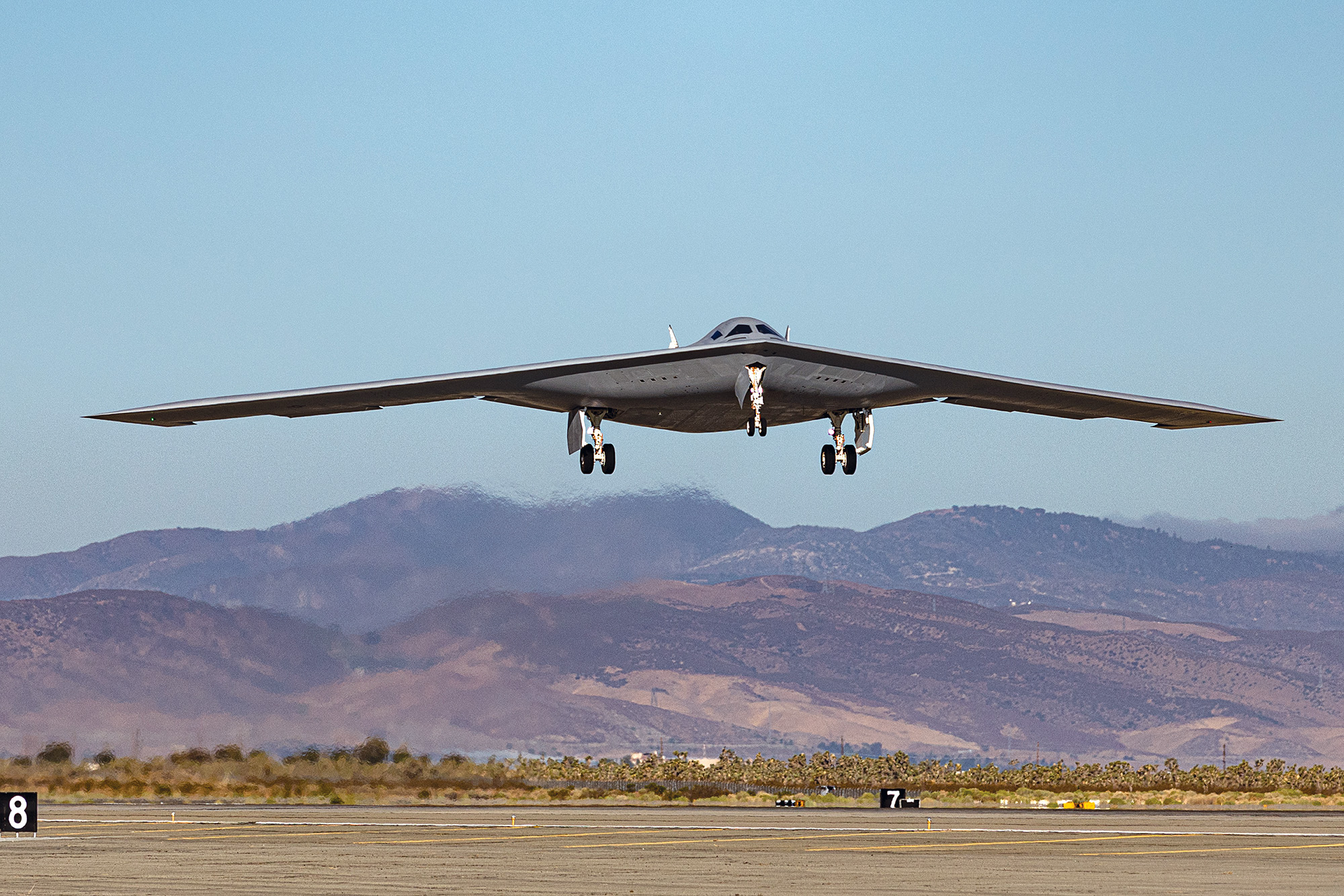
The next-generation B-21, built by Northrop Grumman, will enter service in 2027. The stealthy bomber features a flying wing design similar to the B-2 Spirit, and will be capable of carrying both conventional and nuclear weapons. Plans call for a fleet of at least 100 B-21s, though Pentagon leaders increasingly suggest more are needed. Some have called for 145 or more.
The first B-21 Raider bomber will bed down slightly ahead of the original schedule at Ellsworth Air Force Base, S.D., and the first plane to arrive there is already flying test missions, said Air Force Secretary Troy Meink in an interview with Air & Space Forces Magazine.
“The test aircraft will be going there,” Meink said referring to the B-21s now in flight testing at Edwards Air Force Base, Calif.
“We’re going to actually turn the test aircraft into operational aircraft at some point in time. They’ll be going there and starting to really do the things you need to do to prepare the base to get the long-term operational aircraft there.”
An Air Force spokesperson declined to say whether both test B-21s at Edwards will move to Ellsworth, or exactly when in 2027 the first plane will arrive. Flight testing typically continues even after planes arrive at operating bases.
The Air Force studied options to man the B-21 with a pilot and a weapons system officer, splitting the roles, but critics said that would present challenges on long missions. Defense Daily and Aviation Week both reported last fall that Gen. Thomas A. Bussiere, then head of Air Force Global Strike Command, had recommended that configuration.
Recent missions like those supporting Operation Epic Fury and Operation Midnight Hammer, in which B-1B Lancer and B-2A Spirit bombers flew round-trip missions from the central United States to Iran and backs highlight the long hauls USAF bomber crews often undergo. The Midnight Hammer mission took 37 hours round trip. Both the B-1 and B-2 bombers operate with two pilots, who can rotate for rest breaks during long missions.
The Air Force has not specified how many B-21 pilots it needs. As of the start of fiscal 2026, there were 497 bomber pilots with the 11B Air Force Specialty Code, and 141 bombers of all types, for a ratio of 3.5 pilots per bomber. That suggests a need for at least 350 bombers by the late 2030s
Earlier plans to retire the B-1 and B-2 sooner would likely have meant some of those slots could be filled by pilots trained for the older bombers, but with both now slated to remain for the next decade or so, tapping experienced WSOs and CSOs is seen as an effective way to build a pilot force quickly—and to retain talent that might otherwise leave the service as F-15Es and other jets are retired.
“To maximize the lethality and survivability of the Raider, it is imperative to retain the deep tactical and combat experience currently residing within the WSO and CSO communities,” the Air Force said. “This deliberate talent management strategy secures the future of global strike capabilities, ensuring the Air Force remains postured to execute extended duration, long-range strike missions in highly contested environments.”
WSOs will be drawn from the B-1, B-52, and F-15E communities, where they operate the planes’ weapon systems and assist pilots with situational awareness and defensive operations. The Air Force plans to retire its B-1s by the late 2030s and has sought to retire more than half the F-15E fleet, although Congress has blocked that so far. The F-15EX will ultimately supplant the F-15E, and it also has a two-seat cockpit. But as designed, that plane can be operated by a pilot alone, and that remains the Air Force’s plan so far.
CSOs also operate planes’ weapon systems, but they can serve as mission commanders for electronic warfare and navigation systems.
The B-21’s range and next-generation stealth capabilities are intended to make the penetrating strike jet capable of slipping undetected into enemy territory and then operating deep inside rivals’ airspace. Northrop executives tout the bomber’s data-sharing capabilities and its digital open-systems architecture as key features of its “sixth-generation” description.
The first operational pilot flew the Raider in June, marking a key milestone in its development and demonstrating the program’s focus on moving quickly, a senior testing official said.
“We put an operational test member in the pilot seat with an Air Force Test Pilot School graduate in the other,” said Col. Matt Guasco, commander of Air Force Operational Test and Evaluation Center’s Detachment 5 at Edwards, in an Air Force release. “In the history of modern test, we’ve never done that so early in a program.”
Flying with both an operational tester and a developmental test pilot at once blurs the line between the two phases of testing. Developmental testing ensures flight safety and that the jet meets technical specifications, while operational testing focuses on combat mission effectiveness. The Air Force said the combined testing environment “eliminates the gap between ensuring a jet simply works and ensuring it is ready for combat.”
Gen. Dale White, who oversees the bomber program, said combining the tests for the B-21 “exemplifies the acquisition culture we’re instilling throughout the force.”
“It’s a smarter and faster mindset that leverages modern production and test tools with the proper sense of urgency,” White said. That urgency “challenges old processes and moves us to a more agile acquisition system. … In the case of the Raider, it means we’re now that much closer to placing asymmetric lethality into the hands of the warfighter.”
The Raider Combined Test Force, comprised of Airmen and civilians from the 412th Test Wing’s 420th Flight Test Squadron are leading the testing. AFOTEC Det. 5, and the 53rd Wing’s 31st Test and Evaluation Squadron are also involved, along with representatives of prime contractor Northrop Grumman.
“Bringing operational testers onto the team at this early point now means we can evaluate the bomber’s true combat utility, not just its flying characteristics,” said Lt. Col. Matthew Gray, squadron commander of the 420th and director of the Raider Combined Test Force.
White held an all-call meeting with the test force team June 8, in which he stressed the importance of making sure the B-21 program has the correct resources and is not hampered by bureaucratic holdups. The program must move with “urgency,” he said, without being “reckless.”