
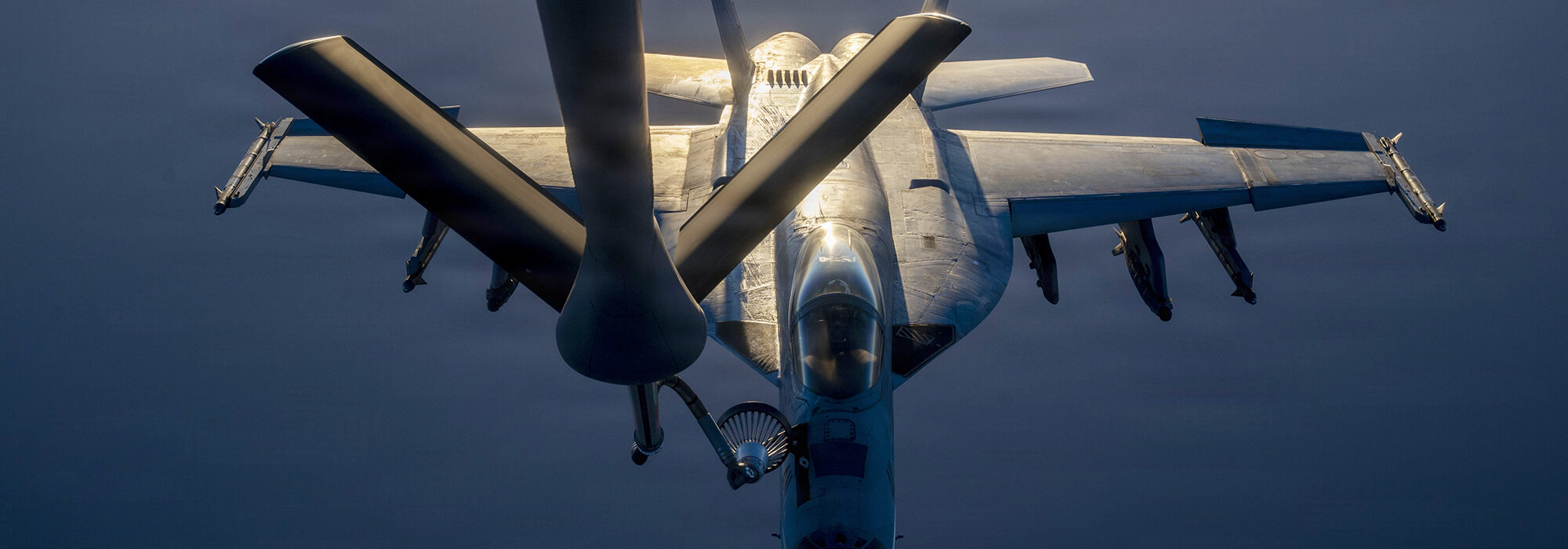
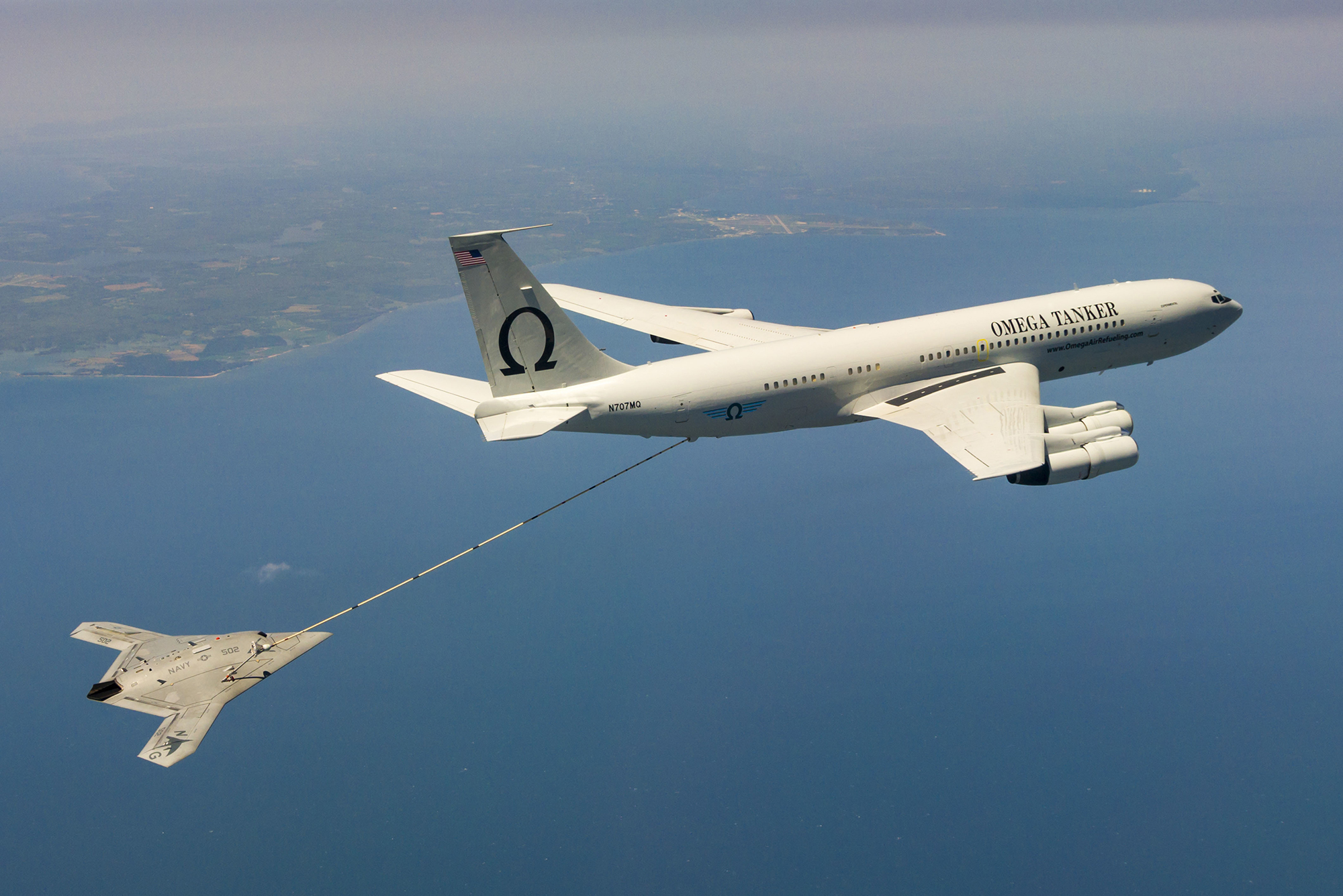
For over two decades the United States Navy has been contracting for commercial air refueling services for itself and a other users, including the U.S. Marines Corps, U.S. Air Force, and the air arms of at least five partner militaries. The scale of these operations is tiny compared to the daily operations of USAF’s Air Mobility Command, but these contract air refueling (CAR) operations have proved safe, economical, and reliable. Customers have consistently expressed satisfaction with the two CAR providers, Omega Air Refueling Services and Metrea Air, and with the competence and professionalism of their crews, most of whom are retired U.S. military personnel.
Naturally, given these successes, the Air Force has considered whether to leave CAR as a fringe Navy activity or to effectively expand it as a component of the national air refueling fleet. To date, the military has balked. Understandable concern about the quality, availability, and dependability of contract air refueling, especially for critical and high-risk combat operations, continue to curb enthusiasm for the concept. But, given the rising cost of recapitalizing the Air Force’s aging air fleet, the concept is ripe for renewed study.
—Capt. Jason Pettit, NAVAIR PMA-226 program managerContract air refueling … “doesn’t burden the Navy with acquisition, long-term personnel costs, and permanent basing expenses.”
HISTORY OF CONTRACT REFUELING
Naval aviation leaders became interested in large Air Force tankers in the late 1970s, when they found themselves facing a Soviet Union “engaged in a serious, steady, and sustained effort which … could make it the dominant military power in the world,” as stated in the Pentagon’s 1978 annual report. “Neither the high quality of U.S. technology and weapons nor the considerable talents and skills of the men and women of the armed forces will continue to make up for the quantitative advantages of such an adversary.” The Navy’s response to this new strategic environment was the Maritime Strategy, which envisioned a 600-ship fleet aggressively postured on the global periphery of the Soviet empire. For Naval Aviation, taking a global posture entailed preparations to shift and support the fleet and its air operations over long distances and to conduct nuclear and conventional strike operations deep into enemy territories. Those missions, in turn, required air refueling support from Air Force tankers, something naval aviators had not previously considered to be part of their normal operations. Even during the Vietnam War, the Navy never scheduled Air Force air refueling for its strike operations, as noted in official histories from that war. The new strategic environment, however, demanded greater use of tankers and, indeed, one of the graphics in the Maritime Strategy document was of a Navy F-14 refueling from an Ohio Air National Guard KC-135.
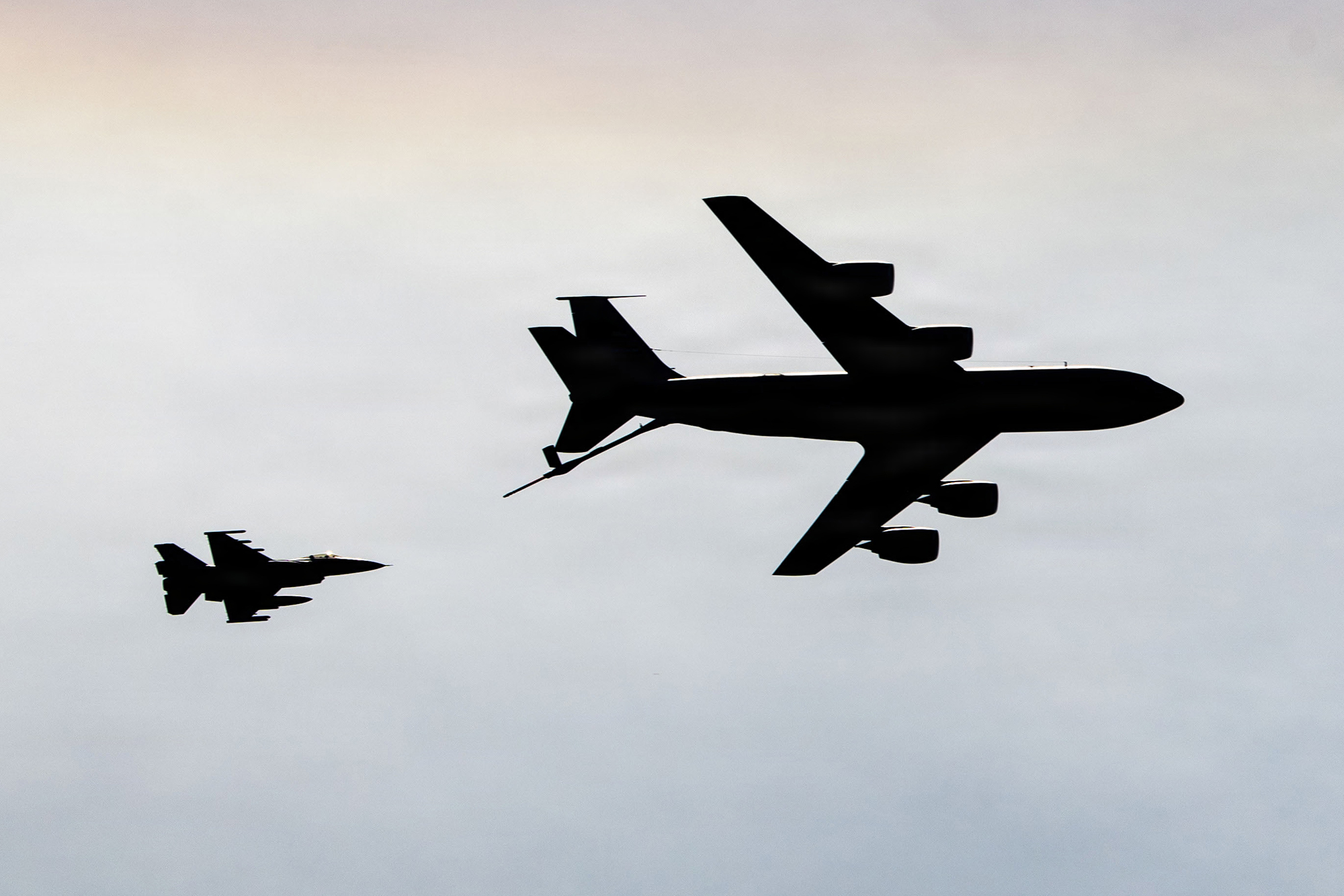
Hedging its bets, the Navy requested funds in 1986 to begin acquiring its own small fleet of large, land-based tankers to support training and at least some strike operations. Congress initially appropriated $110 million for the project, but later withdrew the money when Air Force analysis showed the Navy fleet was neither cost effective nor needed, given the availability of Air Force assets. Unhappy with that conclusion—and convinced that the Air Force would favor its own operational requirements and fail to support Navy training requirements, such as qualifying carrier pilots before deployments, as noted in a 2004 General Accounting Office critique of the Pentagon’s refueling strategy. By then, the Navy had already been using contract air refueling on a limited basis for several years.
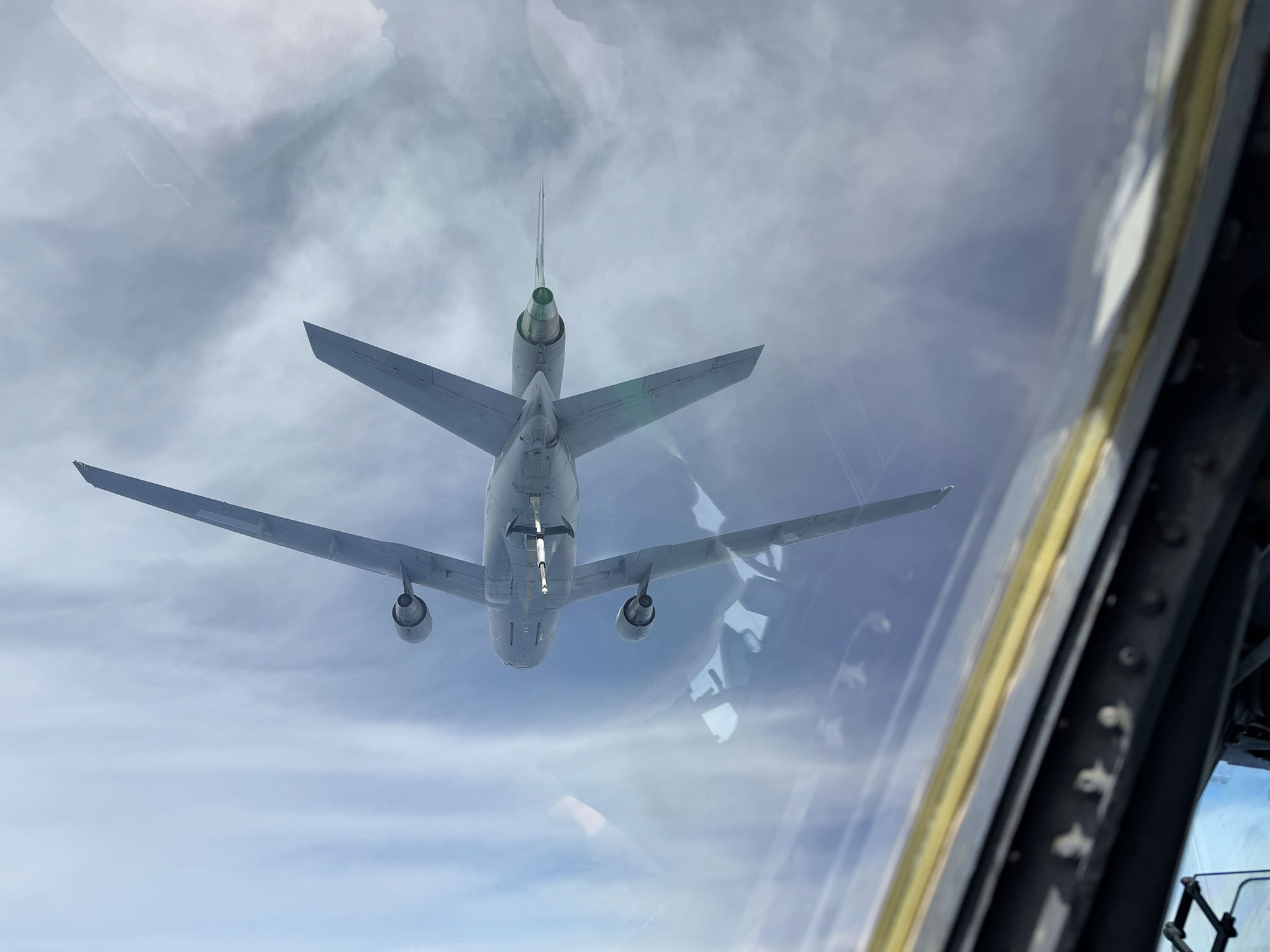
Entrepreneurs Ulick and Desmond McEvaddy were the commercial providers of air refueling services. They began the practice by working with the Naval Air Systems Command at their own expense to help with the engineering needed to convert a Boeing 707 airliner into a refueler. (The Air Force KC-135 Stratotanker is based on an earlier version of the same aircraft.) The Navy certified the Boeing 707-300 and it began operations in 2001.The McEvaddys’ new company, Omega Air Refueling, subsequently acquired 10 DC-10s from Japan Airlines in 2007, three additional Boeing 707s in 2011, and two KDC-10s from the Dutch Air Force in 2019, according to Thomas Swiderek, President of OMEGA Air.
Meanwhile, in 2016, Metrea activated iMetrea Strategic Mobility to respond to a Navy request for proposals to provide refueling services and by acquiring four KC-135s from the Singapore Air Force and 14 KC-135Fs from the French Air Force. Metrea uses some aircraft for refueling, while reserving others for parts, according to James “Slim” Morgan, president of the Metrea Strategic Mobility.
Between them, these two companies have since provided refueling services to the U.S. Navy, the U.S. Air Force, the U.S. Marine Corps, and international air forces from Australia, Germany, Canada, India, and the Netherlands, all leveraging the Navy’s contract to acquire refueling services. The U.S. Air Force started using Metrea in 2023 to support a few combat aircraft refuelings for F-16s, F-35s, and bombers. In April 2025, according to Air Force statements, the 62nd Air Mobility Wing at McChord Air Force Base, Wash., contracted for a single proof-of-concept air refueling of a C-17 by an Omega KDC-10. AMC staff officers note that this was a local, not AMC initiative, the operation demonstrates Air Force interest, since the wing commander would not have undertaken the operation without higher-level permission.
CONTRACT AIR REFUELING TODAY
All CAR contracts for the Navy and other users are managed by or through the Adversary and Special Aircraft Program Office (PMA-226) of the Naval Air Systems Command (NAVAIR). To assure quality and safety, PMA-226 employs Navy and civilian contract personnel to routinely inspect commercial refueling aircraft to confirm that they are properly maintained at appropriate government safety and operational standards, according to Navy Capt. Jason Pettit, director of PMA-226. Omega, Metrea, and Navy contract managers treat CAR cost data as proprietary, so do not disclose the data publicly. But all three assert that the two companies negotiate flat rates per flight hour with the Navy at scale, “comparable” to what Air Mobility Command charges for its services. A February 2026 memo from the Pentagon Comptroller lists the reimbursable rate for Air Force KC-135Rs at $20,959 per flight hour.
Pettit suggested in a 2025 interview that the program’s cost effectiveness goes beyond the equivalency of flight hour rates, because CAR “doesn’t burden the Navy with acquisition, long-term personnel costs, and permanent basing expenses.” The availability of Omega and Metrea tankers also allows Pettit and his organization to satisfy foreign military sales requests for training support to reduce wear and tear on their own refueling aircraft. As a result, contracted refueling hours have risen from around 2,500 to 4,200 flight hours per year over the last several years, he said.
Omega and Metrea achieve their cost effectiveness through disciplined exploitation of the economics of being a commercial operator. First, they bought their fleets, along with parts stocks, and ground equipment at bargain basement prices. Next, they keep their aircraft flying by hiring skilled aircrew and ground support personnel, with extensive military experience. Metrea also employs a small percentage of currently serving Air Force Reserve and National Guard pilots. Under current arrangements, reservist pilots working for a commercial air refueling operation are perfectly proper, so long as everyone understands that their military obligations will have priority over their corporate jobs during mobilizations. Should the commercial air refueling industry expand and adopt more formal, CRAF-like arrangements with the military, its reservists would present a conflict of interest during mobilizations, and the Air Force likely would not allow CRAF member airlines to count them against their contracted mobilization obligations.
Regarding the salaries, the companies pay pilots a “competitive” hourly wage for travel and the hours they fly. Maintenance and staff positions are, likewise, filled full or part time as required by its operations. In contrast to military tankers returning to their home bases between missions, the commercial operators hold down flight hours by parking their tankers wherever scheduling gaps find them, then flying crews home commercially until they are needed again. These and other operational techniques help contain costs, keeping the services attractive to the Navy and other users.
Metrea and Omega operate at levels of safety and reliability equivalent to those of the airlines and the military. The Navy’s Pettit said he employs Navy, government, and contract personnel to inspect flight and ground procedures and equipment in accordance with the aircraft manufacturers, the Navy, and FAA guidelines. The reliability and availability rates claimed by both operators are over 90 percent—well above Air Force rates for its refuelers. For fiscal 2024, the last date for which the Air Force released mission capable rates for its aircraft, KC-135s were mission capable only about 63 percent of the time, according to Air & Space Force Magazine’s 2025 USAF & USSF Almanac.
The Federal Aviation Administration does not certify the Metrea and Omega aircraft for commercial operations, Pettit said. Metrea’s military KC-135s never had commercial-type ratings, and the FAA removed the certifications of Omega’s converted Boeing 707s when they received their air refueling equipment. In general, the FAA views the specialized equipment, different maintenance procedures, and perceived lack of a commercial mission of these aircraft as obviating certification for commercial operations under Part 121 (airlines) or Part 135 (charter) of the Federal Aviation Regulations. So, current CAR aircraft fly with experimental certificates between jobs; as public aircraft sponsored by the Navy during U.S. military refueling operations; and as state aircraft when deploying overseas to service allied customers. But, while the certification of CAR aircraft is complex, the Navy’s inspection procedures, user testimonials, and company policies indicate these tankers are well-maintained, safe, and generally more available than the equally aged KC-135 tankers in the Air Force’s fleet.
TO EXPAND OR NOT TO EXPAND
The existing Civil Reserve Air Fleet (CRAF) program provides the starting point for assessing the potential of CAR for expansion. Since the early 1960s, the CRAF has been the least expensive source of wartime mobilization capacity among the other components of the airlift system. Moreover, the Air Force incentivizes selected commercial carriers to participate in the CRAF by awarding contracts for peacetime and contingency services at competitive “fair and reasonable“ rates guaranteeing at least modest profits. In general, CRAF operations allow U.S. Transportation Command (USTC) to slow down the wear and tear on aircraft provided by Air Mobility Command (AMC) by flying them only enough to maintain the readiness of the airlift system rather than their full capacity to generate flying hours.
To the extent possible, all other flying, including individually ticketed travel by government employees, is awarded to CRAF carriers. CRAF military managers also oversee the distribution of flying hours to help maintain military readiness, incentivize civilian participation, and to maximize the mobilization margin of the member airlines. In concept, this approach allocates only enough flying hours to the military fleet to keep its flying and support assets practiced and ready for war. CRAF carriers get what’s left, which is enough to incentivize around 25 carriers to commit some 450 aircraft to the program.
Additionally, CRAF carriers in routine operations receive military contracts for a fraction of the flying hours available from their committed aircraft. They are thus obliged to apply the rest of their available aircraft hours to commercial passenger or cargo business to fill their schedules. Consequently, when the military demands expansion margin during a contingency, the airlines can redirect these commercial-dedicated hours to fulfill military requirements.
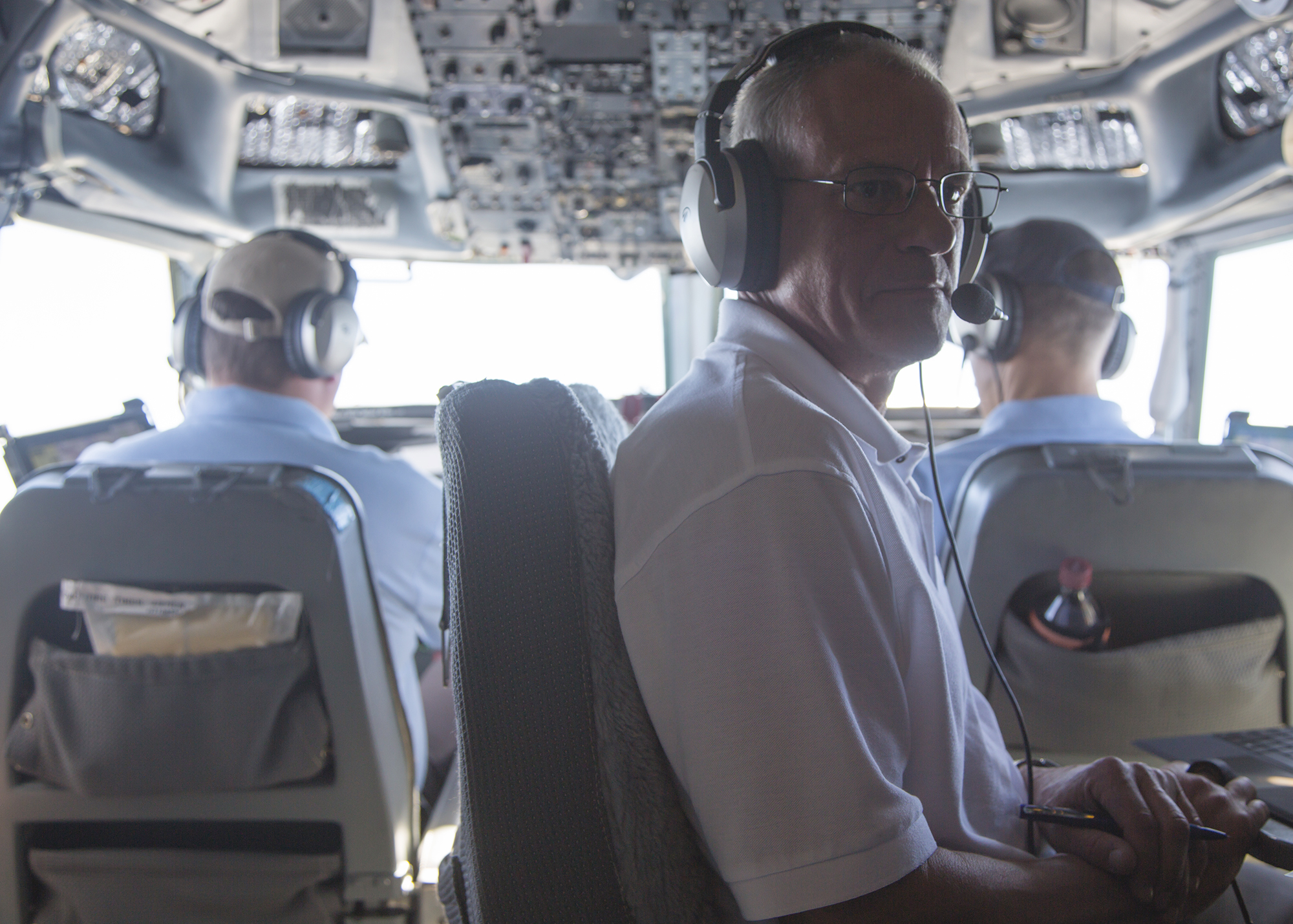
Given the current composition and operations of the CAR program, it does not lend itself to integration into the CRAF or a CRAF-like program. The key challenges to integrating CAR into a CRAF-like program is the absence of a commercial market for air refueling, and the fact that tanker aircraft do not hold FAA certificates to conduct commercial passenger or cargo flights. The absence of commercial certification obliges CAR carriers to limit their fleets to the number of aircraft they can more or less fill with military business. When mobilized, consequently, CAR aircraft will tend to have a smaller “mobilization margin” of uncommitted flight hours than CRAF airliners whose unmobilized flight schedules are burdened with a much smaller percentage of military contract hours. Commercial passengers and cargo shippers carry by far the major cost of keeping the CRAF available for mobilization, leaving the military to incentivize the program by paying slightly padded rates for a restricted number of peacetime contracts with CRAF member airlines. The CRAF, in summary, is a very good deal for the U.S. military, and it makes sense to seek a way to integrate CAR into it.
The obvious solution to the otherwise fatal absence of a commercial air refueling market would be to equip at least a part of the CAR fleet with aircraft holding commercial certificates and able to compete for civil or other public passenger or cargo operations. This is easier said than done. Federal aviation regulations, namely, type certificate data sheets for specific aircraft, permit the conversion of military surplus transport aircraft to commercial applications, but even if the aircraft were derived from a commercial design, the process involves review of all maintenance documents, evaluation of all modifications and repairs through the entire life of the aircraft, compliance with all civil airworthiness directives, removal of items not approved by the FAA—including air refueling systems—installation of commercially required items, and other actions.
For these reasons and perhaps habits of institutional mindsets, accepting commercial operations by aircraft equipped for air refueling would be a major policy hurdle for the FAA, and the military. Still, there are several options for acquiring aircraft suited to the CAR mission. In broad terms, an aircraft chosen for this mission should be able to conduct air refueling safely, effectively, and efficiently. It also should be able to compete within some niche of the commercial market, whether air cargo or passenger operations. The first option for the Air Force would be just to leave the Navy in control of a small program to support training and some noncombat operations and let the corporate providers worry about acquisition costs and sustaining whatever second-hand aircraft they can acquire.
While this is the least expensive option, it would guarantee that CAR remains a niche capability. A second alternative would be for the Air Force and CAR partners to seek commercial type ratings for the KC-135s and KDC-10s presently in the CAR fleet. This approach would avoid significant acquisition costs, but the modifications and recertification process for these old aircraft would be expensive and dependent on the FAA agreeing to allow air refueling aircraft to perform commercial cargo or passenger operations. In all likelihood, these recertified aircraft would not be commercially competitive, due to age, efficiency, and other reasons; relevant to earlier departures from the marketplace log ago.
A third option would be to attempt to commercialize the KC-10s now under the care of the 309th Aerospace Maintenance and Regeneration Group (309th AMARG), the so-called boneyard at Davis-Monthan Air Force Base, Ariz. Retired only a few years ago to make way for new KC-46s joining the fleet, these aircraft still have years of flying hours left in them and could be competitive in specialized commercial applications, such as transoceanic air cargo operations, support of allies, government cargo operations, and more. In addition, the costs to return these jets to service might be less than to do the same for older KC-135s. They also would face the same challenge of satisfying FAA commercial certification requirements.
A fourth option might be for the Pentagon to underwrite the acquisition of KC-46s by civilian CAR providers. While the acquisition cost of these aircraft is high—about $160 million each for the Air Force and $250 million for non-U.S. customers, according to media reports, these jets offer long-term advantages, because they already hold FAA commercial-type certificates for the basic aircraft and their refueling equipment, according to Boeing, the jets’ manufacturer. If the FAA or the Air Force still balked at conducting commercial and contract passenger and cargo operations with KC-46’s still carrying their refueling booms and pods, there could be management techniques for operating a mixed fleet of active and inactive tankers efficiently. CAR Carriers operating KC-46s could potentially operate as CRAF carriers do today, by financing their mobilization margins through appropriate balances of military and commercial contracts, leasing arrangements, and other business models such as that of the Airlift Enhancement Program of the 1970s.
It is notable that the United Kingdom’s Royal Air Force has already developed a civil-military partnership to provide tanker capacity and mobilization margins at reduced costs. The RAF entered into a lease agreement with AirTanker Ltd., a consortium of major European aviation companies, in 2008 to privately finance a tanker force until 2035. AirTanker purchased fourteen Airbus A330 MRTTs (Multi-Role Tanker Transports), from which it would maintain a “core” fleet of nine tankers operated by the RAF and five in a “surge” increment managed by AirTanker. Under the agreement, AirTanker is free to manage the surge fleet increment on a commercial basis, subject to RAF priorities and operational needs.
AirTanker’s commercial projects have included numerous short-term passenger and cargo contracts, a multiyear lease of one aircraft to the Thomas Cook Group travel airline, humanitarian missions, and episodic provision of passenger, cargo, and air refueling support to augment the core increment. Another innovation is the use of “sponsored” reservists to fill many of the crew positions in the surge or commercial increment. These reservists are paid by AirTanker. Symbolically, these crews often fly wearing RAF flight suits sporting the patch of 10 Squadron, one of the two A330 MRTT Voyager squadrons, along with 101 Squadron. This arrangement, AirTanker states, asserts the continuities of their civil and military roles and retains aircrew coverage under the Geneva Conventions.
Though operating in a statutory and commercial environment different from that of the USAF and the U.S. commercial air carrier industry, the RAF’s strategic tanker program at least indicates the potential of a civil-military contract air refueling program. Quantifying that potential into a fleet plan will require analyses of issues like aircraft certification requirements, industry interest, financing, the roles of reserve personnel, mobilization and employment procedures, command and control, and so on. But given the potential savings and enhancements that an enlarged CAR program could bring to the air refueling fleet, such analyses should be undertaken.