
AURORA, Colo.—The Air Force’s Next-Generation Air Refueling System could turn into a family of systems with different capabilities, the interim head of Air Mobility Command said Feb. 24, as she presses for an aggressive, wide-ranging approach to tanker modernization.
In a media roundtable at AFA’s 2026 Warfare Symposium, Lt. Gen. Rebecca J. Sonkiss made the case that recent operations like Midnight Hammer, which struck Iranian nuclear facilities, has highlighted just how vital the aerial refueling fleet is to air operations. That in turn has shined a spotlight on the age of the Air Force tanker fleet
“I cannot have a 90-year old tanker refueling a B-21,” Sonkiss said, referring to the KC-135 that dates back to the Eisenhower administration. “If you do math, as we reach the end of programs for things, that’s reality. I cannot have that. I must recap the tanker force.”
NGAS has long been seen as the culmination of that recapitalization effort. But very little about the program has been solidified. Sonkiss’ former boss, Gen. Johnny Lamontagne, told reporters last fall that “just about every option is on the table,” per DefenseScoop, including a stealthy airframe, a converted business jet, a blended-wing body, or perhaps even an unmanned option.
AMC is still conducting market research to gain industry input, and at least one potential competitor, Northrop Grumman, appears to have taken something of an all-of-the-above approach.
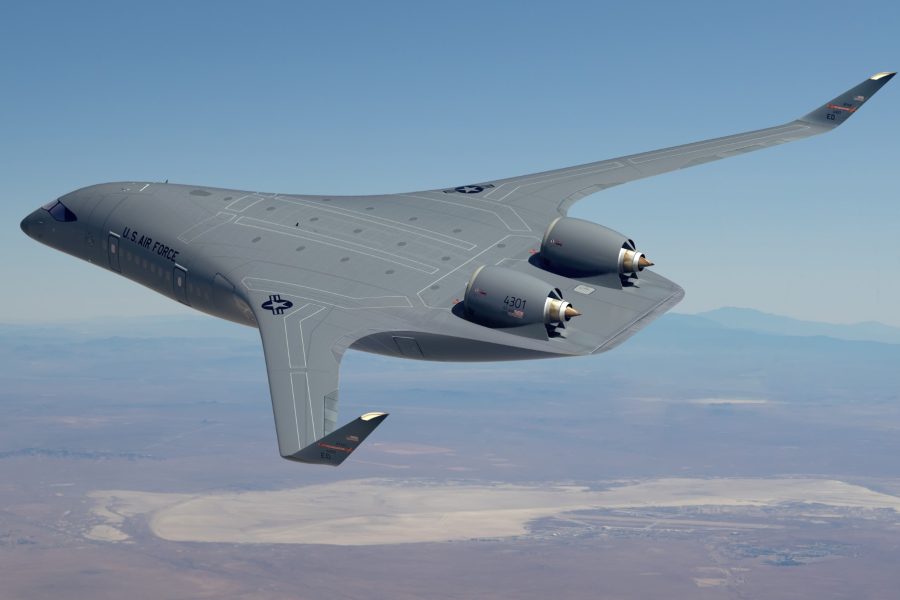
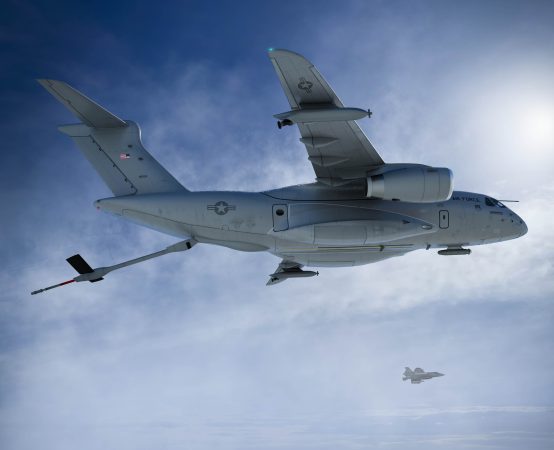
Aviation Week reported last week that Northrop is pitching a three-part “family of systems” concept to the Air Force for NGAS that consists of a larger, blended-wing refueler, a midsized tanker, and a smaller uncrewed refueler.
At the symposium this week, Northrop Grumman Aeronautics Systems President Tom Jones hinted at that approach, saying “there’s a number of areas that we are looking at” and mentioning the firm’s partnerships with JetZero to develop a large blended-wing body aircraft and with Embraer to add a refueling boom to its midsized KC-390.
Sonkiss, for her part, is still keeping all options on the table for AMC. Is NGAS “a family of systems? It could be,” she said.
The answer to questions like that will depend on what Air Force decides about how deep into contested airspace it wants to send the NGAS tanker and if that can be accomplished with stealth or other technologies.
Yet NGAS is only piece of the puzzle, Sonkiss suggested. Of the Air Force’s 500 tankers, about 375 are KC-135s. The service currently has plans to buy a total of about 260 KC-46 Pegasus tankers after deciding last July to purchase 75 more. But that still leaves a gap in capacity if the KC-135 is retired.
“[NGAS is] a portion of the total tanker modernization; it’s not the whole thing,” she said. “Right now, we’re on a really good pathway with KC-46 and the extension of the additional 75 tankers. But it doesn’t stop there. I’ve got to keep going. I’ve got to keep modernizing the tanker.”