
The 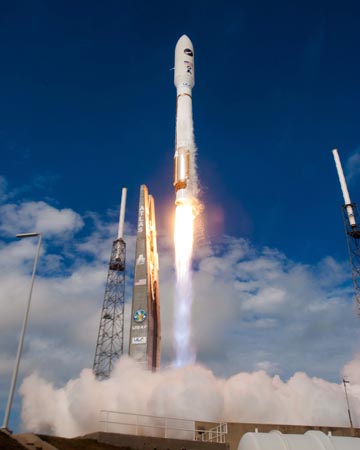 Air Force and its industry partners on Tuesday launched an experimental X-37B orbital test vehicle into space aboard an Atlas V rocket fired from Cape Canaveral AFS, Fla. This is the third mission of an X-37 reusable spaceplane and the second flight of the first X-37 in the two-vehicle fleet. “We couldn’t be more pleased with the strides we’ve made in this program,” said Richard McKinney, the Air Force’s deputy undersecretary for space programs, in the service’s Dec. 11 release. He added, “However, it is important to keep in mind that this is an experimental vehicle, and a third mission is still relatively young for a test program.” The first X-37 vehicle spent 224 days on orbit after its inaugural launch in April 2010. After its return, the vehicle underwent refurbishment for its return to space. “We are excited to see how this vehicle performs on a second flight,” said Lt. Col. Tom McIntyre, X-37B program manager. He said the length of the vehicle’s stay on orbit will depend on factors like executing the test objectives and the vehicle’s performance. The second X-37 vehicle spent 469 days in space on its maiden mission, returning to Earth in June. (Washington, D.C., report by Maj. Eric Badger) (See also Boeing release and Spaceplane Mission Gets Green Light.)
CCAs and Autonomy Gain Momentum as Focus of Future Force
Sept. 29, 2026
For the past four years, the idea of autonomous drone warfare like Collaborative Combat Aircraft has been discussed as a future concept, rather than near-term reality. But now that promised vision appears imminent, with the Air Force promising at least 1,000 such drones by 2032.