

More than a quarter-century after handing over the mission to the Navy, the Air Force is making the first steps towards taking back over a critical nuclear command, control, and communications function.
In a special notice to industry released Dec. 9, the Air Force Life Cycle Management Center announced it would host an industry day as part of its market research for the new “Looking Glass-Next” program.
“Looking Glass” is the nickname given to the Airborne Command Post mission—aircraft that fly with the systems and crews needed to receive and relay orders from the President and launch intercontinental ballistic missiles via the Airborne Launch Control System. It was first called Looking Glass because the airborne command post was supposed to mirror the underground command post of Strategic Air Command.
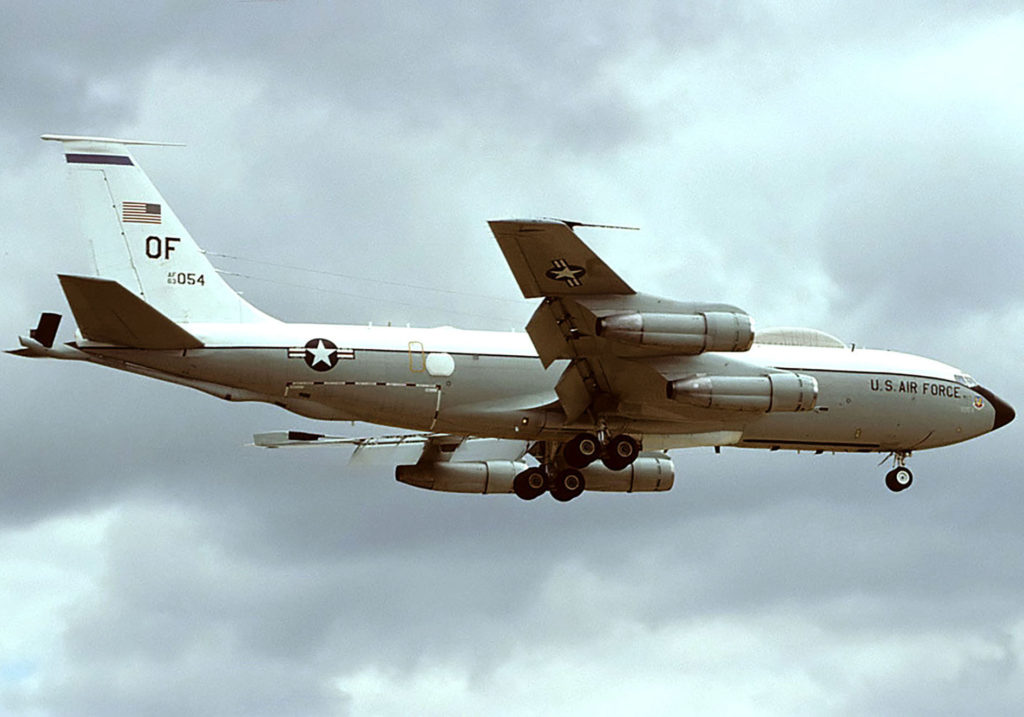
For years, the Air Force flew EC-135s for the Looking Glass mission. From 1961 to 1990, at least one Looking Glass aircraft was always in the sky, ensuring the U.S. had a way to control its nuclear forces even if its land-based control centers were attacked.
The service buttressed the EC-135 fleet in the 1970s with the Advanced Airborne Command Post program, which produced the E-4B Nightwatch, knowm as the National Airborne Operations Center. The E-4, which is nicknamed the “Doomsday Plane” due to its potentially grim mission, can perform the Looking Glass mission but has a larger suite of capabilities and responsibilities because it is meant to be able to host the President or Secretary of Defense in case of a national emergency. It also doubles as the Secretary of Defense’s main transport outside the U.S., and with just four aircraft total, is as hard-worked as any fleet in the service.
From 1990 to 1998, the EC-135 continued to operate, staying on 24/7 alert and regularly flying to continue the Looking Glass mission. In 1998, the mission transferred to the Navy’s E-6B Mercury, which also conducts the TACAMO mission. TACAMO, short for “Take Charge and Move Out,” is a similar nuclear communications mission focused mainly on receiving, verifying, and relaying orders to the Navy’s nuclear submarines.
For the past 27 years, the fleet of 16 E-6B aircraft has conducted both TACAMO and Looking Glass missions together, based primarily at Tinker Air Force Base, Okla. But the two missions are now poised to split again—the Navy has been working on a replacement for the E-6 for years now and has said it plans to continue just the TACAMO mission using new E-130J aircraft, based on the workhorse C-130.
The Air Force, meanwhile, appears poised to take back on the Airborne Command Post mission. The notice to industry states that the Looking Glass-Next program “is aimed at recapitalizing missions currently executed on the E-6B.”
The future of the Looking Glass mission came up before Congress this past May and June after Rep. Don Bacon (R-Neb.) asked Air Force and U.S. Strategic Command leaders about their plans. Bacon, a retired Air Force brigadier general who represents STRATCOM’s home of Offutt Air Force Base, asked if the Air Force would be taking back over Looking Glass, and officials including Air Force Secretary Troy E. Meink, then-STRATCOM boss Gen. Anthony J. Cotton, and Deputy Chief of Staff for strategic deterrence and nuclear integration Lt. Gen. Andrew Gebara all said the issue was still under discussion.
“The Joint Requirements Oversight Council will take that on and they’ll make the best decision on who is the best service to do that,” Gebara said at the time. “And then if the Air Force is that service, then we will move out on that program. The commitment of the Navy has been that they are going to continue that mission until properly relieved and right.”
An Air Force spokesperson could not immediately confirm if the JROC made an official determination, but the planned Industry Day indicates the Air Force is moving ahead with the Looking Glass mission back in its portfolio.
More evidence of that move came in the National Defense Authorization bill unveiled by lawmakers this week. The annual policy bill includes a section that will limit the Secretary of the Air Force’s travel budget until he submits an acquisition strategy for the Air Force to maintain the Airborne Command Post capability—to include a consideration of whether the service can use a converted C-130J like the Navy has for TACAMO.
While the Air Force contemplates the future of the Looking Glass mission and a dedicated fleet, the service is also working on a successor to the E-4 NAOC, dubbed the E-4C Survivable Air Operations Center.