
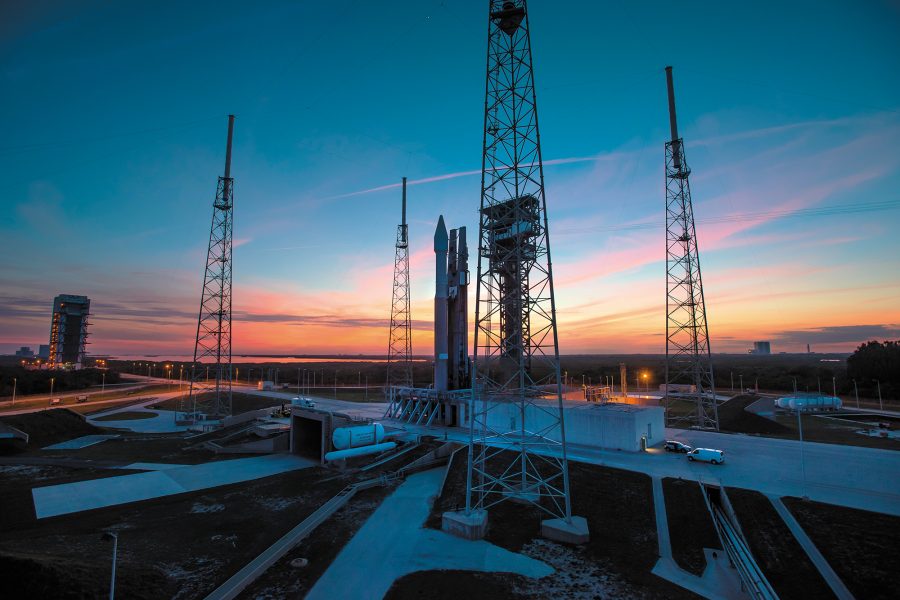
Chief of Space Operations Gen. B. Chance Saltzman is warning lawmakers that the Space Force may eventually have to limit the number of launches it can support each year without additional resources to manage surging demand at its spaceports.
Demand for rides to space for both commercial and military payloads has risen dramatically in recent years, and the Space Force is responsible for facilitating the bulk of U.S. launch operations at its two coastal ranges, which together supported 180 missions in 2025. Annual launch rates at the two ranges are projected to grow to more than 700 over the next five to 10 years, and leaders say more funding is essential to further prepare its spaceport infrastructure for that higher throughput.
“What we’re trying to do is expand that infrastructure as quickly as possible,“ Saltzman said July 15 at the Global Air and Space Chiefs Conference in London. “We don’t want to put a cap on the number of launches that we can support from our ranges, but we have to consider that our existing resources will fail if we don’t consider a cap. And I think that’s kind of where we are right now.”
Saltzman’s warning about a potential cap on annual Space Force-supported launches comes as the service is crafting a 10-year strategy for range improvements and policy changes. Among the service’s needs are new roads and bridges to support more providers on the range, better commodity access to launch pads, and expanded authorities that allow the ranges to operate more like commercial ports.
“The constraints are that we built our spaceport infrastructure at a time … when eight, nine, 10 launches was a big year,” Saltzman said. “Since the Space Force was established seven years ago, [there has been] a 1,100 percent increase in operational tempo of launch services being provided. It starts to put stress on that infrastructure that was designed for a different operation. That’s the fundamental kind of limitation.”
It’s not clear at what point the ranges might hit their capacity limits, though that’s a question the launch enterprise is working to answer now. Col. Eric Zarybnisky, acting portfolio acquisition executive for space access, said he’s tasked spaceport leads at Vandenberg Space Force Base, Calif., and Cape Canaveral Space Force Station, Fla., to develop models that depict where bottlenecks exist today and what additional resources they might need to address them.
“I owe it to Congress and the executive branch to say: I need this money and here’s why,” Zarybnisky, recently confirmed to be a brigadier general, told Air & Space Forces Magazine in an interview at Space Systems Command headquarters at Los Angeles Air Force Base. “I want to be able to point very clearly to analysis that says expanding out a booster taxiway at the Cape, here’s what that does for us, right here is how it improves capacity, here’s how it alleviates the road constraints we have there.”
A Space Systems Command spokesperson later said that the analysis is less about defining “a restrictive, numerical cap for launches,” and more about better understanding where to invest in order to expand capacity.
“These updates are about more than just keeping pace,” the spokesperson said. “Space Access is committed to modernizing our infrastructure and drive a paradigm shift toward a resilient, ready, and synchronized spaceport ecosystem that guarantees unfettered, on-demand access to space for the nation.”
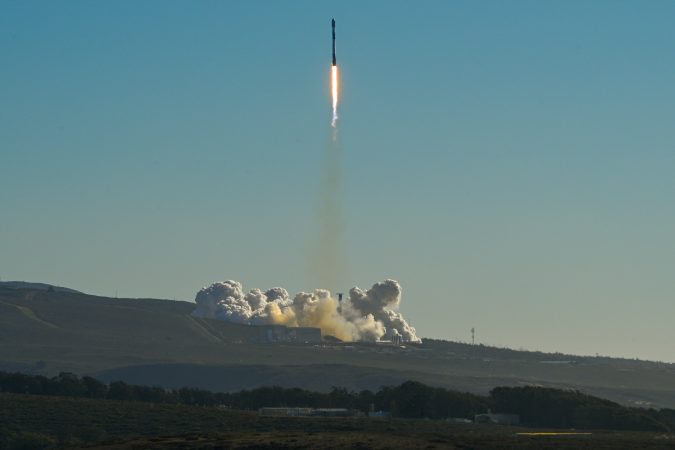
Space Launch Delta 30 Commander Col. James Horne, who oversees operations at Vandenberg, said the range is on track to support about 90 launches this year. He told Air & Space Forces Magazine in an interview at the base he expects that number could hit 150 to 200 in the next two to five years. While the command’s focus is on expanding capacity rather than limiting it, Horne said without more funding and infrastructure investment, it would be hard to support more launches beyond that.
“That’s where we start to get pretty tight without a lot of those additional investments that we are making and that we’re budgeting for to get there,” he said.
Saltzman, who is set to retire this summer, said in the briefing that launch capacity will likely continue to be a top priority for the service in the coming years. Lt. Gen. Douglas A. Schiess, the nominee to be the next Chief of Space Operations, echoed those sentiments during his July 16 confirmation hearing.
“If confirmed, the most pressing issue I would address in launch range management is scaling to meet the unprecedented increase in launch tempo, as well as the exponential growth in commercial missions,” Schiess said in a written response to advance policy questions from the Senate Armed Services Committee.
Lawmakers have largely been supportive of the Space Force’s requests for additional launch range funding and legislative flexibility. In fiscal 2024, Congress allocated $1.3 billion through fiscal 2028 to support infrastructure efforts at the service’s launch ranges through an effort called Spaceport of the Future.
In its fiscal 2027 budget request, the Space Force is seeking to continue many of the infrastructure projects it started in the first phase of Spaceport of the Future. Zarybnisky said the service hasn’t determined how much more funding it will need for the next phase of upgrades, dubbed Spaceport of the Future 2.0, but will submit an initial request as part of its fiscal ‘28 budget proposal.
Congress has also approved legislative changes in recent years that would allow the Space Force to collect more fees from the commercial launch companies that use its ranges. While the service previously could require reimbursement only for direct costs like utilities, a provision in the 1984 Commercial Space Act prohibited it from requesting payment for indirect costs, including maintenance and upkeep.
The Fiscal 2024 National Defense Authorization Act sought to remedy that, allowing the service to collect indirect fees, with guardrails, through 2026. The limitations include a fee cap of $5 million annually. Space Force officials have said they would like to see that cap increased, and a 2025 Government Accountability Office report said the service was “potentially missing opportunities to recoup millions of dollars” because it lacks clear guidance on cost collection and reimbursement.
House and Senate lawmakers have proposed extending the current $5 million cap through 2031 in their respective drafts of fiscal ‘27 defense policy legislation. Meanwhile, Zarybnisky said the Space Force is crafting a more transparent approach to fee collection that gives companies more insight into the fees and how it plans to use them to improve its ranges.
“We owe Congress, the launch service providers, everybody, clear analysis that says: Here’s how we got to that number, here’s the right answers, here’s how we’re going to execute that authority to make sure it’s transparent to the launch service providers,” he said. “So, that is absolutely part of the conversation.”
