
US 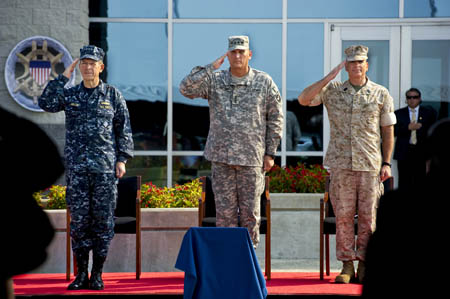 Joint Forces Command officially closed its doors Thursday in a move meant to trim excess Pentagon bureaucracy and help the Defense Department operate more efficiently. Speaking during the disestablishment ceremony at the command’s headquarters in Suffolk, Va., Adm. Mike Mullen, Chairman of the Joint Chiefs of Staff, said airmen, soldiers, sailors, and marines are so used to operating jointly after nearly a decade of fighting two wars that a separate command dedicated to fostering jointness is no longer needed. However, he emphasized that “international, economic, and threat environments” will “demand we work together in order to be successful” in the future. Mullen said the Air Force-Navy AirSea Battle concept, which calls for closer integration of air and sea forces, is the perfect example of how integrated the services have become. “This and many other joint approaches would have been almost unthinkable a mere generation ago,” he said. For that, JFCOM deserves credit. DOD established the command in 1999. While the Pentagon leadership has eliminated some of JFCOM’s former functions, some activities will live on in the Norfolk-Suffolk area under new management or with other US military organizations. (AFPS report by Jim Garamone)
The Air Force’s BACN may be cooked—the service plans to retire its entire E-11A Battlefield Airborne Communications Node fleet in fiscal 2028 and equip aircraft to use satellite communications instead.