
New Enlisted Recruiting Commander
By Todd South
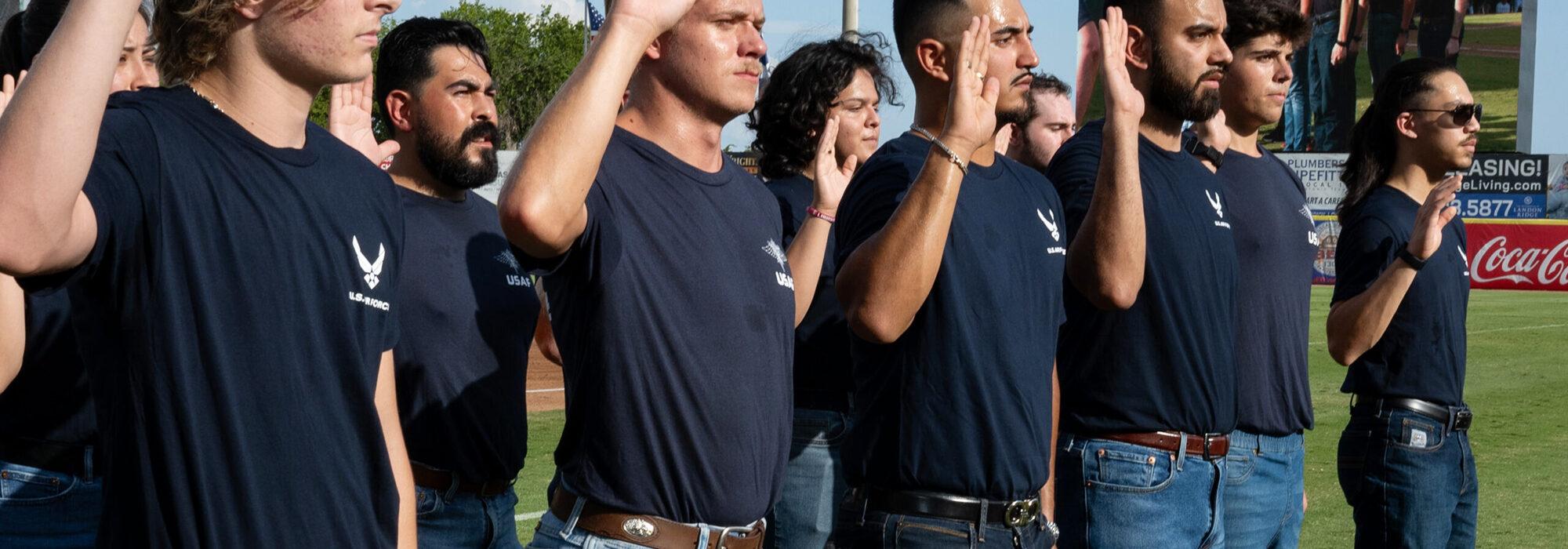
The Air Force appointed a colonel to head enlisted recruiting, more than 18 months after combining officer and enlisted recruiting into a single organization.
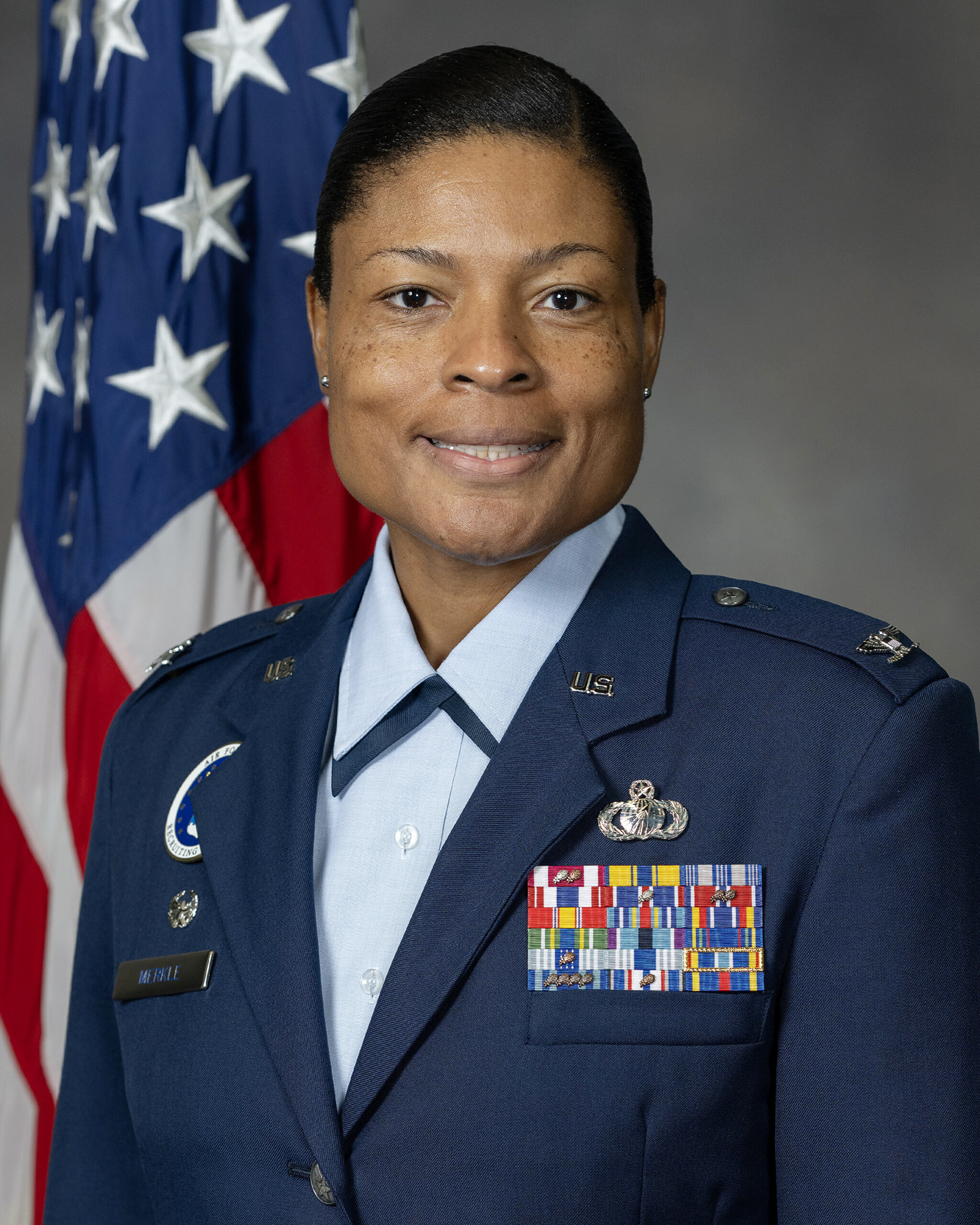
Col. Lacresha A. Merkle took command of Air Force Recruiting Services on July 30 at Joint Base San Antonio-Randolph. She will report to Brig. Gen. Jeffrey W. Nelson, who heads the Air Force Accessions Center, which combines AFRS and the Jeanne M. Holm Center for Officer Accessions into a single organization.
The Holm Center, at Maxwell Air Force Base, Ala., used to be part of Air University before being folded into the Air Force Accessions Center (AFAC). Nelson has been dual-hatted for the past 18 months or so overseeing both commands.
“Today’s assumption of command represents more than organizational change; it marks our commitment to building a seamless, modern accessions enterprise,” Nelson said in an AFAC release.
The Air Force combined the accessions activities in December 2024 to “streamline” enlisted and officer accessions as it dug out of 2023, when it failed to meet recruiting goals for the first time since 1999. The Air Force met its goals in 2024 and 2025 and this year reached its target five months early, bringing in 32,750 recruits—the most since 2004.
Merkle arrives as the Air Force and Space Force combined plan is to add 12,700 more uniformed personnel, including 8,900 Airmen and 2,800 Guardians. It’s not clear yet how that breaks down between officer and enlisted accessions.
If funded by Congress and achieved by recruiters, the Air Force would end fiscal 2027 with 330,400 Airmen, the most since 2022. The Space Force would end the year with 12,795 Guardians, the most ever, en route to a doubling in size over five years, according to Space Force plans.
The Space Force has been the most officer-heavy of the military branches, with a roughly 50/50 split between officers and enlisted.
In the release, Merkle said she wanted to “sharpen our recruiting pipeline.” Merkle comes to the post after commanding the 360th Recruiting Group in New Cumberland, Pa., where she oversaw more than 960 Airmen spread across 21 states and Europe, according to her official biography.
Joining Merkle at AFRS is Chief Master Sgt. Jake Fason, who took over as the new AFRS command chief during the same July ceremony.
New Rules for ‘Grooming Standards Separations’
By Matthew Cox
The Department of the Air Force released new guidance telling commanders to begin separating Airmen and Guardians who have had medical shaving profiles for too long.
The July 28 memo, “Changes to Military Separations Incorporating Grooming Standards Separations,” was posted on the amn/nco/snco Facebook page. An Air Force official confirmed that Assistant Secretary of the Air Force for Manpower and Reserve Affairs Richard Anderson’s memo is authentic.
The memo updates a December 2025 policy issued after Defense Secretary Pete Hegseth announced a crackdown on deviations from military grooming standards. It directs commanders to consider separating Airmen and Guardians who have held shaving profiles for more than 12 of the past 24 months and who remain unable to conform to grooming standards.
“Members accumulating more than 12 months of medical profiles for shaving within a 24-month period who remain unable to meet grooming standards must be considered for separation under this provision,” wrote Richard L. Anderson, assistant secretary of the Air Force for Manpower and Reserve Affairs.
Commanders must either initiate involuntary separation or submit a retention recommendation to their chain of command.
The policy change does not affect religious waivers for Sikhs, Muslims, and other religious groups permitted to wear beards under religious accommodations.
Service members separated “solely on the basis of the condition” and not for deliberate disregard of the policy will be discharged under honorable conditions, the memo states. The new policy should not be used to separate members who otherwise would be separated for unsatisfactory performance or misconduct, the memo states.
Commissioned officers considered for separation under the policy “must be formally counseled on their deficiencies and given an opportunity to correct those deficiencies,” the memo said.
Commanders “seeking to retain members unable to meet grooming standards due to facial hair” can refer their recommendations to their chain of command. Retentions may be granted on a “case-by-case” basis, the memo states, and should only be approved if there is a “compelling government interest” for retention, such as:
- Low manning and retention rates in the Airman or Guardian’s career specialty;
- The Airman or Guardian has special experience or specialized training;
- The cost and time required to replace the individual is extensive; or
- The Airmen or Guardian is close to retirement.
The Air Force Surgeon General previously authorized profiles of up to five years in 2020. But in a Sept. 30, 2025, memo, Hegseth ordered the services to revise their policies, saying beards, goatees, and other facial hair that could interfere with a proper seal on a chemical protective mask or firefighter respirator would be prohibited. Service members suffering from conditions such as pseudofolliculitis barbae, also known as PFB or razor bumps, could no longer hold medical shaving profile for extended periods of time. PFB is a skin condition caused by ingrown hairs, which can become infected and make shaving painful.
The Air Force updated its policy in December 2025, advising commanders and medical professionals to provide preventive education on appropriate shaving hygiene for Airmen and Guardians at risk of getting PFB. Treatments can include medication and laser hair removal.
