
ACC’s New Readiness Metric
By Matthew Cox
AURORA, Colo.
When Air Combat Command began developing a simplified aircraft readiness metric two years ago, the aim was to turn voluminous data points into a single number that could enable commands at every echelon to know exactly how many planes they could get off the ground on any given day.
Now, with Gen. Kenneth S. Wilsbach, the former ACC commander, as Air Force Chief of Staff, that system is spreading to other major commands.
Readiness Informed Metrics, or RIM, goes beyond mission capable rates and other averages to focus instead on how much airpower a unit can generate. ACC’s endorsement now has Air Mobility Command adopting the concept as well.
Ask any commander to explain readiness measurements and the answer is usually “complex.” Mission capable rates are one of the best known metrics: Aircraft are deemed mission capable when they are able to perform at least one of their core missions, such as counterair, electronic warfare, ground attack, and data collection, as in the case of an F-35A Lightning II. In 2024, the mission capable rate for F-35As was 51.5 percent. But rates are averages, and don’t speak to what units can do at a specific moment in time. So a squadron deployed for combat operations can show a 90 percent MC rate in theater, when its parts needs are prioritized, and fall well below 50 percent when it returns and is no longer at the front of the line. The Air Force stopped publicly releasing mission capable rates after 2024.
Break rates and fix rates—the percentage of aircraft requiring maintenance before they can be made mission capable, and the time required to make those repairs—are additional measures used by commanders to understand fleet readiness. While this provides more granular detail, these closely guarded numbers are also averages.
RIM boils all that down to a single number that tells if a unit can generate its assigned airpower requirements or, if not, how short of the goal it is. Squadron numbers can be rolled up into wings, wings into Numbered Air Forces, NAFs into a majcom, providing leaders at each level a way to understand their organization’s readiness in comparison to their requirements.
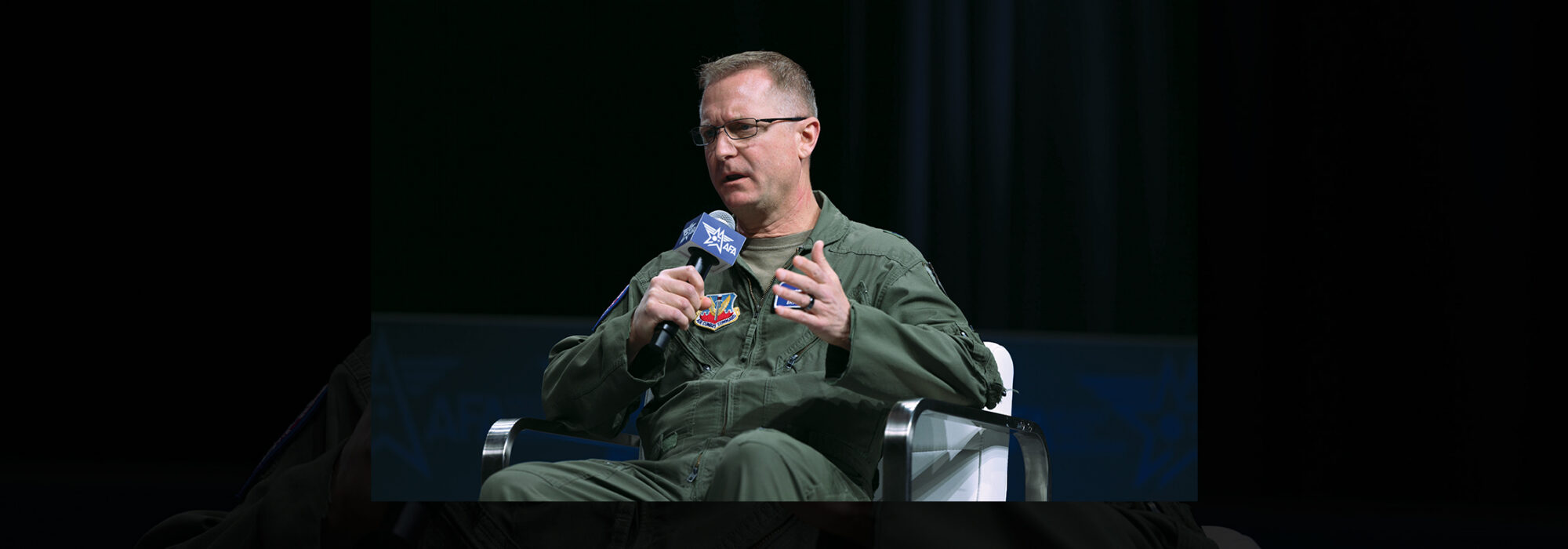
RIM also arms higher-level commanders to more easily communicate risk to headquarters, combatant commands, and the Joint Staff and could potentially be used as a transparent means of communicating readiness to Congress in terms of resource needs, said Brig. Gen. Brian S. Laidlaw in one of the most detailed explanations of RIM to date.
“We still track fixed rates; we still track break rates; we still track how long it takes to get the jets back—all of those numbers are still valid,” Laidlaw told Airmen at AFA’s 2026 Warfare Symposium in February. “They are foundational to what we do, but we need to pick one [number] that we can rally around, that’ll help us tell the story, that will align the enterprise.”
RIM settles on “mission capable airplanes—something that we could see, something that we could touch, something that we can communicate across the enterprise and say, ‘this is the minimum number of mission capable airplanes that we need,’” Laidlaw added. “That’s the key to getting ready, since that became our North Star.”
Laidlaw’s comments align with Wilsbach’s emphasis on readiness—to “fly and fix to fight and win our nation’s wars,” as he has said since becoming chief in November.
Air Force fighter, bomber, tanker, and other crews have been operating at a high tempo for the past year, beginning with Operation Rough Rider against the Houthis in Yemen, and following through with the Midnight Hammer raid on Iran’s nuclear infrastructure last June, Absolute Resolve against Venezuela in January, and since Feb. 28, Operation Epic Fury against Iran.
Compared to the 1980s, today’s Air Force operates with smaller squadrons and wings, each with fewer mission capable aircraft than in earlier generations. During the Cold War, each fighter wing had three squadrons of 24 fighters, and mission capable rates averaged 80 percent. When a wing deployed, it sent two squadrons, each fully manned and with 24 mission capable aircraft, leaving behind the third wing which donated jets and crew to ensure the deployed squadrons were fully ready.
Today, fighter wings have just two squadrons, typically fewer than 24 aircraft each, and mission capable rates are just 60 percent or less. Deployed units send just 12 aircraft forward in a typical deployment, notes John Venable, a senior fellow at the Mitchell Institute for Aerospace Studies and a retired Air Force colonel.
Laidlaw recalled flying as a young officer in F-15C Eagle squadrons with 24 jets in the early 2000s. “When we did our phase one and our phase two exercises, if you didn’t generate 24 aircraft during your exercise, someone was going to have to answer to that—that was the bar,” Laidlaw said. “Over time, we haven’t necessarily been able to do that.”
Before implementing RIM, ACC officials analyzed years of readiness data, finding that mission-capable rates slowly degraded over time. Said Laidlaw: “What we saw when we looked at this was, over time, [how] we defined success was largely based on the previous year’s performance.” The net effect was that “year after year, you see [USAF] setting the goal post lower and lower.”
With RIM, however, “we tie [readiness] directly to a mission, directly to a requirement,” Laidlaw said. “Everyone can see that it’s a whole number. Either I have the number of airplanes that I need to do what I’ve been tasked to do, or I do not have the number of airplanes I need to do my tasking.”
That delivers a level of clarity that isn’t there when leaders juggle percentages. Laidlaw would not provide specific RIM data, noting those figures are classified. But he did offer a hypothetical: a wing commander with 200 assigned aircraft and a RIM requirement of 150. “You know that you have to have 150 mission capable aircraft every day,” Laidlaw said.
“When you show up at work in the morning and you look out the window and you look across the flight line, and there’s only 100 airplanes out there that are mission capable,” this much is clear: “We’re 50 airplanes short.”
Unlike other measures, which may look different depending on where in the wing you sit, RIM is the same for everyone: “It doesn’t matter if you’re wearing pilot wings, if you’re wearing a maintenance badge, if you are from any one of the support agencies that are absolutely critical to building those mission capable rates, you get it immediately. … It’s simplicity.”
What RIM also does is clarify the picture for senior commanders, Laidlaw said. ACC Gen. Adrian L. Spain chairs a video teleconference with ACC’s wing commanders twice a month, and senior leaders from operations and sustainment also listen in.
“Each wing commander puts up there one slide front and center, prominent, large, and he or she gets to answer the question: Am I meeting my RIM, or am I not meeting my RIM number?” Laidlaw said. “It is clear as day. Everybody gets to see it up and down the chain of command.”
Each commander is allowed three “detractors” that are keeping them from meeting the RIM target. When, at a recent meeting, one commander had an “abnormally high depot rate,” it was clear the issue is not under his control.
“We’ve got to modernize to generate readiness for the future,” Laidlaw said. “Well, that decision was made, in some cases, months, even years ago, by different commanders.”
That’s where Spain, as the overall commander, can step in and say, “Here’s my risk decision. We’re going to prioritize this and this,” Laidlaw added. “Everyone up and down the chain sees it … and now we go and we execute.”
Brig. Gen. Derek M. Salmi, director of operations for strategic deterrence and nuclear integration at Air Mobility Command said AMC is now working to incorporate RIM into its processes, while tailoring the concept to the mobility mission.
“We recognize the value of RIM as a very powerful … view of what the requirement is,” Salmi said, adding that the command has “spent a lot of time ensuring that our North Star number is correct, so we are shooting for the right target.”
Like ACC, AMC has incorporated RIM into its regular commanders updates.
“Every week, our maintenance professionals pick one of our major bucket systems, and we deep dive into it using the North Star number,” Salmi said. The process is “aligning everyone to what the clear target is, what levers we’re trying to pull all the way down to the wing level—to include more resources, more personnel, more equipment. So we’re aligned and not working at cross-purposes.”
While it remains unclear if RIM will be adopted in all the majcoms, under Wilsbach’s leadership, the service has begun to use similar concepts as he ramps up the focus on readiness. In early February, Lt. Gen. Kenyon K. Bell, deputy chief of staff for logistics, engineering, and force protection, said at the Mitchell Institute for Aerospace Studies’ Airpower Forum that his command is using a new framework, the “Air Craft Readiness Machine (ACRM),” to identify a North Star for tracking the availability of each aircraft in the USAF fleet as a means for prioritizing resources.
Pilot Readiness
RIM and ACRM are all about airplanes. What neither addresses is the people factors that squadron and wing commanders must watch, such as how frequently their people are flying.
Squadron commanders, whose focus is on their unit, rather than across a wing or majcom, find it difficult to separate materiel readiness—how many jets they can put on the ramp—and overall readiness—how many pilots can fly those jets off the ramp for real-life missions.
Air Force Lt. Col. Ryan Stillwell, a former B-1B Lancer squadron commander, said the two are intimately intertwined. Readiness assessments “should be based on how many sorties I need a month to keep my aircrew current and ready,” he argued.
To Stillwell, currently an education fellow at Mitchell, if the only goal is to maximize the number of mission capable jets, “you’d barely ever fly,” he said. “You would fix them and put them in a hangar, almost like a classic car. But that’s in conflict with why we have to fly these airplanes: The whole point of higher MC rates, or in this case, number of MC aircraft, is to be able to fly them.”
Another former B-1B squadron commander was similarly skeptical. Units track aircraft maintenance levels and crew flying hours very closely and that classified report “is pushed every month right from the squadron level and is reviewed by the majcom commander,” the former officer said. “But I’ll be completely frank with you: I personally never saw it drive any change at my level in the unit. … Something actually has to happen … to drive change.”
Multiple former commanders said the reality is that squadrons will take on missions regardless because squadrons will “always find a way to get it done,” one said. You don’t go into anything intending to fail or to not give it your best effort, despite the constrained resources. You’re still going to find a way to do it.”
That said, former commanders acknowledged RIM can help higher-level leaders, including civilians lacking in knowledge about detailed maintenance statistics, get a clearer picture of how many combat assets units can generate.
“This isn’t a panacea that will fix all the readiness problems,” Stillwell said. But RIM can provide a “more consistent way to report the true state of the force … that everybody can understand, whether it’s within the Air Force, or within a command from the Pentagon, all the way up to Congress.”
CCA’s AI Pilots Step into the Spotlight
By Greg Hadley
AURORA, Colo.
Just one year ago, Collaborative Combat Aircraft (CCA) took center stage as then-Chief of Staff Gen. David W. Allvin designated the two competing jet prototypes as the first unmanned fighters in Air Force history: General Atomics’ YFQ-42A and Anduril Industries’ YFQ-44A.
Twelve months later, it’s the autonomy software flying those aircraft that’s garnering the attention. Autonomy software, more than hardware, may prove the most valuable and enduring element of the CCA program.
Two autonomy software suites are competing, and both have flown aircraft from General Atomics and Anduril. Indeed, halfway through the Warfare Symposium, Anduril said its YFQ-44A had flown under two systems—one of the competitor’s and its own system—in a single flight.
With AI the talk of the nation these days, Air Force CCAs are among the most challenging applications in the works. The “AI pilots” that will fly CCAs must be able to safely operate in tandem with crewed fighters and execute missions dictated by their human fighter pilot “quarterbacks.”
Autonomy has been an objective capability since at least 2018, when the Air Force Research Laboratory was running its “Skyborg” experiments, noted Col. Timothy Helfrich, portfolio acquisition executive for fighters and advanced aircraft, during a panel discussion at the symposium.
Skyborg was software independent of the airframe, but even so, in a world where competitions have long been between competing airframes, industry focus turned to the hardware, not the software.
That has largely remained true as General Atomics and Anduril have battled in the media over preeminence while the Air Force awaits the final decision in what it’s dubbed CCA Increment 1. But just as the Air Force began the hardware competition with five entries before narrowing to two, it likewise awarded contracts to five companies to work on autonomy software. Officials have thus far declined to name all of them.
In February, however, the Air Force finally lifted the lid on its software efforts. A Feb. 12 release revealed that Collins Aerospace had been paired with General Atomics to test Collins’ “Sidekick” autonomy software, while Shield AI and Anduril would test Shield’s “Hivemind” system.
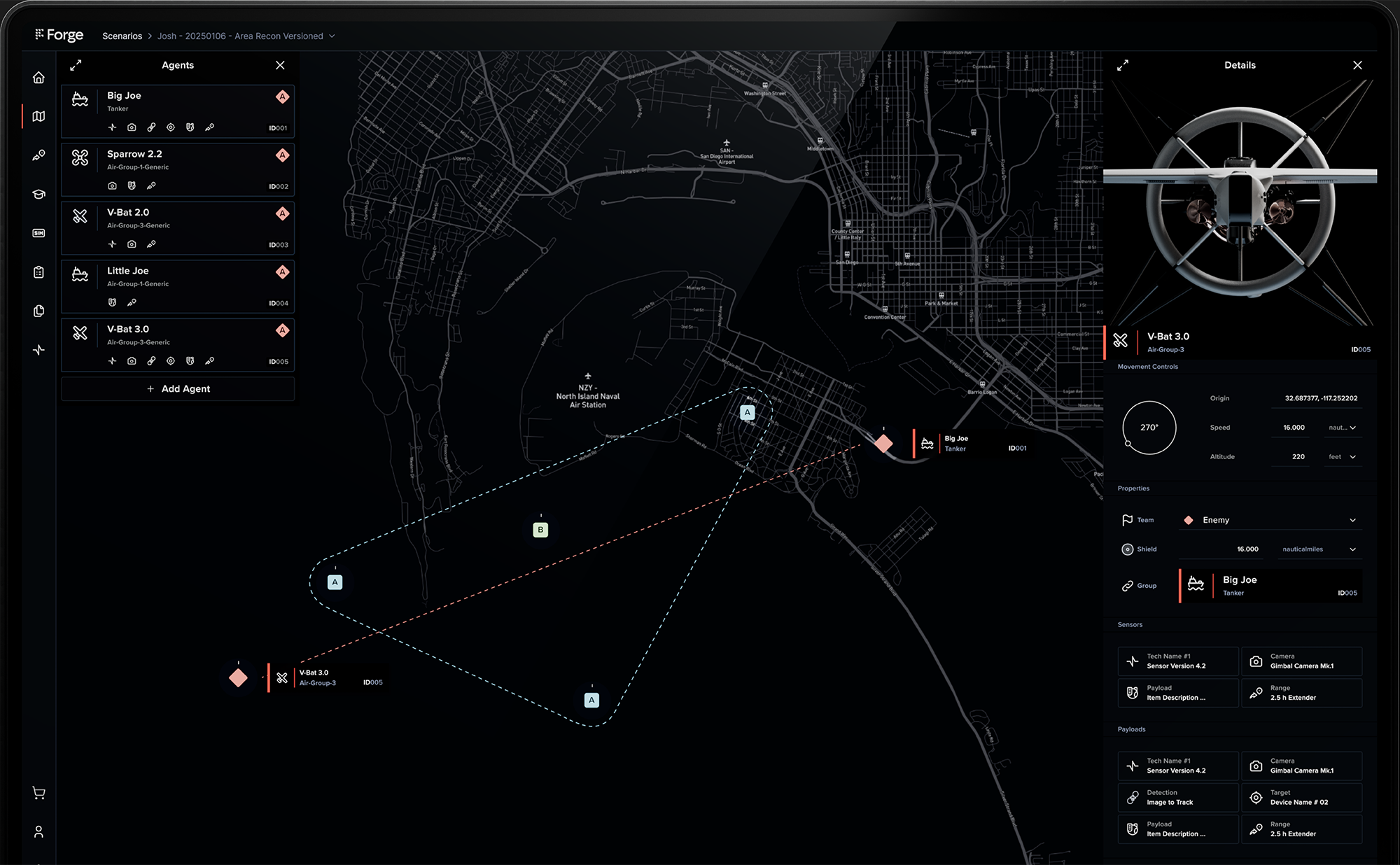
Sidekick and Hivemind are artificial intelligence flight control and management software designed to fly any host platform, then learn to execute missions as directed.
“We see it as essentially the pilot in the seat,” said Lt. Col. Matthew Jensen, commander of the Air Force’s Experimental Operations Unit, which is developing tactics and procedures for operating autonomous systems and integrating them with manned fighters.
Just as pilots can and do switch aircraft, these AI systems can learn to fly different platforms. Shield AI’s Ben “Billy Ray” Bradley, a retired Air Force pilot, told Air & Space Forces Magazine that the idea that the CCA program has locked its aircraft builders and software providers together into two competing teams isn’t accurate.
“The Air Force has paired us with Anduril for flight, but we also, in simulation, can and do fly on the GA air vehicle,” Bradley said. Hivemind has already flown General Atomics’ MQ-20 Avenger, the aircraft on which the YFQ-42A was based.
“We are required—because the whole purpose is that we are agnostic to any platform—to be able to fly on both platforms in simulation,” Bradley said. “But because you don’t have all the time to go do actual flight tests, [the Air Force] partnered us with one platform to go do flight tests. But it’s not as if we can’t fly on GA’s platform.”
Hivemind has also flown multiple aircraft from drone-maker Kratos, and even a variant of Airbus’ UH-72 Lakota helicopter. It’s also scheduled to fly on Northrop Grumman’s Talon IQ drone, a variant of Northrop’s YFQ-48A Talon Blue CCA contender, though Shield AI declined to say when.
And it is the brains for Shield AI’s own developmental CCA, dubbed X-BAT. One of the most eye-catching displays at the symposium was a 45 percent scale model of the X-Bat, which is designed to launch vertically from a trailerable launch rig. The model at the symposium came complete with “Powered by Hivemind” emblazoned on the wing.
The full-sized version Shield intends to fly later this year will be about the size of an F-16, powered by a GE F-100 engine, the same powerplant as the F-16.
Collins Aerospace has not been as public as Shield in detailing Sidekick’s flights. But a spokesperson told Air & Space Forces Magazine that Sidekick flew on “three or four” platforms during its classified development.
Sidekick beat Hivemind in the race to fly one of the CCAs first. General Atomics announced Feb. 12 that Sidekick had flown the YFQ-42A earlier in the month, with a human on the ground managing the system.
That put Sidekick perhaps three weeks ahead of Shield AI, since it wasn’t until Feb. 25 that Helfrich revealed at the conference that Hivemind had made its first flight with Anduril’s YFQ-44A.
Both Sidekick and Hivemind “performed as expected,” Helfrich added—which Lt. Col. Matthew Jensen, commander of the Air Force’s Experimental Operations Unit (EOU), called a good first step.
“We’re probably treating it much like we would a student pilot: ‘Hey, let’s get through the basics: Can you stay in your space? Can you fly? Can you avoid other aircraft?’” Jensen said. “And then as we build confidence in that, we’ll start to add more and more capability, more and more challenges to it. And the goal is that eventually you have a transferable capability that is as good as your high-end, highly proficient fighter pilot.”
There was one wrinkle on the YFQ-44A flight, Helfrich noted, that demonstrated an important point about these new systems: “What we did was we flew one mission autonomy [from] Shield AI, and then in the same flight, without landing, we went and pivoted to a second mission autonomy, same flight.”
In essence, the drone had switched pilots midflight. The second pilot was Anduril’s “Lattice” AI flight software, and the company reported it executed the same test points as Hivemind.
Anduril was able to execute that midflight switch for the same reason Collins and Shield AI have been able to move their AI pilots between different aircraft: the Autonomy-Government Reference Architecture.
The A-GRA is a “baseline” of autonomy owned by the U.S. government. Every A-GRA-compliant aircraft must have flight autonomy software: “the parts that are highly coupled with your flight and safety-critical software, so just the basic things that make sure that the aircraft flies and it’s safe,” Helfrich said. And all A-GRA-compliant mission autonomy software must be able to connect to the aircraft’s flight autonomy software. When a human operator gives the basic direction for a CCA to take flight, the mission autonomy software is the pilot that makes the flight software takeoff.
A-GRA underpins the Air Force’s CCA program. Without it, the AI pilots would have to be customized to each aircraft, creating an extensive additional layer of programming. By standardizing the interface between the AI pilot and the internal flight system, the AI pilots can become interchangeable.
Bradley said it takes just weeks to direct the AI pilot so it can be integrated with a new platform, and Shield AI is getting faster and faster every time it puts Hivemind onto a new platform.
Decoupling the airframe from the AI pilot means the Air Force will have not one but two decisions to make as it narrows the field of competitors in Increment 1 later this year. With two aircraft and two pilot systems, there are four possible combinations to choose from.
Anduril’s midflight switch of mission autonomy software highlighted another aspect of the Air Force’s CCA program, one also demonstrated by the service’s surprise designation of Northrop’s YFQ-48A in December: As Gen. Dale R. White, the new czar for the Air Force’s top programs, including CCA, said: “If you’re eliminated from a competition, the door never remains closed.”
“You can continue to develop,” White said. “You may not get funded by the government, but at the end, if you think that you’re going to produce a better product, … you can … come back and still compete.” Anduril, for example, was never confirmed as being among the five companies competing for the CCA autonomy software contract, but in a blog post, the firm’s Senior Vice President for Engineering Jason Levin hinted that it had taken White’s advice and self-funded development of its AI Lattice pilot.
Operations Development
Even before the Air Force narrows to a chosen airframe and AI pilot, the service is standing up an experimental team to develop operational concepts, tactics, and procedures for how CCAs will be used in practice.
Helfrich, in fact, said “the most important thing” his team will do to advance CCAs this year is not the down-select decision, but rather to put CCAs in the hands of Jensen’s Experimental Operations Unit this coming summer.
Putting CCAs under the operational control of Airmen is not testing, but experimenting, figuring out how the autonomy works and orienting the humans to work effectively with the AI pilots.
For the AI itself, this phase will be about finding the limits of the systems and injecting rapid updates to improve them. Helfrich described the starting point as fielding a “minimum viable product,” a common term in the tech world, as the first step to developing improvements.
“We’re setting up the structure of the program to be able to respond and integrate with the operator every single day,” he said. “And so what you get on Day One, that’s just the first step. You’re going to keep getting better and better.”
The A-GRA is key to that. Shield AI and Collins can update their AI pilots without worrying about the safety of the aircraft itself, because the aircraft’s flight software is already settled and the interfaces are standard.
Potential updates will address weaknesses in the AI pilot’s performance, enabling it to improve. Jensen noted that while the A-GRA sets a baseline, the systems are neither the same nor completely equal.
Like people, the AI pilots can improve, and so will the human pilots working with them, predicted Brig. Gen. David C. Epperson, commander of the U.S. Air Force Warfare Center.
“That’s the crux of having the EOU and getting platforms actually in their hands, so that we can start to get sets and reps,” Epperson said. “And what we’re going to see over time as these [vendors] change their mission autonomy [and] as we advance the program, … we’re going to understand better how those changes matter to both the CCA, [and] the quarterback and how we train up that aircrew as we move forward.”
The entire effort is about building trust between the operators and the AI pilots, just as it is with building a team in a squadron.
“We actually have to deploy this in a way that allows our human brain to stay wrapped around the decision space, so that I can intuitively assess the inputs and the outputs,” said Lt. Gen. Luke C.G. Cropsey, military deputy to the assistant secretary of the Air Force for acquisition, technology, and logistics.
In other words, if the human pilot cannot understand why the AI pilot made the decision it did, Airmen won’t have the necessary confidence to trust the AI operationally. The AI has to react rationally to the human pilot’s instructions.
Jensen said his experimental unit embraces that perspective, and said he intends to have human pilots “debrief” with the autonomy software just like they currently do with each other after each sortie.
“I want to be able to talk to a large language model and explain what the autonomy did at a certain time and certain place, and [ask it to] provide the reasons why it did it,” he said.
Conceptually, that’s reasonable, but it’s hard to debrief a machine. Such a capability is still in development, but Helfrich and Jensen both said it’s critical to start building trust and familiarity now, rather than waiting to have every aspect of the AI pilot refined and trained to perfection first.
Jensen also said he plans to bring CCAs to major exercises “as soon as we can,” which may be unsettling to some.
“[That] will probably surprise some people when they show up to Red Flag and they’re like, ‘Why are the robots flying with us?’” Jensen said. “But you know, we’ll drive it and see what happens.”
The robots are coming, and it’s humans who will teach them—take them to the fight.
Guard, Reserve Concerned About Fighters
By Todd South
AURORA, Colo.
Air National Guard and Air Force Reserve leaders warn that the Air Force must modernize their fighter fleets along with the Active force, or they risk losing combat-tested talent and making the reserve forces irrelevant in future operations.
Speaking at a media roundtable during AFA’s Warfare Symposium in February, Lt. Gen. John P. Healy, chief of the Air Force Reserve, said more than 80 percent of his aircraft inventory is legacy jets with limited future lifespans.
“I am keenly aware of some of my units that are scheduled to divest without any plan of recapitalization,” he said. “I am, some could say, loud and annoying when it comes to [ensuring] we can maintain this fighting force.”
“Some of these units are 100 percent combat veterans,” he added, and the challenge is “to ensure that talent, that experience doesn’t walk out of the door during a normal, planned divestment.”
The challenge is similar in the Air National Guard. Maj. Gen. Bryony Terrell, special assistant to the ANG director, said more than half of ANG fighter squadrons have no road map for modernization.
“Thirteen of our 24 fighter squadrons have no advanced recapitalization plan,” Terrell said. “Some are programmed to receive legacy aircraft, and some have no identified follow-on platform at all. The Air National Guard must modernize alongside the Air Force—not after it.”
F-16 squadrons at Atlantic City, Air National Guard Base, N.J.; Buckley Space Force Base, Colo.; Joint Base San Antonio, Texas; and Morris Air National Guard Base, Ariz., are all at risk of losing aircraft, she said.
In the Reserve, according to Air Force Reserve spokesman Sean Houlihan:
- The 924th Fighter Group at Davis-Monthan Air Force Base, Ariz., deactivated its A-10 mission in September, without a follow-on fighter mission;
- The 926th Fighter Wing at Nellis Air Force Base, Nev., divested its last 10 operational F-16s in late 2025; and
- The 442nd Fighter Wing at Whiteman Air Force Base, Mo., is scheduled to lose its A-10s by the end of 2028.
Guard and Reserve leaders want to replace those legacy aircraft with new F-15EX and F-35 fighters, noting that the Air Force cannot meet mission requirements without their components. Air National Guard fighter units today represent 21 percent of the total Air Force, 30 percent of its combat power, and are responsible for 94 percent of homeland defense missions. They do all that for only 7 percent of the total Air Force budget, according to a 2025 Guard fact sheet.
Chairman of the Joint Chiefs of Staff Gen. Dan Caine, himself a former Air Guardsman, cited the Guard and Reserve contributions to Operation Epic Fury in his first press conference after the war began.
“The integrated Reserve and National Guard forces have continued to demonstrate the value of America’s Reserve Forces, including the Wisconsin Army National Guard operating in Kuwait and Iraq and Air National Guard units from a variety of states, to include Vermont and Virginia,” he said.
Singling out the Vermont Air National Guard’s 158th Fighter Wing, he noted that its F-35 crews had been mobilized for and flown in support of Operation Absolute Resolve against Venezuela in January, then flew directly to the Middle East in anticipation of Epic Fury. The back-to-back operations highlight how central Guard and Reserve forces are to the overall Air Force.
A Long-term Problem
Heather Penney, director of studies and research at the Mitchell Institute for Aerospace Studies and a former Air National Guard F-16 pilot, said the rapid drawdown of the Cold War force—and under investment in the 2000s—paved the way for today’s aged force.
“We got to this position because of major divestments in the 1990s,” Penney said. “We cut the force structure in half and slowed down our recapitalization programs.”
Instead of acquiring 750 F-22s as originally planned, the Air Force bought only 187. Meanwhile, counterinsurgency campaigns in Afghanistan, Iraq, and Syria increased demand for airpower.
“We had less force structure and had to use it harder because of flying hours and operations in the Middle East,” Penney said. “We prematurely curtailed the lifespan of those aircraft.”
If a typical fighter lifespan is 30 years, the cost to maintain and sustain those aircraft starts rising at about the 15-year mark, she said.
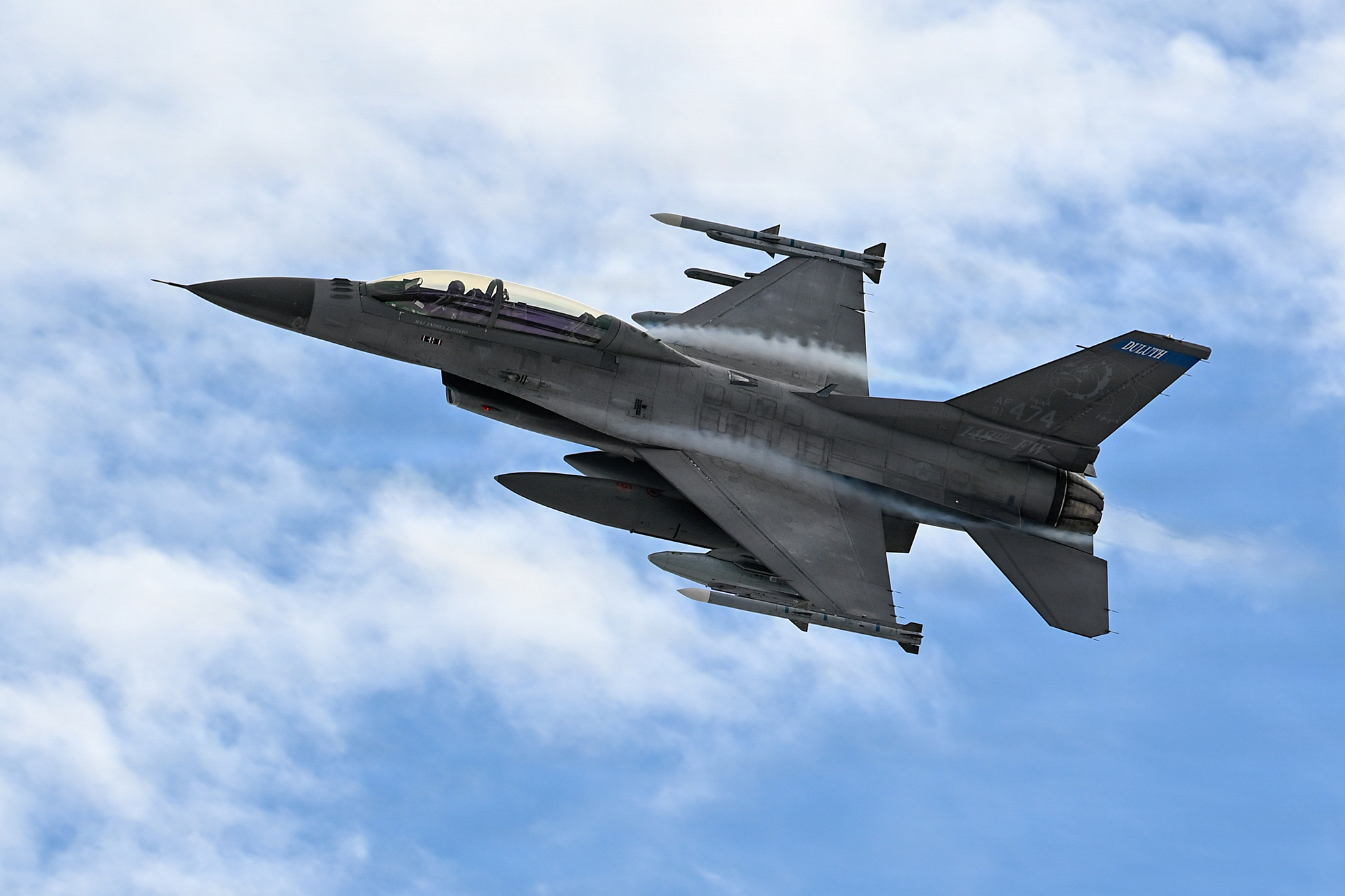
Air National Guard spokesman Maj. Jonathon LaDue acknowledged that the Guard’s Block 30 F-16s have limited structural airframe life remaining and must be retired over the next decade. Newer Block 40, 42, 50, and 52 jets—now averaging 36 years old—are also challenged. Current plans call for keeping them in service until around 2040, when they will approach 50 years of age, LaDue wrote in an email response.
“Fifty-year service life fighters are not an acceptable deterrent in the current and future threat environments,” LaDue wrote.
Transferring legacy aircraft from the Active force to the reserve components doesn’t solve the problem. The fiscal 2026 budget request indicated seven Guard wings will receive post-block F-16s in the coming years, but while that buys time after legacy A-10 Thunderbolt IIs are retired, LaDue said, it “is not a valid Total Force recapitalization or an enduring mission.”
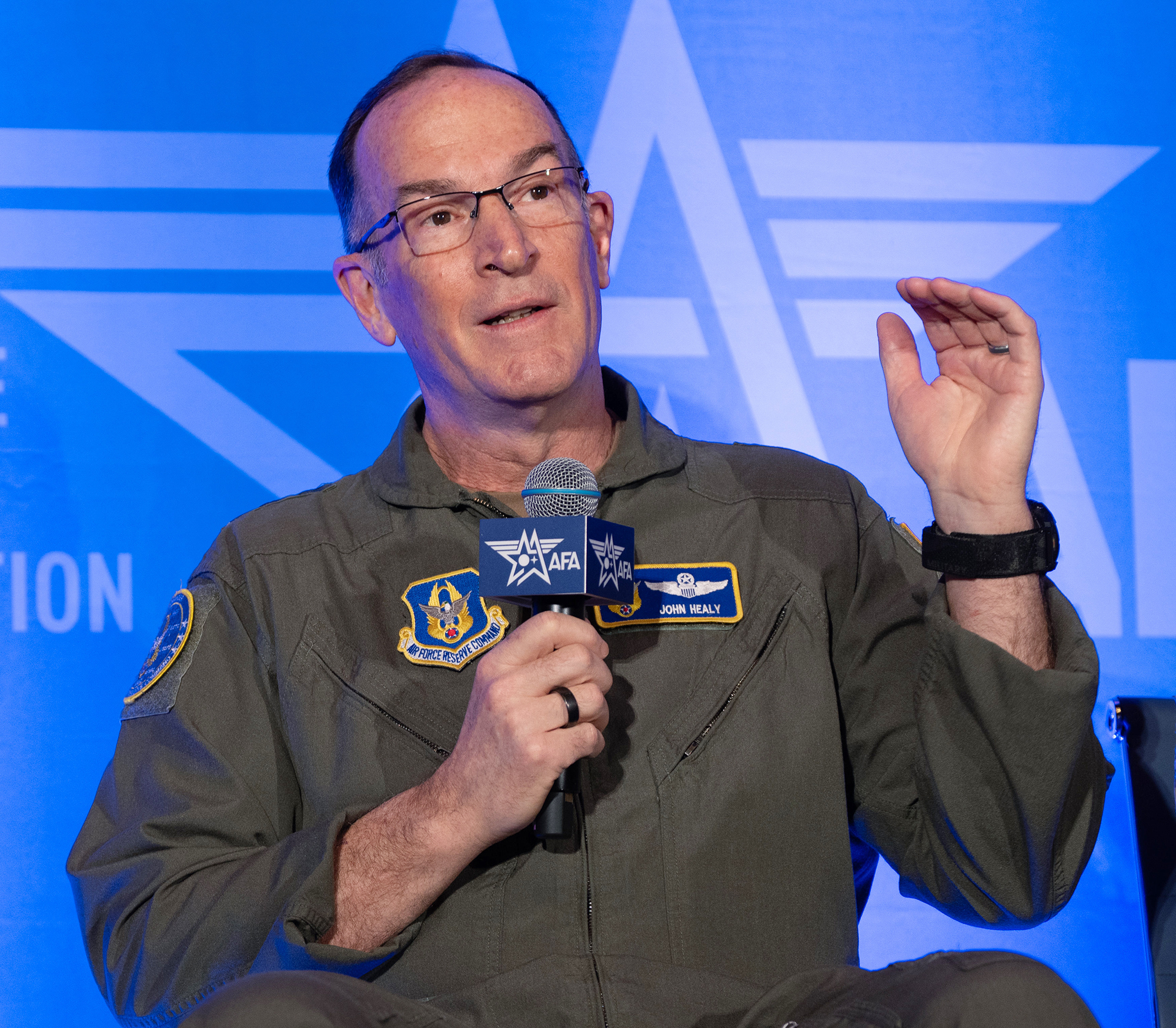
Healy, the Reserve chief, has sought to gain F-15E or EX jets to replace some retiring aircraft in the Reserve. “For every one of these 10 units that are going away, I’m looking at [whether] we can get an F-15 unit behind it—whether it’s a Strike Eagle or an EX,” Healy said. “I’m pressing hard. If we’re divesting of an F-16 unit, I want an F-35 unit behind it.”
Reserve units are more cost effective than Active units, Healy suggested, saying he can run an F-16 unit for $12 million less than the Active force can annually. Savings are even higher for other platforms, he said: $24 million less for an F-15EX unit and $28 million less than an F-15E unit.
But whatever the cost is to operate, the central challenge facing the Air Force is the shrinking size of the fighter force. An August 2025 report to Congress projected adding 300 advanced fighters by 2030, when the total fighter force is projected to be 1,400 fighters, 240 more than in the inventory today. The problem is that the Air Force’s stated requirement is 1,558 manned fighters to “achieve missions with high confidence and low risk.”
The Pentagon is expected to release its 2027 budget request later this spring and could increase planned procurement numbers. F-15EX production is expected to reach 24 jets in fiscal 2027, according to the Air Force’s report, and if additional funding is available, that could rise as high as 36. Air Force F-35 purchases, meanwhile, have yet to top 48 in any given year, and last year were only 24.
Post-block F-16s will continue to be upgraded with active electronically scanned array radars, multifunctional information distribution systems, joint tactical radio systems and integrated viper electronic warfare suites, according to the report, and later-model F-22s will also continue to be upgraded. But the Air Force has no plans to update its oldest Block 20 F-22s, which are no longer seen as combat capable.
Fear of Losing the Flying Mission
All of that has Guard and Reserve leaders worried about future flying missions. Some units are already being converted to other uses. In 2023, Mansfield Lahm Air National Guard Base, Ohio, transitioned from a C-130 flying unit to the 179th Cyberspace Wing. In 2019, the Puerto Rico Air National Guard’s 156th Airlift Wing, previously a C-130 unit, transitioned to a contingency response and communications mission, LaDue wrote.
And last year, the Maryland Air National Guard divested all its A-10s and converted to a cyber wing. Maryland is now the only state in the Union without a flying mission in the Air Guard. That future could hit other states as well.
“Without replacement, 12 Air National Guard fighter squadrons are at risk of losing their airframes and flying missions in the next five years,” according to a 2025 ANG fact sheet.
Talent Exit
When a unit loses its flying mission, the change radically alters personnel requirements.
“It truly is a huge shift for everyone involved when flying is not the mission,” said Brig. Gen. Shannon “Sinjin” Smith, commander of the Idaho Air National Guard, offering his personal perspective.
In a 2025 Mitchell report, Penney argued that the Air Force can ill afford the loss of pilots in the reserve components, given that the total Air Force was already short of requirements by nearly 1,850 pilots. Unlike the Active force, which transfers Airmen when their units shut down, members in the Guard are on the hook if they want to move to take a new flying position elsewhere.
She argues that the Guard’s 89 percent average retention rate over the past two decades has been crucial to maintaining core expertise in the service, and that shutting down units now will disproportionately impact experience levels across the Air Force. By contrast, the Active component managed just 40 percent retention between 2017 and 2022.
“Most reserve component pilots have more flying hours, sorties, simulator time, and deployments than pilots in Active component squadrons,” Penney wrote. “Shuttering fighter squadrons in the reserve component will further stress the Active component.”
The fallout from cutting flying missions for the Guard and Reserve hits harder than for the Active component.
The Active duty moves people to the mission if a base closes, or a squadron is deactivated, Smith said. But when you remove the mission from a Guard or Reserve location, “most Guardsmen are not going to move to the new mission.”
Lags in reserve modernization also hurt retention of Active-duty talent in the Guard and Reserve.
“The odds of an F-35 pilot getting out of the Air Force and going to an F-16 unit are pretty low,” Smith said.
The modernization problems hitting the Guard and Reserve are not limited to fighters, Smith said.
“It’s way bigger than fighters,” he said. Tanker units and airlift missions face their own strains. Those have a ripple effect on fighters also.
“You can never have a fighter based where you need it without airlift and refueling,” Smith said.
Another Mitchell study, authored in 2025 by retired Col. John Venable and Joshua Baker, noted that replacing an Active squadron on deployment takes two Guard or Reserve squadrons. Meanwhile, 10 Guard squadrons will be held back for homeland defense during a major war, leaving the Reserve with only six deployable squadrons, Venable’s report says. But realistically, only four Reserve squadrons could deploy to support combat operations in the Indo-Pacific.
Much will hinge on how successful the Air Force can be in increasing its budget over the next five years. Maximizing fighter production and leveraging cost savings through multiyear contracts would help, but only over time. Meanwhile, the Reserve cannot continue to divest without recapitalization, Healy said: “I think we’re finally at a point where we’re putting a stop to that.”
Terrell said fixing the modernization gap will rely on increasing F-35 and F-15EX purchases.
“If procurement opens up, I think there’s going to be a more open and balanced approach, and that’s what we’re hoping for,” Terrell said. “The key to all of that, though, is to have a plan. And right now, today, we don’t have a Total Force recapitalization plan that includes funding. So that means year-to-year we’re trying to figure out how the Air Force is going to roll out these platforms.”