
Compromise Defense Bill Adds Funds for Fighters, E-7
By Greg Hadley
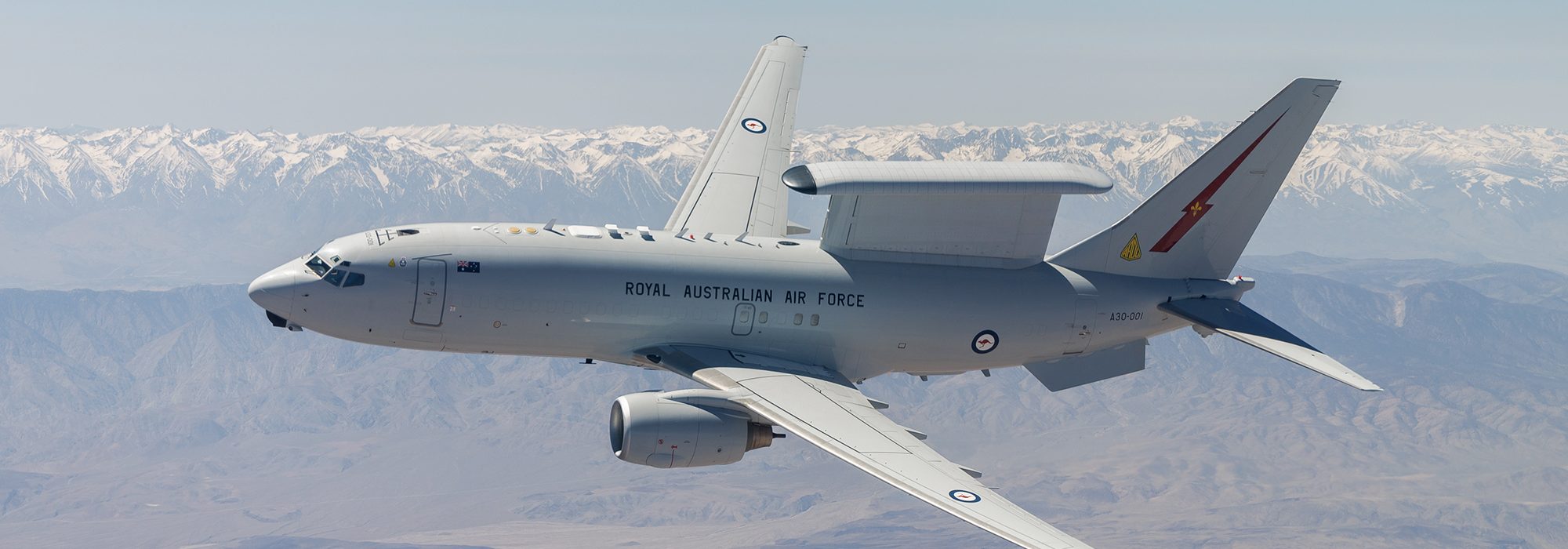
Congress is looking to add $900 million to save the E-7 airborne early warning and control aircraft from cancellation and $500 million aircraft from cancellation and $500 million to address “emerging needs” for the F-47 Next-Generation Air Dominance fighter in the fiscal 2026 appropriations bill released Jan. 20.
The bill also funds the Air Force to buy a dozen or so more airplanes this year, including six C-130Js, two Compass Call electronic warfare aircraft, and one more F-15EX fighter, along with some $401 million to address “economic” factors impacting the F-35 program.
The appropriation passed the House and was expected to clear the Senate and be signed into law at press time Jan. 30. It includes a total $17 billion over and above the Pentagon’s top-line request of $832 billion for defense, according to analyst Byron Callan of Capital Alpha Partners, not counting $156 billion approved last year by Congress as part of the Big Beautiful Bill Act reconciliation package.
If passed and signed into law, Air Force procurement would increase by $3 billion to $57.3 billion, from its request of $54.2 billion. But funding for operations and maintenance would decline by $1.4 billion and investment in research, development, test, and evaluation would decline by $887 million. Personnel spending would also decline, by $373 million, for a net increase of $401 million.
WEDGETAIL FIGHTERS
Lawmakers successfully protected the E-7 Wedgetail program, which the Trump administration had sought to cancel in the 2026 budget. Furious pushback from former Air Force leaders and the Air & Space Forces Association appear to have swayed lawmakers, who included $900 million for E-7, bringing total 2026 investment to $1.1 billion, to “continue E-7 rapid prototyping activities and transition to engineering and manufacturing development aircraft,” according to the joint congressional statement.
Lawmakers did not increase the number of Air Force F-35As to be purchased, as they have in years past, instead funding the Air Force request for 24 F-35As and 23 F-35B and C-models for the Navy and Marine Corps. The “economic factor” appears to address projected “price increases in the Lot 18 production contract” tied to supply chain issues. The F-35 Joint Program Office and contractor Lockheed Martin finalized Lot 18 and 19, covering 296 airplanes between them at a total cost of $24.29 billion. Negotiations on Lot 20 are ongoing.
The Air Force’s request for 24 F-35As in ’26 was its smallest ask in years—half as many as requested in 2025. The thinking when the ask was made was to limit procurement until the forthcoming Block 4 upgrade is ready, and Congress went along with that plan. Separately, however, lawmakers added $140 million for spare parts for the jets’ F135 engines and $80 million more for airframe parts in an effort to increase readiness. Congress also included $531 million in advance procurement to support future buys in its spending bill.
Lawmakers added $115 million to pay for an additional F-15EX Eagle II, increasing the 2026 buy to 22 jets.
Still, the biggest spending increases in the fighter jet category were reserved for the sixth-generation F-47. Lawmakers raised spending by $500 million, from $2.57 billion to $3.08 billion, as part of a package of plus-ups it said were “to address Department-identified needs after passage of [reconciliation] and emergent requirements.”
They also added $897 million in funding for the Navy’s next-gen fighter, the F/A-XX. In a joint statement accompanying the bill, appropriators directed the Navy to use the funds “to continue F/A-XX development” and award an engineering, manufacturing, and development contract “to achieve an accelerated Initial Operational Capability.”
MORE NEW AIRCRAFT
Congress members put up $976 million to acquire six new C-130J transports for the Air National Guard and $194 million to buy a new LC-130J “Skibird,” a C-130 adapted for landings in the Arctic and Antarctic to replace old H models.
Also added: $494 million for two EA-37 Compass Call electronic warfare aircraft, which would bring the total fleet size to 12, matching the original program requirement, and $250 million to buy a new C-40 executive transport jet. Finally, the measure adds $100 million for an unspecified number of additional HH-60W helicopters. Air Force budget documents suggests that would cover two aircraft at $40 million per air-frame, plus other costs.
Air Force Revises Deployment Model—Again
By Greg Hadley
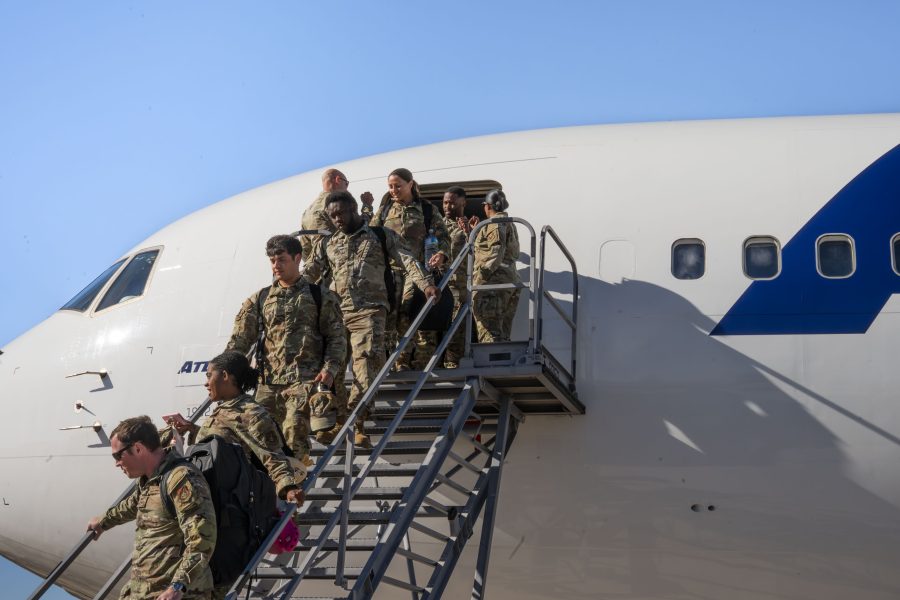
The Air Force is revising once again its deployment model, scrapping its plans for “deployable combat wings” and revamping the Air Expeditionary Wing with a new AEW 2.0 model.
The new AEW won’t return to the pick-up game AEW model of the 1990s, but will instead “form approximately 18 months prior to deployment so that its teamed, capabilities-based components can train and certify as a cohesive unit,” according to a release.
In canceling deployable combat wings (DCW), the Air Force is abandoning yet another of the initiatives launched as part of 2024’s “re-optimization for great power competition.” Other elements previously canceled include a planned “Integrated Capabilities Command,” the downgrading of major commands, and the renaming of Air Education and Training Command as Airman Development Command.
AEW 2.0 retains the objectives of the Deployable Combat Wing while changing key elements of that approach. DCWs resource the personnel and equipment needed for a deployment ahead of time, so that Airmen could train, exercise, deploy, and reset as a collective unit. Central to each DCW was a command element, or “A-Staff;” a mission element, such as a fighter, bomber, or airlift squadron; and support elements to run the air base or airfield and care for the needs of wing personnel.
Like that model, the AEW 2.0 seeks to minimize the number of “unit type codes,” or UTCs, needed to fill out a wing, an Air Force spokesperson told Air & Space Forces Magazine. UTCs define capabilities that comprise multiple Airmen; it take hundreds of UTCs to fill out a force package.
“The AEW will be comprised of significantly fewer UTCs than the legacy deployment construct,” the spokesperson said. The new model starts with a “core UTC” that covers both the command and control element and a base operating support element. The C2 element will not be an “A-staff,” however, but a wing operations center, the spokesperson said.
“The forces comprising the AEW Core UTC are sourced from predominantly one [major command], from as few additional bases as possible, and early in the deployment cycle to promote unit cohesion as they prepare, train, and certify together,” the spokesperson said.
The new wings will still be “modular,” with the Core UTC able to work with a wide variety of Mission Generation Force Elements, which comprise the operational forces.
“The MGFE are selected to provide expertise as required so the group and wing commanders are equipped to command effectively,” the spokesperson said. “Each wing will have its own unique set of demands that require a commander-driven employment plan that is base- and mission-specific.”
When DCWs were first introduced, commanders at the major command level objected to the construct because they thought it failed to recognize core differences between the major commands and their particular expertise. With the Air Force now under new leadership—specifically Air Force Chief of Staff Gen. Kenneth Wilsbach, who headed Air Combat Command when the DCWs were conceived—the concept has now been revised.
AEW 2.0 “will be implemented in fiscal year 2027,” which starts Oct. 1.
It has been nearly five years since the Air Force unveiled the Air Force Force Generation Model, or AFFORGEN, in an effort to better manage Air Force deployment rotations. AFFORGEN established a 24-month cycle, with four phases designed for units to prepare, certify, deploy, and reset. The goal was a predictable rhythm for presenting forces to combatant commanders and a clearer means of projecting and assessing risk and operational tempo.
What followed were a series of evolutionary changes, beginning in October 2023 with “Expeditionary Air Base” teams or XABs, that included a core nucleus of Airmen who trained together beforehand, plus additional personnel that joined the group in theater. Next came six Air Task Forces, or ATFs, which were built around teams of several hundred Airmen that came together a year before deploying; those teams then drew from a handful of bases when they deployed. The first ATF deployed in September 2025.
Deployable Combat Wings were envisioned as the culmination of that evolution. But the new AEW construct scales back on some of the biggest changes embodied in the DCW model, including interchangeable air staffs regardless of expertise and eliminating group commands.
The Air Force spokesperson said AEW 2.0 preserves “capacity to fulfill the in-garrison mission and defend the homeland,” acknowledging that the DCW concept could have left some bases undermanned.
Golden Dome’s Director Guetlein Focuses on Command, Control, and Interceptors
Courtney Albon
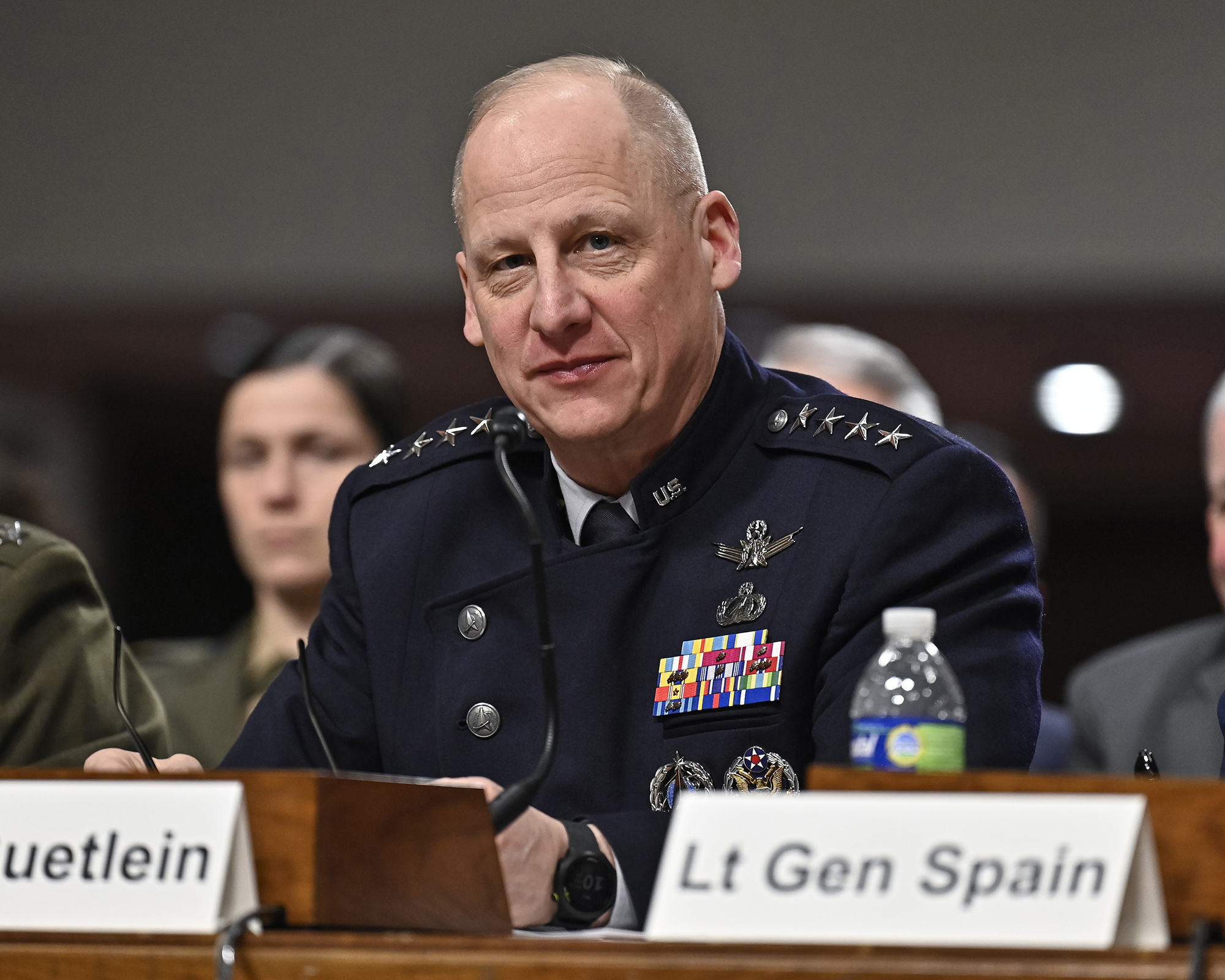
The Pentagon’s Golden Dome director said Jan. 23 his top priorities for the advanced homeland missile defense shield over the next two years are establishing a baseline command and control capability and integrating interceptors into that system. The vision for Golden Dome—initially cast by President Donald Trump’s administration in the early days of his second term—is a sprawling network of sensors, satellites, and interceptors designed to protect the United States from missile threats. In a speech at Space Systems Command’s Industry Days Conference in Los Angeles, Golden Dome Director Gen. Michael Guetlein offered new insight into how the program hopes to make progress toward delivering on that vision in the next few years, with the goal of demonstrating an initial capability by 2028 and an “objective architecture” by 2035.
First on the list is to develop an integrated command and control system by this summer. Guetlein described the system as a “glue layer” that will connect all of the tactical C2 capabilities that will contribute to Golden Dome. Since July, Guetlein’s team has been working with a consortium of six companies to integrate new and existing C2 capabilities into that system.
“Those six partners, and they are partners, are working together and holding each other accountable through peer pressure to deliver what they said they’re going to deliver on the timeline they said they’re going to deliver,” he said. “We have to have that delivered this summer and demonstrate the C2 capability in front of the president.”
In 2027, the program’s focus will shift toward integrating interceptors into that architecture, a task Guetlein hopes to achieve by that summer. It’s not clear how many or what types of interceptors will be part of that initial effort. The Space Force is working with industry to prototype space-based interceptors that can take out enemy missiles in the boost and midcourse phases of flight. In late November, the service awarded contracts to 18 companies for boost-phase interceptor designs.
SECURITY CONCERNS
As Guetlein and his team—which now consists of 52 personnel but will soon grow to 100—get after the program’s technical goals, they’ve also been managing a barrage of security threats since the program’s inception.
Those threats started in July, just after Guetlein was con-firmed to lead the office, he said.
“I was confirmed July 18,” Guetlein said. “On the 20th of July, they started hacking our defense industrial base.”
Guetlein didn’t expand on the sources or scope of the “hacking” but said it raised enough concern that Pentagon leadership directed the program to “go silent.”
That silence about a program that’s expected to cost $175 billion over the next three years—and much more beyond that—has drawn scrutiny from the public, members of Congress, and some in industry. Defense appropriators, in their draft of defense spending legislation released Jan. 20, called for more insight into the program’s budget.
Guetlein acknowledged the program’s secrecy and defend-ed it—saying that the threats from adversaries demand the Pentagon protect information about the program.
“We have been quiet,” he said. “I’ve not been talking to industry consortiums. I’ve not been talking to the press. I’ve not been talking to the think tanks. And it wasn’t until September I was allowed to even start talking to the Hill. That is why we’re not talking much, because we need to preserve this capability to defend this nation from our adversaries.”
Because of the threat, Guetlein has been limited to classified briefings on the Golden Dome architecture, meeting one on one with members of industry. To date, he’s briefed more than 350 firms, including all of the major defense primes. Asked when the program would have another industry day—the first and only was held in August—Guetlein said it’s not likely to happen in the near term. The program became “too exposed” after its first industry day, he said, possibly referring to briefing slides that leaked within days of the event.
To give more companies access to contracting opportunities, particularly small businesses, the program plans to establish an industry touchpoint, similar to Space Systems Command’s Front Door, that companies can use to engage with program officials and address concerns about security vulnerabilities. That should be active by next month, Guetlein said.
“The approach we are taking on security with our industry partners is very collaborative,” he said. “I have a team that is focused on working directly with you to talk to you about your vulnerability points and how you might be able to fill them, trying to let you know what could be happening to you—and in some cases, what is happening to you—and then working collaboratively with you to close those.”
At F-35 Factory, Hegseth Makes Acquisition Reform Case and Says Lockheed Will ‘Step Up’
By Courtney Albon
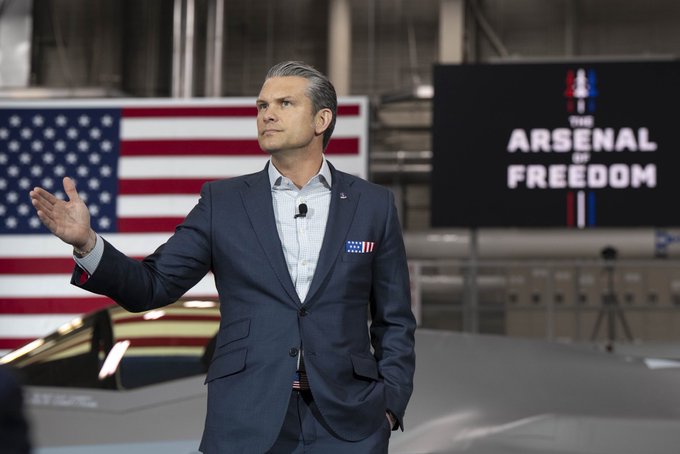
Defense Secretary Pete Hegseth foot-stomped the Pentagon’s push for acquisition speed and contractor accountability in a Jan. 12 speech at Lockheed Martin’s production hub in Fort Worth, Texas—the heart of the department’s biggest acquisition program, the F-35.
“We’re changing the game to incentivize speed, to incentivize efficiency, competition, open architecture at cost—ensuring that big companies like this one, and small ones, can compete,” Hegseth told employees who work at the plant.
The factory floor has become a sort of stage for Hegseth in recent weeks as he travels the country to defense firms large and small as part of his “Arsenal of Freedom” speaking tour, which started Jan. 5 at an HII shipyard in Newport News, Va. The campaign comes as both the Defense Department and the White House push for reforms across the defense industry, targeting waste in the Pentagon and the companies it buys from.
Hegseth in early November released a sweeping acquisition reform strategy meant to restructure Pentagon organizations and processes and inject more competition and accountability into weapon development programs. On Jan. 7, President Donald Trump issued an executive order that seeks to bar underperforming defense contractors from issuing stock buybacks and tie executive compensation to program execution. The order bemoans “years of misplaced priorities” by defense contractors and states that prioritizing “excessive dividends” over on-time capability deliveries harms military readiness and “betrays the American people.”
The F-35 is perhaps one of the most cited examples of a troubled DOD acquisition program with an estimated lifetime cost of $2 trillion, and Lockheed has drawn criticism for development delays and cost overruns. Hegseth acknowledged in his speech that he has “had some pretty tough words to say” about defense primes in recent months as he pushes for change in the acquisition system.
But he also struck a conciliatory tone toward Lockheed leadership. He highlighted the company’s recent successes—a record 191 F-35 deliveries in 2025, and a recent agreement with the Pentagon that could triple the firm’s delivery of Patriot Advanced Capability-3 missiles for the U.S. and its allies—and said he believes Lockheed will “step up” to meet the Defense Department’s demands.
“If you create the best and the fastest at cost on behalf of taxpayers and the warfighters, you’re going to win,” he said. “I hope, based on what Lockheed Martin can do, that you win a lot. Because you make incredible, exquisite platforms.” Hegseth’s acquisition reforms call for more competition within the defense industrial base, opportunities for nontraditional vendors and adoption of commercial buying practices. The objective, he said, is to deliver systems that service members need on time and with less waste, not to displace larger defense firms.
“We ultimately don’t care what the name is on the side of the missile or the plane or anything that’s made at the War Department,” he said, using the alternate title for the department authorized by Trump. “We just want the best. And our expectation is that every company competes and every company competes on a level playing field.”