
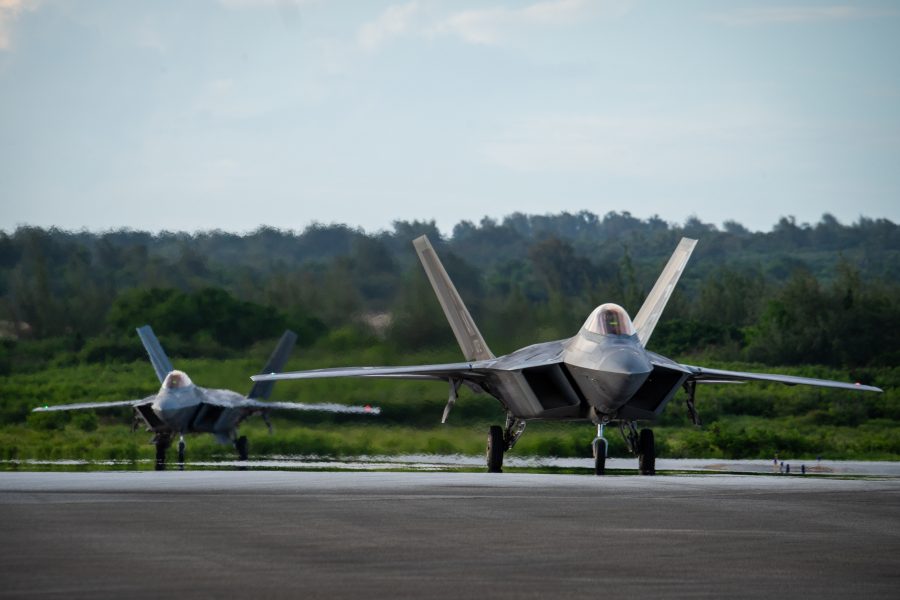
SIMI VALLEY, Calif.—The Air Force plans to conduct more intensive training—and Congress is set to help by boosting funding for exercises and so-called “campaigning” by hundreds of millions of dollars, particularly in the Pacific.
“We have to do hard things together,” Air Force Chief of Staff Gen. Kenneth S. Wilsbach said Dec. 6 during a panel discussion at the Reagan National Defense Forum here. “We’re going to exercise, and we’re going to exercise hard.”
Wilsbach’s predecessor, Gen. David. W. Allvin, championed a return to large-scale exercises, and Wilsbach played a key role in developing and executing those exercises as head of Air Combat Command, which oversaw the first large-scale Bamboo Eagle exercise in summer 2024 across the West Coast, an offshoot of the service’s signature Red Flag combat training exercise. The Air Force then conducted a major Resolute Force Pacific exercise in the Pacific this summer in addition to Bamboo Eagle.
REFORPAC served as the anchor of a sweeping Department-Level Exercise series that stretched and stressed the Air Force in ways it hadn’t seen in years, service leaders have said.
“When we don’t meet the objectives, we’ll teach, coach, and mentor, and we’ll get better,” Wilsbach said, appearing on a panel alongside Secretary of the Navy John Phelan.
The day after Wilsbach’s remarks, House and Senate lawmakers released their compromise fiscal 2026 National Defense Authorization bill, the annual legislation that guides Department of Defense policy. While the NDAA does not appropriate funds for the Pentagon, it includes spending recommendations that reflect congressional priorities—which appear to align with thinking inside the Pentagon.
The draft NDAA, which the House approved in a Dec. 10 vote, adds an extra $107.3 million for Department of the Air Force-wide “campaigning and exercises.” On top of that, lawmakers included another $182 million specifically for Air Force campaigning within U.S. Indo-Pacific Command. Campaigning has a broad definition in U.S. military circles and generally refers not only to military operations, but also to presence activities, training events, and cooperation efforts with allies. Those funds were not requested by the Pentagon in its official budget but were added by lawmakers.
Referring to his efforts to improve the Air Force’s aircraft availability and flight hours, Wilsbach said that if he is successful in increasing the readiness of the service’s planes to fly training missions, “you are getting reps and sets, and your force is proficient, and you establish a deterrent value.”
Secretary of Defense Pete Hegseth has said the U.S. military needs to be better prepared and operate on a “wartime footing,” a message Phelan and Wilsbach appeared to broadly agree with, and Phelan emphasized readiness as well.
“I think that’s the element—that urgency to act,” Phelan said. “Look, it’s like the Mike Tyson statement: ‘It’s always easy until you get in the ring and get hit in the face.’ I don’t think we want to wait to get hit in the face. The President’s goal is for us not to get hit in the face. The President’s goal is for us not to get into the fight. And if you wait for war, a lot of people are going to get killed because we’re not prepared. So that’s why I think we need to act like we’re at that wartime footing.”