
New rules governing religious accommodations for facial hair and new military fitness programs for some Airmen are coming—but probably not until next year.
As part of a flurry of Sept. 30 memorandums, Secretary of Defense Pete Hegseth gave the military services a lengthy to-do list with several items requiring action within 60 days, which would have been Nov. 30. Those included:
- An implementation plan for new standards for service members wearing beards for religious reasons
- A “combat field test” for personnel in combat arms roles
- A review of training and education standards to identify changes made since 1990
Then the longest government shutdown in U.S. history started Oct. 1, resulting in 43 days of furloughs for the thousands of military civilian workers needed to draft complex personnel policy changes. Delays were inevitable.
“We lost 43 days during the closure; these are complicated issues with a lot of detail,” an Air Force official told Air & Space Forces Magazine. “And [the Office of the Secretary of War] will have to review this as well. That will take time,” they added, referring to the alternate title authorized by executive order.
Hegseth directed each service to review its military education and training and “report any changes to program standards since 1990 and make recommendations on whether to restore any standards that have been lowered since that time,” the memo states.
In his Sept. 30 speech to hundreds of military leaders, Hegseth urged services to follow “the 1990 test” when reviewing warrior-focused combat training programs.
“The 1990 test is simple—what were the military standards in 1990, and if they have changed, tell me why,” Hegseth said. “Was it a necessary change based on the evolving landscape of combat, or was the change due to a softening, weakening, or gender-based pursuit of other priorities?”
It’s unclear if this review will affect Air Force flight training for female pilots, who were prohibited from flying combat aircraft until Former Defense Secretary Les Aspin lifted the ban in April 1993. The move paved the way for Lt. Jeannie Flynn—later Jeannie Leavitt—to complete F-15 Eagle training on Feb. 10, 1994, making her the Air Force’s first female fighter pilot.
The new facial hair standard prohibits beards, goatees, and other facial hair that could interfere with a proper seal on a chemical protective mask or firefighter respirator. Sikhs, Muslims, and other religious groups have been permitted to wear beards under religious accommodations since 2010, but Hegseth’s directive states that “all personnel will complete annual training” to validate a proper seal on either a protective mask or respirator, according to the memo.
“Noncompliant personnel—due to refusal, exemption denial, or failed tests—will be flagged as non-deployable in the appropriate military service personnel system,” the memo states. Airmen and other service members placed on non-deployable status for 12 consecutive months are tabbed for administration separation.
Airmen are still authorized to wear mustaches, but they “must not go beyond the corners of the mouth or into a respirator seal zone,” according to an Oct. 29 memorandum updating portions of the Air Force regulations on dress and personal appearance.
Hegseth also directed all the services must have some type of “combat field test,” in addition to its standard fitness test, for troops in combat arms jobs. For the Air Force, that will apply to Airmen in tactical air control party, combat rescue officer, pararescue, and explosive ordnance disposal specialties. Airmen in special tactics, combat controller and special reconnaissance jobs fall under Air Force Special Operations Command, which already has this type of assessment, an AFSOC spokesperson said.
The standards for combat field tests will be “service-determined” but “must be executable in any environment, at any time, with combat equipment,” the memo states.
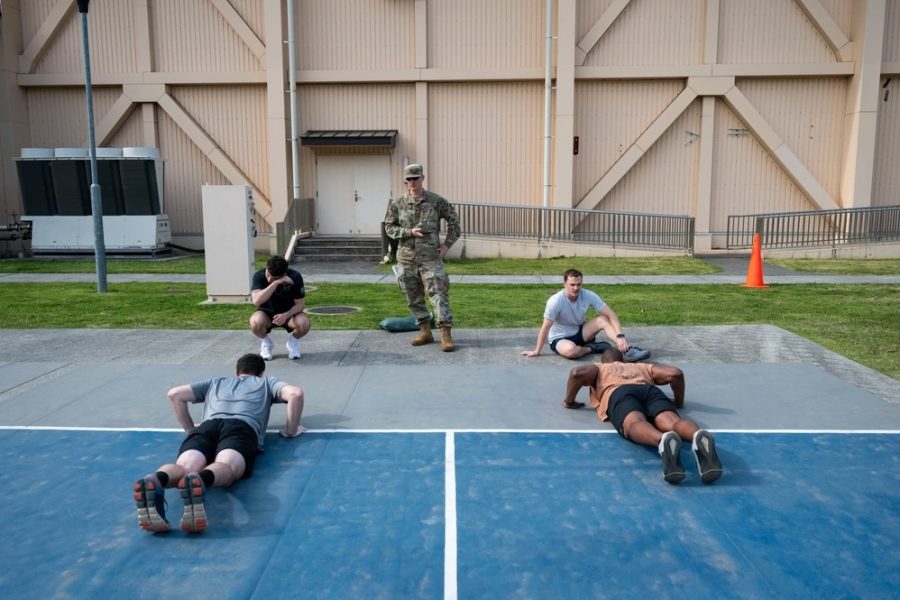
The memo also states that active component service members must complete two fitness tests annually. The Air Force already announced September 24 that Airmen will begin to take a new physical fitness assessment every six months. The new four-part PFA increases the running portion from 1.5 to 2 miles.
Service members will also be required to perform fitness training every duty day, the memo states.
“Fitness is not a check box—it is a core competency, as vital as professional military education,” the memo states. “Every military unit and individual service member must strive to exceed the standard, not settle for it.”