
Three service members have been killed so far during Operation Epic Fury, the U.S. campaign against Iran, U.S. Central Command announced March 1.
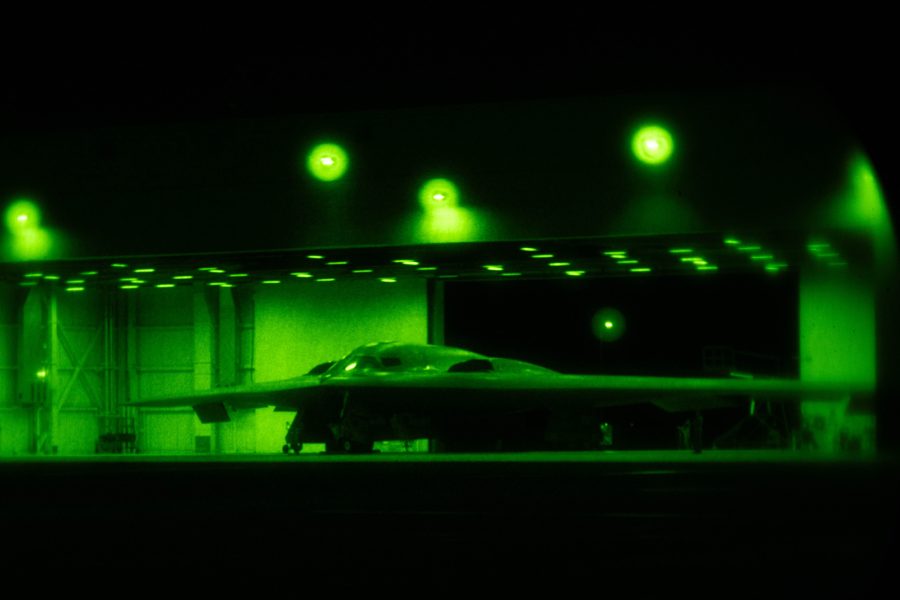
The U.S. and Israel, meanwhile, continued the air campaign, with U.S. Air Force B-2 bombers conducting airstrikes with 2,000-pound guided bombs on Iranian ballistic missile sites, U.S. officials told Air & Space Forces Magazine.
After the initial massive wave of American and Israeli airstrikes, Iran began retaliating against U.S. bases in the Middle East, targeting Naval Support Activity Bahrain; Al Udeid Air Base in Qatar; Ali Al Salem Air Base in Kuwait; Al Dhafra Air Base in the United Arab Emirates; and Muwaffaq Al Salti Air Base in Jordan. Iran also targeted civilian sites across the Gulf and Israel.
Naval Support Activity Bahrain, Ali Al Salem, and Al Udeid were hit by projectiles, satellite imagery and social media videos show. It is unclear if other bases were hit. A number of countries in the region, including those that host American troops, confirmed they had been subject to large-scale missile and drone attacks.
Another five Americans have been seriously wounded. CENTCOM did not say how the casualties occurred and cautioned that its information was accurate as of 9:30 a.m. Eastern Time on March 1.
“Several others sustained minor shrapnel injuries and concussions—and are in the process of being returned to duty,” CENTCOM said in a statement. Major combat operations continue and our response effort is ongoing.”
President Donald Trump acknowledged American service members could be killed when he announced the beginning of Operation Epic Fury early Feb. 28.
“My administration has taken every possible step to minimize the risk to U.S. personnel in the region,” Trump said in a video address posted to social media. “The lives of courageous American heroes may be lost, and we may have casualties.”
B-2 Strikes
The B-2 bombers that struck Iran departed from Whiteman Air Force Base, Mo., on a round-trip mission, refueling along the way with the support of the U.S. Air Force aerial tankers. They landed at Dyess Air Force Base, Texas, on their return to the U.S., according to a video from a local aircraft spotter.
The targets for the nighttime strike were “hardened ballistic missile facilities,” U.S. Central Command said in a statement March 1 confirming the B-2 mission.
B-2s were also used in last June’s Operation Midnight Hammer against Iran’s nuclear facilities and last spring’s Operation Rough Rider to bomb Houthi targets in Yemen. They were also used against the Houthis under the Biden administration in 2024.
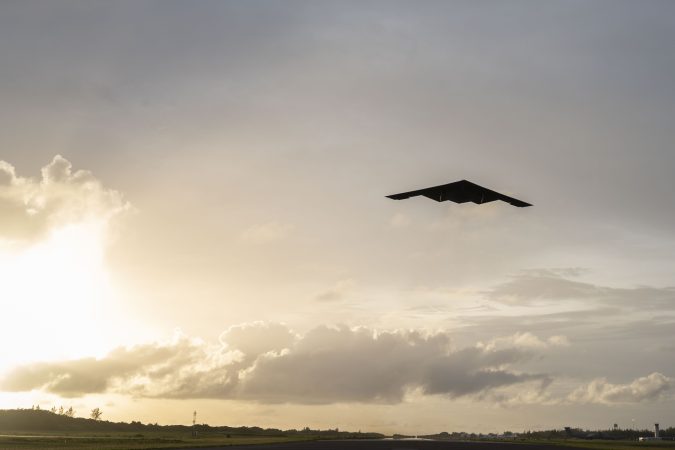
Four B-2s took part in the mission using the callsigns Petro 41-44, according to Air Traffic Control communications, open-source data, and aircraft spotters. U.S. Central Command did not specify how many B-2s were used.
The B-2s are stealth bombers, though U.S. and Israeli officials say they have eliminated much of Iran’s air defenses. Many strikes so far, including the Israeli Air Force attack that killed Iranian Supreme Leader Ayatollah Ali Khamenei, were carried out in broad daylight. U.S. officials said they focused on degrading Iran’s air defenses in the early hours of the campaign. The use of the B-2s was first reported by Fox News.
B-2s can carry highly sophisticated bunker-busting bombs, most notably the GBU-57 Massive Ordnance Penetrator that was used in strikes against Iranian nuclear facilities last year. But the B-2 has also been used operationally in recent years to drop scores of GBU-31 2,000-pound guided bombs, including against the Houthis in Yemen and again against Iran during Operation Epic Fury.