
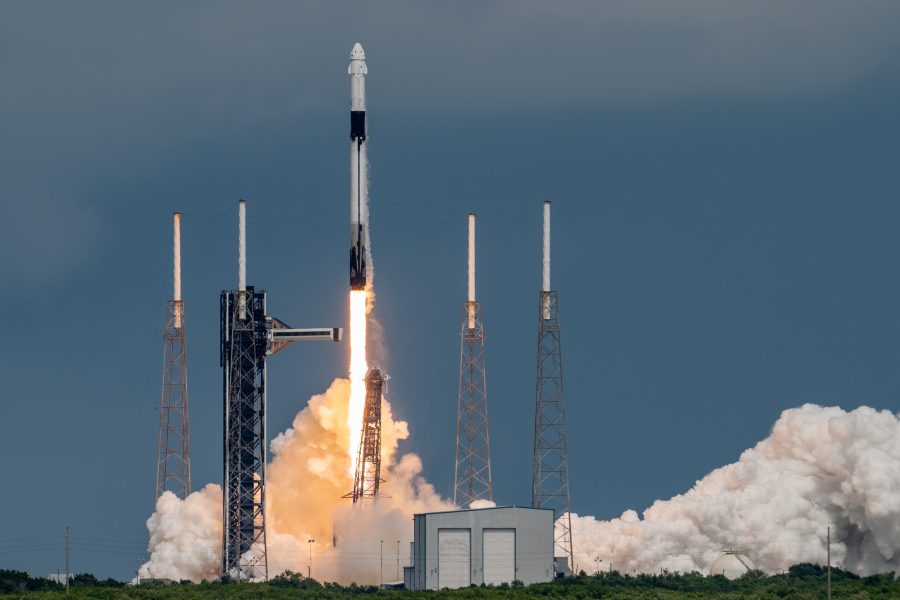
If the forecast holds, the world’s busiest spaceport is poised to get even busier.
The Space Force’s latest projections show that its Eastern Range at Cape Canaveral Space Force Station in Florida could be supporting as many as 500 launches annually by 2036—a fivefold increase over the next 10 years.
That forecast is based on business projections from each of the major launch companies who have pads at the spaceport, including SpaceX, United Launch Alliance, and Blue Origin, as well as newcomers like Firefly, Stoke, and Relativity. Their backlogs are filled with commercial and government customers making plans for proliferated constellations with hundreds to thousands of satellites. They’re also seeing demand from the Pentagon itself, which is growing increasingly dependent on space for things like navigation and communication and wants more spacecraft to track and even intercept threats.
Rapid growth is nothing new for the range, which is home to both Cape Canaveral and NASA’s Kennedy Space Center. Over the last decade, SpaceX’s mastery of reusable rocketry and its prolific launch rate—combined with the rise of proliferated satellite constellations and demand for space-enabled services—has spiked the spaceport’s annual launch rate from around 18 missions in 2016 to 109 last year.
The Space Force in recent years been managing that growth by rethinking the way it operates its ranges, running them more like commercial spaceports than government launch facilities. That means streamlining processes, introducing more automation, relocating office buildings to increase efficiency, and pushing for policy changes that allow it to collect more fees from the companies that use its facilities and reinvest them in infrastructure improvement projects. Congress has allocated $1.3 billion between fiscal 2024 to 2028 for the service to make those improvements at the Cape and its West Coast range at Vandenberg Space Force in California, part of an effort called “Spaceport of the Future.”
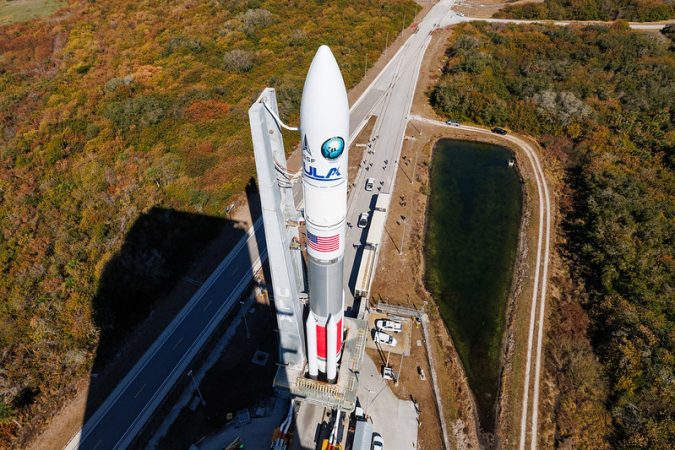
Col. Brian Chatman, who oversees operations at the Cape as commander of Space Launch Delta 45, said that funding is helping reshape the landscape at the range, but there’s more work to be done and more resources needed to meet an annual cadence of 500 launches—a milestone he thinks could come much sooner than 2036.
Chatman’s instinct to be prepared for launch rates to grow faster than expected is based on past experience. In 2017, the Space Force projected the Eastern Range would hit the century mark—100 launchs per year—by 2030. The service reached that cadence in 2025.
“We’re laying in plans now for 500 in ‘36, but I would not be at all surprised if we saw that happen sooner,” he told Air & Space Forces Magazine in an interview. “Right now, 500 by 2030 is really what I’m pushing the team to build the plans to.”
Spaceport of the Future
With funding in hand for the first phase of the Spaceport of the Future infrastructure overhaul, SLD 45 has spent much of the last two years in design mode, finalizing building plans and relocating offices to ensure it’s making the most of its limited footprint.
One such project involves relocating government workspaces that are currently scattered throughout what’s known as the “industrial area,” where launch service providers assemble and test their rockets and prepare hardware to be transported. By consolidating the government functions in another area of the range, Chatman said, companies can expand and use that space more efficiently.
Another project will move some of the range’s weather balloon release stations that are currently situated within one of the launch complex’s blast damage assessment areas, which can cause schedule issues that Chatman said have led to launches being scrubbed.
“Relocating the weather balloon release facility more inland to decouple it from the blast damage assessment area of one of the launch complexes allows us then to be able to continue to support weather balloon releases while, simultaneously, launches are happening, and allows people to access the weather balloon location to release those weather balloons while we’re doing hazardous operations in and around the launch sites,” he said.
Construction on these and other phase one projects will start early this year and continue for the next three years or so, Chatman said.
Spaceport 2036
But the work won’t stop after that. As the SLD 45 team completes the first round of projects, it’s also making plans for upgrades it will need to support the growth it expects by 2036, if not sooner—projects it didn’t account for as part of the Spaceport of the Future initiative. The service is still finalizing its strategy in partnership with NASA and its launch providers, and Chatman said the goal is to have it finalized this summer and then included as part of the Space Force’s fiscal 2028 budget request.
Through its meetings with industry, the Eastern Range team identified five broad focus areas it needs to address to support a higher launch cadence:
- infrastructure and utilities
- transportation and access limitations
- commodity supply chains
- process and organizational alignment
- expanded launch support facilities
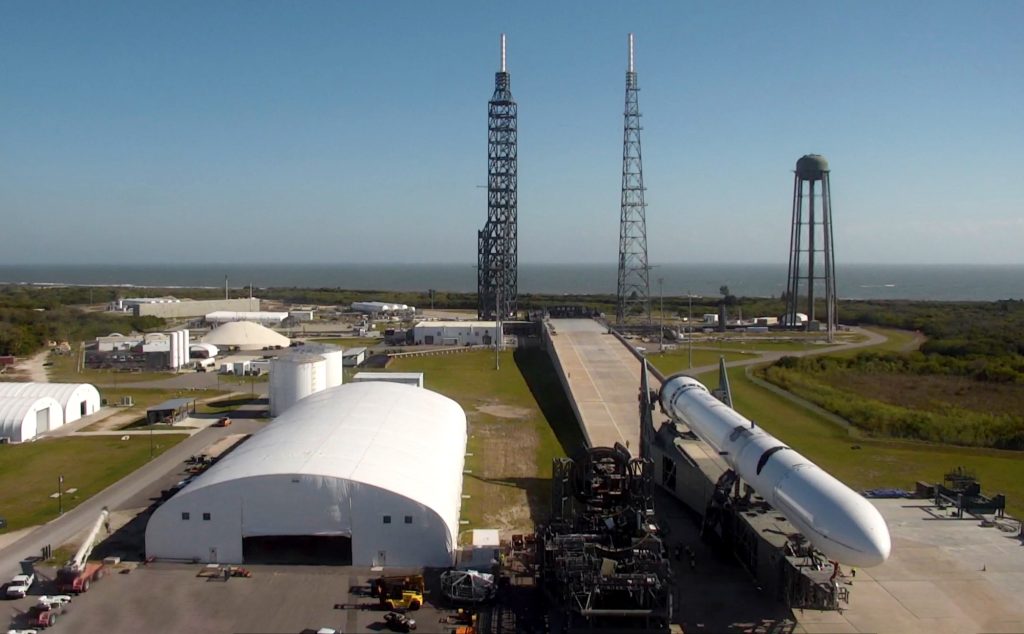
One major need, Chatman said, is for a transport lane dedicated to moving rocket boosters across the range. Today, the base relies on one main travel route to get on and off the Cape. Launch vendors use that same lane to transport rockets to the pad and—as more companies transition to reusable vehicles—to bring spent boosters back to their processing facilities.
That wasn’t an issue when the range was supporting 10 or 20 launches a year, but today, it presents a real challenge. Chatman said the issue was on full display last November after Blue Origin’s New Glenn made its second flight and the company recovered its booster. Getting the booster from the wharf to the company’s processing facility took more than four hours and caused major disruption to traffic flow.
“That was four and a half hours that we had to come up with alternate means for personnel just to get to work,” Chatman said. “I’ve got to have dedicated routes for those transports to happen, again, to maximize efficiency for all operations happening now on the Eastern Range.
The range is also considering changes to the way it provides utilities and delivers commodities, like fuel, to launch sites. Today, it moves fuel via hundreds of trucks and is seeing a growing demand for power and wastewater treatment, Chatman said.
“As we look to increase the amount of launches, that increases the amount of wastewater that is being produced,” he said. “A wastewater treatment facility that can grow and stay on par with the requirements to be able to handle that wastewater coming off those launch vehicles is something we didn’t account for in the first Spaceport of the Future.”
Near-Term Needs
While the bulk of these projects will be included in future budget requests, Chatman said the range is hopeful it might be able to secure funding for a few more pressing needs in the fiscal 2027 budget, due for release this spring. That includes the booster transport lane and some of the commodity distribution needs.
Chatman said he’s also trying to make a case for more near-term funding to fill personnel gaps. SLD 45 has 3,000 personnel, about 2,000 of them government civilians. The range has never fully recovered from cuts made during sequestration in 2012 and then took an additional hit last year as civilian employees left via the government’s deferred resignation program.
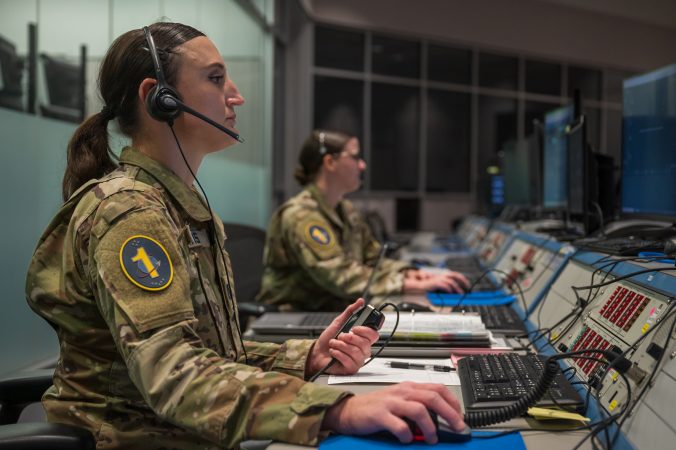
Today, the range has 450 approved but unfilled manpower billets that Chatman said he lacks the funding to fill. Those positions are crucial during what could be five to 10 years of construction at the Eastern Range, providing everything from legal support to navigate environmental regulations to maintaining day-to-day operations.
“The team is absolutely getting after it, but one of the conversations we’re having within Space Systems Command and across the Air Force and Space Force is, I need some additional bodies to be able to meet that cadence we have going forward,” Chatman said. “We are methodically going through and executing as fast and as hard as we can, but within the constraints that we have, just from a limited manpower and resourcing perspective.”