

The Space Development Agency launched its first two batches of operational satellites last fall—it was supposed to be the start of a 10-month campaign to populate its proliferated data transport and missile tracking constellation.
Six months later, the agency and its vendors have yet to move those first satellites through the formal testing phase, and it is months behind its ambitious launch schedule due to supply chain challenges and technical issues with at least one satellite provider.
Some of the challenges the agency has faced were out of its hands, like a record-breaking 45-day government shutdown that severely limited its largely civilian workforce. Other issues, according to SDA Director Gurpartap Sandhoo, are growing pains—from managing a stressed supply chain to coordinating tight launch schedules to operating larger fleets of satellites.
“I think the biggest thing we have learned in this whole journey of a proliferated architecture is all the choke points that we have in the way we used to buy things when you had onesie, twosies versus at scale,” Sandhoo told Air & Space Forces Magazine. “You don’t realize the weak points until you actually do it.”
Created in 2019 to disrupt the Pentagon’s traditional practice of buying small numbers of exquisite satellites and taking years to field them, SDA’s focus is on delivering smaller satellites in large numbers on a two-year cadence. Central to its approach is to regularly refresh its constellation with new tranches of satellites as technology advances and requirements evolve, a concept called spiral development.
That constellation, called the Proliferated Warfighter Space Architecture, today includes both data transport and missile warning, defense, and tracking satellites. Tranche 0,launched in 2023 and 2024, included 27 satellites to demonstrate capabilities like laser communications with ground stations and between spacecraft and aircraft. The 42 satellites that launched last fall were part of Tranche 1, meant to be the first operational tranche which will eventually total around 154 spacecraft.
The agency has been held up as a model for speed and agility and, at a time when Pentagon leaders are pushing hard to change the way the Defense Department builds and buys capabilities, its scaling challenges offer a glimpse of what other programs may face as leaders demand more of everything—from munitions and drones to satellites and software.
Scaling Challenges
Sandhoo described SDA’s most recent hurdles as starting in the supply chain, which is not a new issue. Supply constraints, especially for optical communications terminals and encryption devices, have caused slowdowns across SDA’s industry base, which for Tranche 1 includes four vendors: Lockheed Martin and York Space Systems are each building 42 transport satellites; L3Harris is building 14 missile warning and tracking satellites; and Northrop Grumman is building 14 tracking and 42 transport satellites.
Those supply chain issues contributed to schedule setbacks that pushed the first Tranche 1 launch from September 2024 to September 2025. Following that delay, the first two Tranche 1 missions took off as planned within one month of each other. The September mission carried 21 of York’s satellites and the October flight—right in the middle of last year’s government shutdown—included 21 Lockheed satellites.
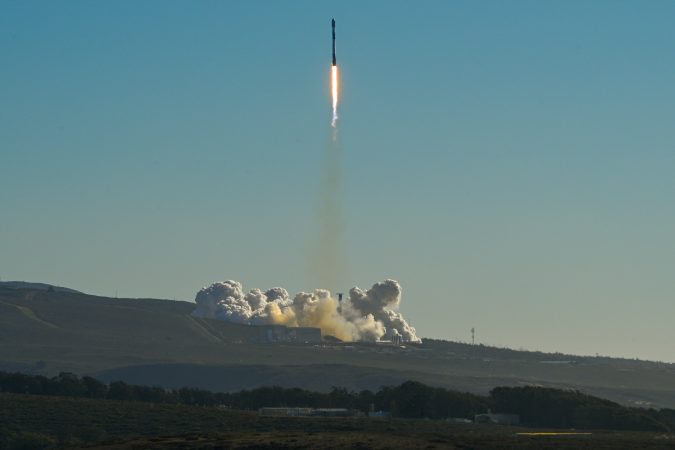
Because launch operations are allowed to proceed during a federal funding lapse, the agency was able to call in limited numbers of civilian personnel to carry out the October launch. But work to prepare for the next flight, then scheduled for November, came to a standstill during the shutdown, Sandhoo said. Further, the agency only had a small team at its disposal to help companies manage initial on-orbit checkout of the first satellites. Even after the government reopened in mid-November, it took time to recover.
SDA initially estimated it would take four to six months to complete the on-orbit checkout and functional testing processes, but making initial contact with the satellites took longer than expected for both companies, and Lockheed has yet to make contact with one of its spacecraft, Sandhoo said. He noted that it’s possible that satellite will still come online—some spacecraft in Tranche 0 were “quiet” for months after launch—but if it doesn’t, there is margin in the constellation and it shouldn’t impact overall performance.
“We can close our planes with 16 or 17 [satellites,]” Sandhoo said. “It’s baked into the architecture to have some redundancy.”
A Lockheed Martin spokesperson said the company is working closely with SDA “to ensure constellation health,” adding that 95 percent of its satellites are healthy. The company didn’t provide details on what might have caused the issue.
“We remain fully committed to the resiliency and success of the Transport Layer program and will continue to contribute to overall mission capability through upcoming launches,” the spokesperson said.
Sandhoo said the checkout issues put the agency two to three months behind schedule, and more challenges could arise during the rest of functional testing, which validates the health of the payload and is performed by the constellation’s ground system rather than in the companies’ factories.
As SDA, York, and Lockheed work to transition the first satellites to operations, planning for the next launch is also underway. That mission is already four months behind, due in part to the shutdown but also because of an anomaly investigation on SpaceX’s Falcon 9—which is set to fly the mission—and a software issue connected to satellites built by SDA’s third transport provider, Northrop Grumman.
Falcon 9 is back flying after a brief pause in early February, but Northrop Grumman and SDA are still working to resolve the software issue, which came to light just before the company’s satellites were slated to be shipped to the launch site.
A spokesperson for Northrop said the company is working closely with SDA and other partners on “rigorous final preparations” of its satellites. They didn’t describe the nature of the software issue or indicate when the firm expects to complete the fix. Sandhoo said that it’s better to address the problem on the ground prior to launch—a lesson it learned following its first few Tranche 1 launches.
He said the agency is considering shifting another vendor’s second plane of satellites, either Lockheed’s or York’s, onto its next launch to allow more time to resolve the problem but hasn’t made a decision. The next launch could occur by late March or April, Sandhoo said. An SDA spokesperson later told Air & Space Forces Magazine the agency hasn’t designated a launch date and is aiming for sometime this spring.
Lessons Learned
While these delays and setbacks have interrupted the timeline for bringing SDA’s constellation online, Sandhoo said the agency is doing what it can to diagnose the problems and implement changes that hopefully minimize similar issues in the future.
For example, during its early Tranche 1 launches, SDA identified payload processing as one of the major chokepoints. To address this, the agency shifted from having individual vendors manage their own processing to coordinating those plans itself. That approach, Sandhoo said, should give his team more flexibility to change providers if one company’s payloads aren’t ready to launch.
“That goes with our principle of being able to pivot and change and not be beholden to some process that’s in place already,” he said.
Sandhoo is also optimistic that the on-orbit checkout and testing process will go faster for its next batch of satellites due to lessons learned from the initial launches. With on-orbit data in hand, he said, the team will be able to better predict potential pitfalls and avoid repeating them.
“The goal is that the next set of checkouts for these planes should not take as long as it has taken us for this one,” he said. “That’s kind of the whole point of having a spiral model is to learn and adapt quickly. This was one of those opportunities. We need to learn and make the changes we need to make so we are not repeating the same mistakes.”