
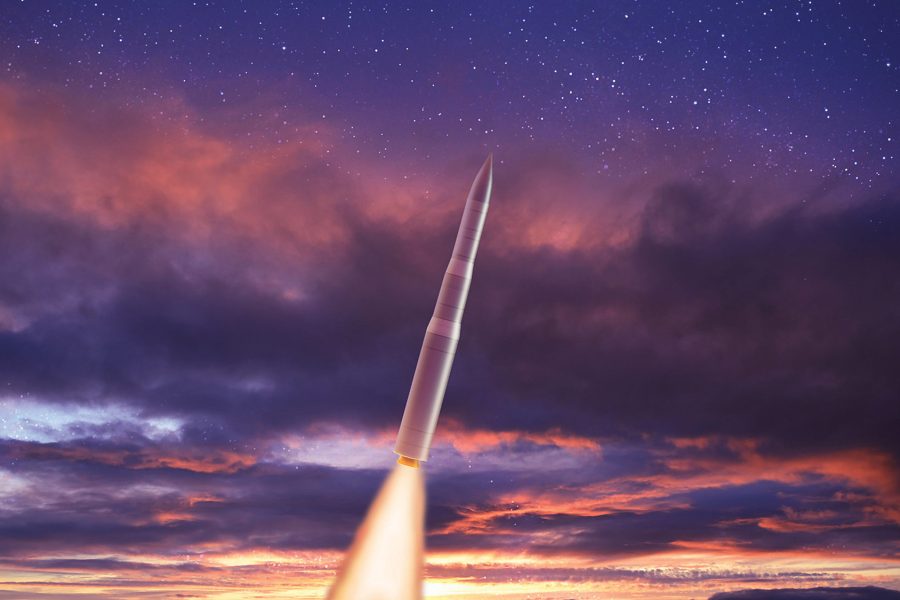
The Air Force will finish restructuring the Sentinel intercontinental ballistic missile program by the end of this year, achieve its first test launch of the ICBM by 2027, and reach initial operational capability by the early 2030s.
The service announced the new plan in a Feb. 17 release. Breaking Defense first reported the timeline based on an interview with Gen. Dale R. White, the new czar for the Air Force’s biggest programs.
Those new dates are sooner than officials had estimated after Sentinel’s massive cost and schedule overruns triggered a congressional notification and a Pentagon review under the Nunn-McCurdy Act.
The review concluded in July 2024 with then-Undersecretary of Defense for Acquisition and Sustainment William LaPlante announcing that the program’s projected cost had spiked to $140.9 billion and its schedule had slipped “several years” from its projected initial operational capability of 2029—though no firm timeline was given.
LaPlante certified that Sentinel was critical for national defense and could continue. He did, however, rescind the program’s “Milestone B” certification allowing officials to work on engineering and manufacturing development and directed officials to restructure the program. Air Force budget documents estimated that that process would last into 2027.
Timing for the first launch had also been in flux. Before the Nunn-McCurdy breach, officials were hoping to hold the test in early 2026. But by 2025, the Government Accountability Office was projecting it no earlier than March 2028 and the Air Force itself said it had no timeline.
The Air Force originally reached Milestone B in 2020 when it selected Northrop Grumman to build Sentinel. At the time, it hoped to achieve first flight in 2023 and initial operational capability in 2029.
Sentinel is meant to serve as the land leg of America’s nuclear triad and replace the Minuteman III, which has been in service since the 1970s despite having an original design life of 10 years.
Officials have said the Sentinel program is one of the most complex modernization efforts the Air Force has ever undertaken. The biggest challenge they have identified is the sheer scale of the infrastructure needed—there are 450 missile silos spread across five states, connected by thousands of miles of cables and wires, and those structures date all the way back to the original Minuteman program in the early 1960s.
Originally, the Air Force planned to refurbish those silos for Sentinel. But during the restructure process, officials determined that the extent of work needed was so great that it would actually be faster to build new facilities.
“The restructured program incorporates key lessons learned to ensure maximum efficiency,” the Air Force release states. “The decision to build new silos, for example, avoids the unpredictable costs and safety hazards of excavating and retrofitting 450 unique structures built over 50 years ago, and is a prime example of choosing a path that delivers capability with greater speed and less risk.”
During the restructuring process, the Air Force briefly ordered Northrop Grumman to halt all work on the design and construction of launch facilities. After about eight months, however, work resumed, and the service and contractor claim they’ve managed to make significant progress even during the restructure.
That progress includes qualification tests on both the first and second stages of the Sentinel’s solid rocket motor, plus a design review of the “Launch Support System,” the digital backbone for testing the new intercontinental ballistic missile over its entire lifespan.
More milestones are coming before the restructure is complete: The Air Force release states that construction on a new prototype missile silo will start this month at Northrop’s Promontory, Utah, facility. Then this summer, the Air Force will start prototyping “utility corridor construction methods” at F.E. Warren Air Force Base, Wyo., to support the cabling needed for the new silos.
“The Sentinel program is moving forward with purpose and momentum,” White said in a statement. “We have the right strategy, we are proving the technology, and we will deliver on our promise to provide our Airmen with the modern, credible system they need to deliver the unwavering deterrence our nation requires.”