
The Pentagon’s research labs are ramping up their search for munitions that can be mass-produced—an effort likely to be buoyed by billions of dollars in the department’s new fiscal 2027 budget request and tens of billions in the upcoming years.
A fact sheet released by the White House’s Office of Management and Budget on April 3 states that one of the Pentagon’s top priorities in 2027 is to “rapidly procure 12 critical munitions,” without specifying which munitions or dollar amounts for each.
But OMB also released data showing projected spending on all Air Force missiles and bombs surging in 2027 and even more continued growth after that, dwarfing what the service has spent on munitions in recent years.
The Pentagon request for Air Force missile procurement in fiscal 2027 is $11.36 billion. Of that amount, $6.8 billion is in the base budget, with another $4.56 billion in reconciliation funding likely added on by Congress later this year.
In fiscal 2025, OMB says the service spent $5.14 billion on procuring munitions, buoyed by reconciliation funding that came at the very end of the year. In 2026, the agency noted $3.7 billion in the account.
Beyond just doubling in one year, Air Force munitions spending is poised to grow nearly eightfold in the 2020s, according to OMB’s projections.
Air Force Missile Procurement Funding
| Year | Amount (in millions) |
| 2020 | $2,636 |
| 2021 | $2,216 |
| 2022 | $2,547 |
| 2023 | $3,279 |
| 2024 | $6,015 |
| 2025 | $5,137 |
| 2026 | $3,714 |
| 2027 | $11,378 |
| 2028 | $13,621 |
| 2029 | $16,030 |
*Data from OMB’s Public Budget Database
Mass-Produced
The OMB fact sheet states that the 2027 budget will help expand capacity in the defense industrial base, “providing a foundation for future scalable munitions production.”
Scaling production to produce munitions in mass has been an area of growing interest for the past few years, and the Pentagon’s science and technology leaders are making moves to push that along.
Three notices to industry from the Defense Advanced Research Projects Agency and the Air Force Research Lab seek both a specific new low-cost cruise missile and methods for producing munitions propulsion, avionics, and sensors at lower cost and in greater quantities.
Two requests for information from industry, posted online by DARPA on March 31, seek big-picture solutions to munitions manufacturing woes.
The first seeks information on “state-of-the-art development and manufacturing processes for missile propulsion systems.”
The document describes propulsion systems as a “notorious bottleneck in missile manufacturing.”
The agency is scouting technologies that can compress the production timeline from months to days and “potentially hours.”
The second DARPA posting aims to better understand the industry and supplier base for avionics and sensors for air-to-air weapons. The notice seeks to use the information to develop low-cost weapons at scale, particularly by integrating this technology into missile systems.
“DARPA would like to understand emerging technologies that can radically shorten this integration period,” according to the document.
Munition supplies of all kinds have taken center stage during the past weeks of Operation Epic Fury, which has seen the United States strike more than 15,000 targets since the war began Feb. 28.
In early March, President Donald Trump announced initial deals with arms producers to quadruple production of exquisite munitions such as Terminal High Altitude Area Defense, or THAAD, and Patriot interceptors.
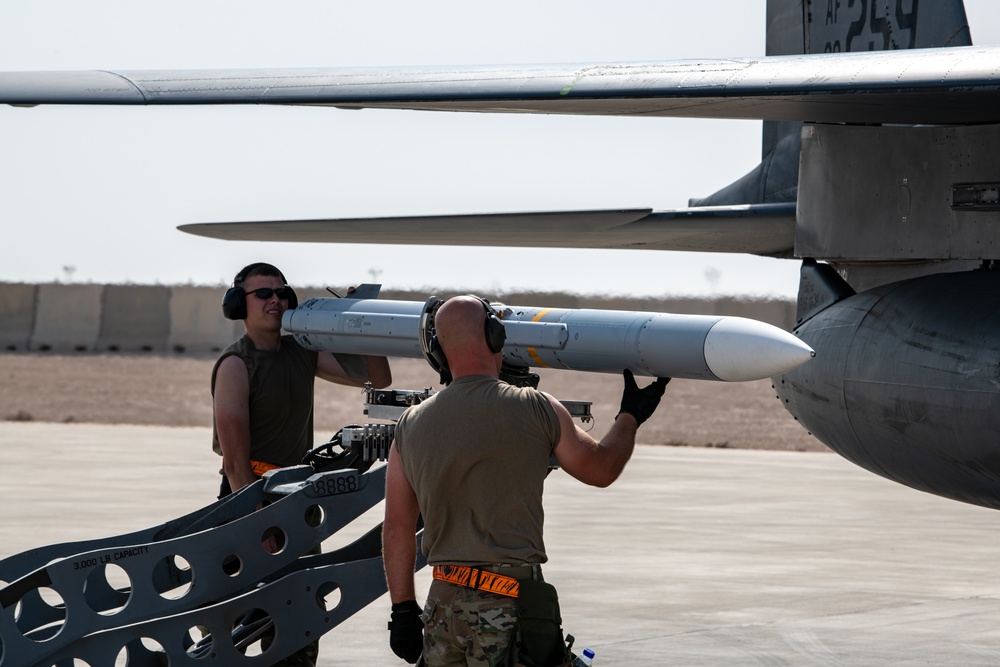
In February, RTX announced agreements that included increased production of the Advanced Medium-Range Air-to-Air Missiles, or AMRAAM, Standard Missile-3, SM-6, and Tomahawk missiles.
Trump also met with top executives from RTX, Northrop Grumman, Lockheed Martin, L3Harris, Honeywell Aerospace, Boeing, and BAE Systems at the White House on March 6. The president said the production expansion deals began three months earlier and that U.S. stockpiles of medium- and upper-medium-grade munitions were a “virtually unlimited supply.”
The AFRL posting calls for industry to develop multiple weapons from multiple vendors that meet the needs for large-scale, affordable, mass-produced cruise missiles capable of traveling at least 350 nautical miles at a cost of less than $250,000 per unit.
The notice requires a flight event in an undisclosed number of months after contract award, and another flight-event capstone demonstration within 16 months of contract award.
AFRL plans to have up to five vendors participate in the flight events.
The capstone event will include at least four affordable, mass-produced cruise missiles that share information over a data link and swarm to engage a target, then re-engage using revised, battle-informed behaviors, all in a potentially GPS-challenged environment, according to the posting.
These are far from the first forays both DARPA and AFRL have made into munitions.
New liquid rocket engine technology is being developed by Ursa Major using the company’s Draper engine. The partnership, announced by AFRL in 2023, saw the vehicle reach supersonic speeds in tests conducted in March.
In 2025, DARPA oversaw the successful testing of rotating detonating engine technology in its Gambit program, launched in 2022. The effort seeks to build an affordable, high-supersonic, long-range munition for striking air-to-ground targets. The more compact technology allows for more room aboard munitions for fuel, extending range.
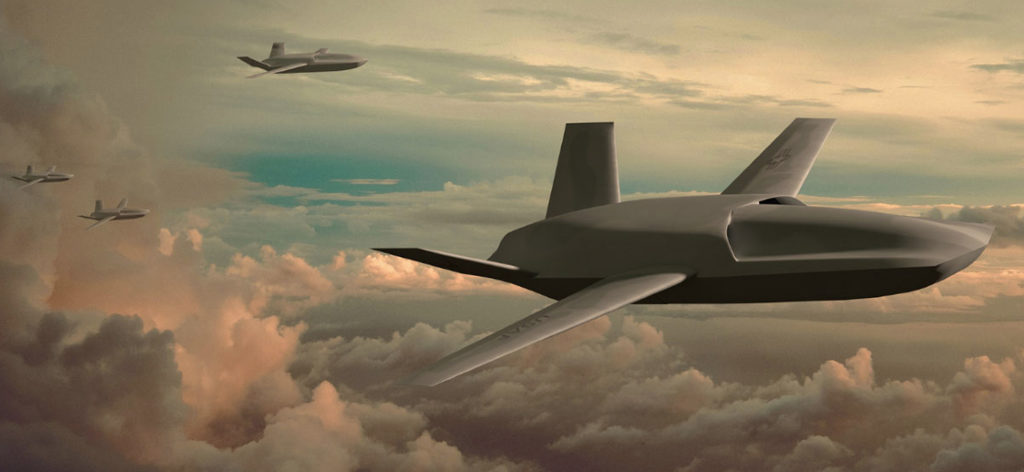
AFRL also sought industry help in shortening timelines for integrating software into advanced weapons. The effort, announced in July 2024, sought to use innovative modular software pipelines and AI-informed decision-making to accelerate the process.
“The problem is the speed at which it takes or the time it takes to improve weapons,” Dr. Will Curtis, AFRL Munitions Directorate science and technology adviser, said at the time. “Typically, it’s measured in years. You might use a weapon and see a deficiency. And then the time it takes to improve that via some kind of change, whether that’s hardware or software, takes years. We’d like to reduce that time down to months, weeks, or days.”
In 2020, DARPA launched two futuristic munitions programs that directly targeted Air Force needs: Gunslinger and LongShot.
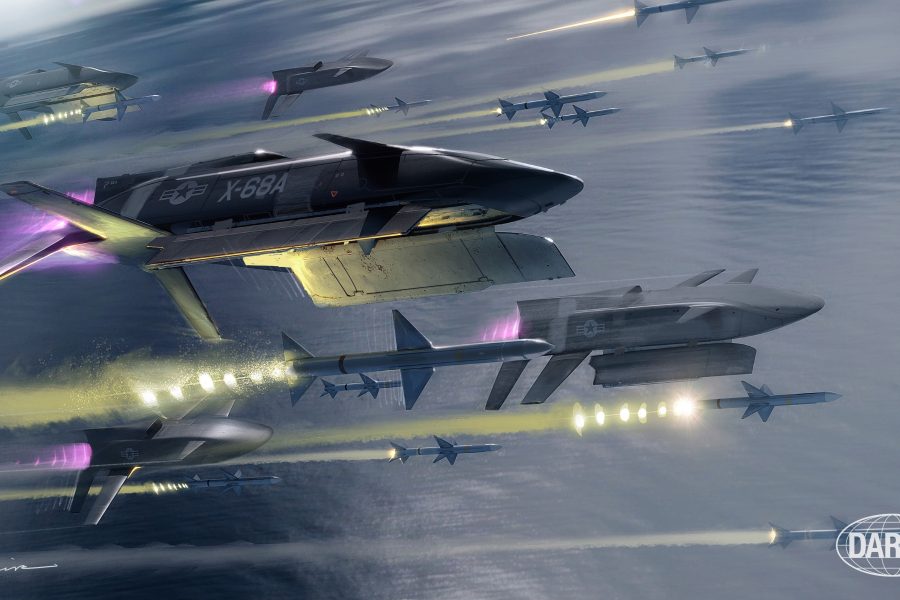
The Gunslinger program sought a new air-launched missile equipped with a gun for use in both counterterrorism and dogfights. The LongShot program developed an air-launched vehicle capable of using current air-to-air weapons. That program evolved into the X-68A drone, which is slated for test flights this year.