
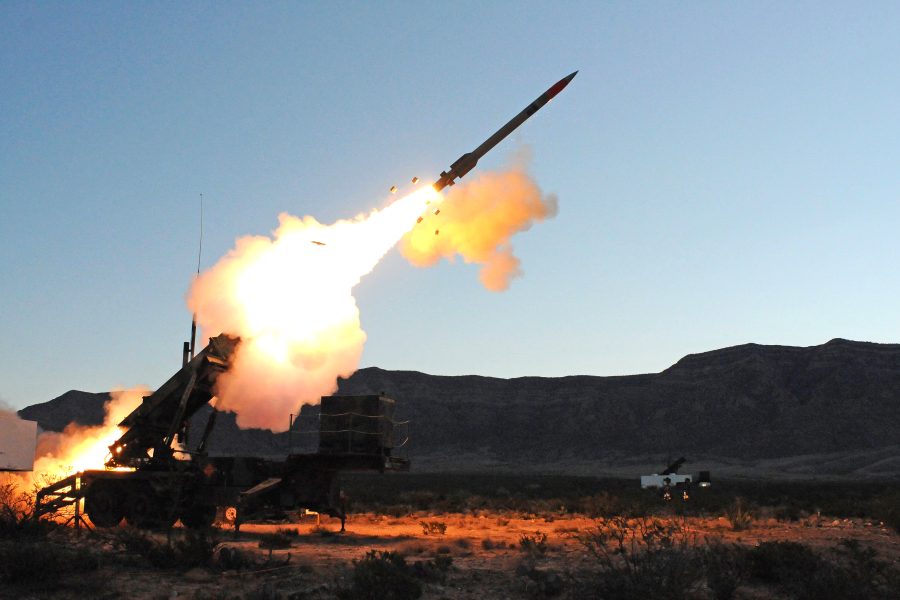
The Pentagon is investing $1 billion in L3Harris’ solid rocket motor business in a bid to shore up the U.S. government’s supply chain for a range of munitions.
Under the agreement announced Jan. 13, the company plans to spin off its missile business, L3Harris Missile Solutions, as a separate entity via an initial public offering later this year, the Pentagon and L3Harris said. The U.S. government will hold a minority stake. The Pentagon says the deal will enable it to have a more predictable supply chain for critical munitions and ease its ability to make multiyear deals.
“We are fundamentally shifting our approach to securing our munitions supply chain,” said Undersecretary of Defense for Acquisition and Sustainment Michael Duffey.
The move is the Trump administration’s latest foray into direct investments in key industries. The government took a 10 percent share in chipmaker Intel earlier this year and has been taking stakes in producers of critical minerals.
The Pentagon has two major suppliers of solid rocket motors: L3Harris, which acquired Aerojet Rocketdyne in 2023, and Northrop Grumman. Up-and-coming companies such as Ursa Major and Anduril have also been awarded Pentagon contracts for solid rocket motors in recent years. The motors are a key component of American rockets and missiles. Russia’s invasion of Ukraine has strained supply chains since 2022 as the U.S. sought to provide arms to Kyiv or sell them to European partners who are willing to provide them to Ukraine’s forces.
“In order to address magazine depth, you need more rocket motors—period,” Michael Cadenazzi, the assistant secretary of defense for industrial base policy, said at the Honolulu Defense Forum Jan. 13.
“We’re excited about the fact that this will no longer be a roadblock, because it has traditionally been a roadblock for munitions production,” he added.
The deal means the Pentagon will now have an ownership stake in a company that bids on defense and other U.S. government contracts. In an appearance on FOX Business with Duffey, L3Harris CEO Chris Kubasik sought to assuage concerns about government control of its solid rocket motor business.
“They will not be involved in the management or the governance of this company. It’s an economic investment,” Kubasik said.
The Pentagon said the deal was a first-of-its-kind “Go Direct-to-Supplier” initiative and a result of the Acquisition Transformation Strategy Defense Secretary Pete Hegseth rolled out last fall. Such deals “save money and time, while proactively managing the single points of failure,” the Pentagon said in a statement.
“This direct-to-supplier model is a crucial step toward replenishing stockpiles, rebuilding our military, and reestablishing deterrence by ensuring the availability of critical components,” Duffey added.
Last week, the Pentagon agreed to a seven-year deal with Lockheed Martin to triple production of PAC-3 interceptors for the Patriot missile defense system. L3Harris produces the propulsion systems for Patriot and THAAD missile defense interceptors, Tomahawk cruise missiles, and the Navy’s Standard Missile.
For now, similar deals with other solid rocket motor producers are not in the works, but the Pentagon is anticipating “additional capacity investments” from firms in the sector, Cadenazzi said.
The Pentagon and L3Harris agreements come on the heels of President Donald Trump’s sharp criticism of the defense industry and an executive order that threatened to prevent stock buybacks and dividend payouts for companies that have demonstrated “underperformance or insufficient prioritization, investment, or production speed” as determined by Hegseth.