The program executive officers for some of the Air Force’s largest acquisition management organizations are struggling to deal with an exodus of senior talent and experienced civilian staff, three of them told an industry conference.
“It’s been an extremely challenging period with a lot of change, and a lot of folks have struggled” to cope with the departures, said Lea Kirkwood, the PEO for electronic systems at the Air Force Life Cycle Management Center at Hanscom Air Force Base, Mass.
Many of the 1,800 Airmen, civilian staff, and support contractors who work on the office’s $11.3 billion portfolio of programs have had to take on extra or different duties, she said at AFCEA NOVA’s annual Air Force IT Day on Dec 12.
In an interview after the session, Kirkwood told Air & Space Forces Magazine that she did not have a precise headcount on hand, but “we have lost a substantial number, particularly of our senior engineers.”
“We continue to work through with the talent we have, both redistributing it where we need and then also figuring out, OK, well, what do we really need to do” and what could be paused or postponed, she said.
Air Force leadership is prioritizing programs so that really important ones will be given the money and authorities to hire replacements. “But that means that there will be programs that are not going to be able to hire backfill. So there’s going to be folks that are going to have to cover down and the teams continue to do that,” she said.
There is a human toll when that happens, said panel moderator Richard Aldridge, a former Air Force acquisition leader who is now executive vice president of global strategy at the the Dine Development Corp. “If someone is now doing three jobs, how well are those jobs being done? And what’s the human impact over the longer term? How many marriages are being ruined right now? How many fathers are missing dance recitals? How do you capture that human cost?”
There is a tendency in government to look at people as a “sunk cost instead of a strategic asset,” he told Air & Space Forces Magazine.
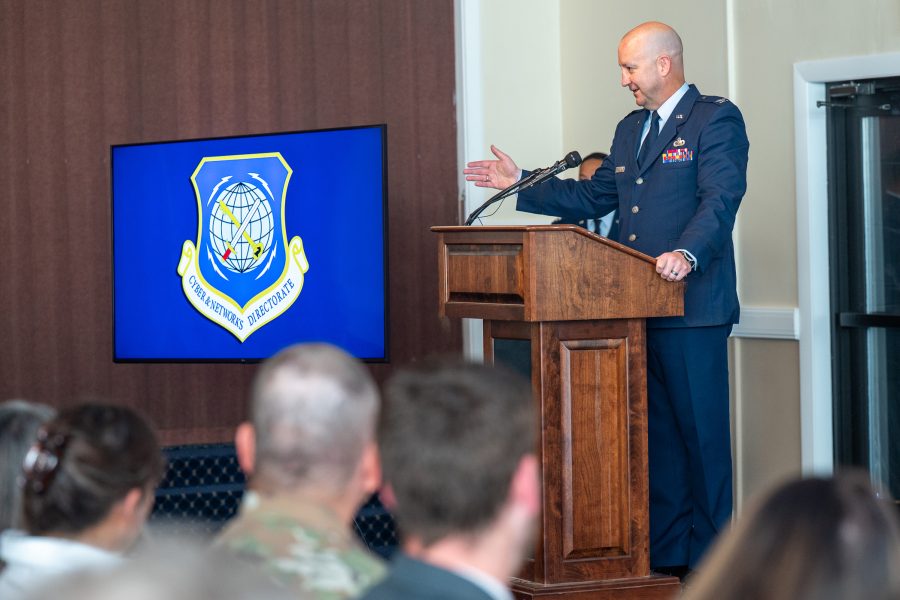
With such large-scale departures, changes in the way the service’s acquisition teams do business are inevitable, said Brig. Gen. Joshua Williams, the PEO for cyber and networks at Hanscom. “We can’t just continue to do things the same way,” he said, arguing for prioritization based on warfighter impact. “If I eliminate this, what’s the impact to the warfighter? And if there’s no impact, if it’s a science project, it just doesn’t happen.”
Alvin Burse, the PEO and director for the Air Force’s Business and Enterprise Systems Directorate at Maxwell Air Force Base, Ala., told the conference that over the past 12 months, a total of 1,344 years of experience had “walked out the door” of his organization, which employs 2,200 military, civil service and contractor personnel, managing 125 programs with a total annual budget of $1 billion.
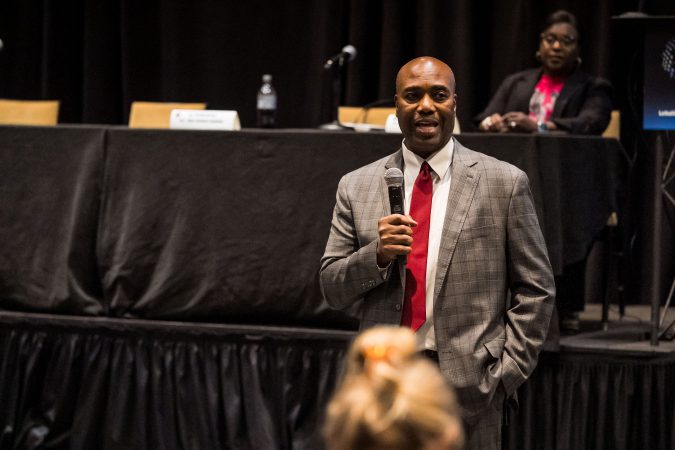
Just like the departures at the electronic systems office, he noted these were senior employees: “You’re talking about division chief, deputy division chief,” he said. “They were not newbies. So when you think about that number, that’s not something that you’re going (to be able) to plug next week.”
That creates a “domino effect,” as Kirkwood called it. Some employees will need “to upskill … before they can take over those other jobs,” Kirkwood said. Burse added that the Air Force will need to do a better job of tapping into exisiting employees’ skill sets.
“That’s going to take a while for us to deliberately lay out a plan, a development plan, a hiring strategy, to be able to fill those spaces,” Burse said.
Kirkwood said the departures were in part driven by demographics, with a large cohort of experienced leaders becoming eligible for retirement as they aged. “That’s normal, to be honest. … We knew that there was going to be a lot of people that would become retirement eligible. We could tell by the number of years in service, and their age ranges.”
But she said the enhanced benefits offered to civilian staff under the deferred retirement program had probably swollen the ranks of those leaving. “Maybe we lost more than we would have based upon the offer that DRP provided.”
Her biggest challenge, she said, was continuing to motivate the workforce. “We all got into this business for a reason,” she said. Leaders had to ask their people “What’s your why and is it still there?”