

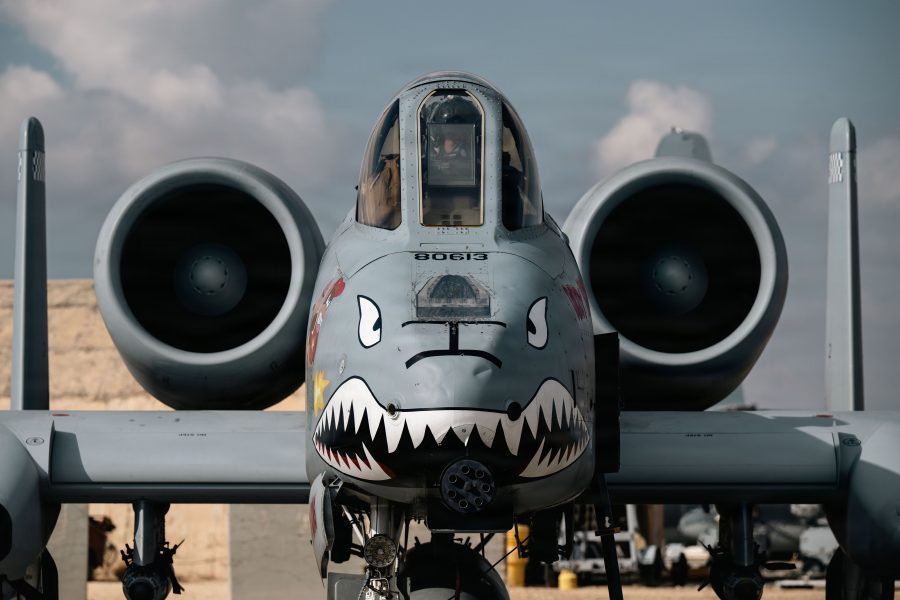
The Air Force will send off its final A-10 Thunderbolt II from depot maintenance this month and deactivate the unit that performs overhauls, upgrades, and rebuilds on the venerable close air support jet.
Closing the depot signals another step in the Air Force’s push to retire the A-10 and could mean future major repairs to particular aircraft go unresolved and hasten the end of their service lives. The fleet’s retirement has been the subject of back-and-forth demands between the Air Force and Congress for more than a decade.
The announcement came Feb. 18 from the 75th Air Base Wing at Hill Air Force Base, Utah, where the Ogden Air Logistics Complex is housed. The 571st Aircraft Maintenance Squadron will be deactivated and its personnel reassigned to sustainment lines for the F-35, F-16, and C-130 at the facility, according to the release.
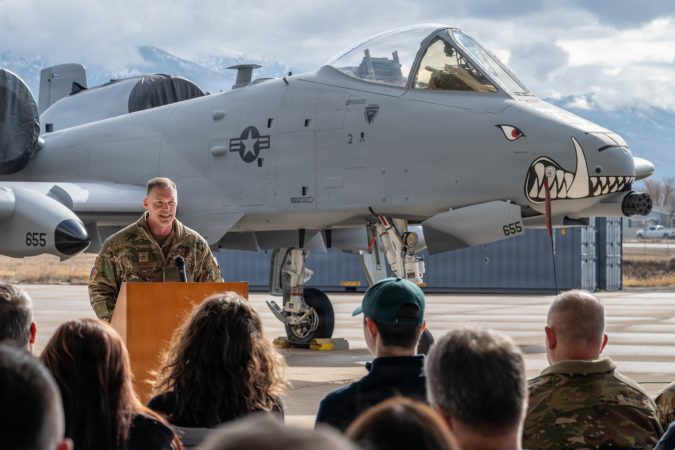
“This mission has been a point of pride for the entire complex,” Brig. Gen. Hall Sebren, Ogden Air Logistics Complex commander, said in the release. “The A‑10 came to Hill because of the skill and dedication of our workforce, and it stayed here because that expertise only grew stronger with time. Our maintainers extended the life of this aircraft again and again, and they did it with a level of pride and professionalism that has become part of Hill’s identity.”
The 75th Air Base Wing did not immediately respond to an Air & Space Forces Magazine query.
While the A-10’s main depot is closing down, the jet itself remains in service—and is actually particularly busy at the moment. This month, the Pentagon released images showing an A-10 providing close air support and security for the USS Santa Barbara (LCS 32) during a training exercise in the Arabian Gulf. The aircraft can be used to counter threats such as small boat swarms that threaten ships in the area.
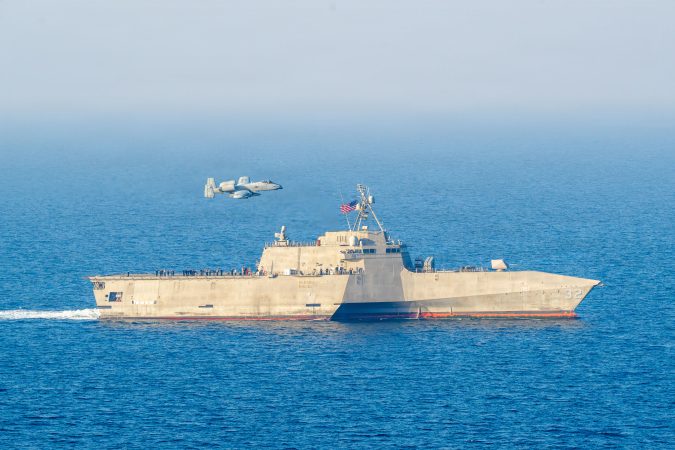
And as of this week, multiple media outlets have tracked A-10s maneuvering in the Middle East amid heightened tensions with Iran.
It’s not the first time the A-10 has made its presence known in the Middle East. Since entering service in the 1970s, the aircraft has played a key role in conflicts from Desert Storm to the wars in Iraq and Afghanistan and Operation Inherent Resolve. It is beloved by ground troops for its close air support, including its 30mm GAU-8/A Gatling gun capable of defeating enemy armor.
Despite this, the aircraft has been a frequent target for retirement and divestment by the Air Force for more than a decade. Leaders have argued that the aging platform is not survivable on the modern battlefield and its mission can be covered by other aircraft, such as the F-35. The Air Force first requested the aircraft’s retirement in 2014 and has continued to make annual requests since.
However, Congress has fought the service’s efforts to shed the aircraft, only allowing the retirement of a select number beginning in the fiscal 2023 budget and preventing a wholesale divestment in the most recent budget. Lawmakers have noted the aircraft’s use in recent wars and the lack of a dedicated close air support aircraft to replace the A-10 in the service’s plans.
The back-and-forth over divestment has impacted the A-10’s depot before. Initial budget plans in fiscal 2014 and 2015 called for the A-10’s depot maintenance fund to be cut by $15.5 and $58 million, respectively. But in October 2016, then-Air Force Materiel Command chief Gen. Ellen Pawlikowski told Aviation Week that depot maintenance for the A-10 had been “fully reopened” to rebuild capacity and meet supply chain requirements.
A similar pattern may be playing out now. In its fiscal 2026 budget request, the service announced plans to retire its remaining 162 A-10s two years ahead of its previous timeline. Budget documents show a corresponding cut in depot maintenance the service cut depot maintenance funding from $124.5 million in fiscal 2024 to $60.8 million in fiscal 2025, then nothing for fiscal 2026.
But Congress has again pushed back and, in December, halted plans to retire 102 of those aircraft, Air & Space Forces Magazine previously reported.
Without a depot or dedicated funding for depot-level maintenance, those 102 aircraft may face availability issues over time. A 2018 Congressional Budget Office report noted that A-10s follow a “risk-based” schedule for receiving depot maintenance, going in every 1,500 to 3,000 flying hours.
As the Air Force has gone through its long goodbye with the A-10, flying units have converted to a variety of other missions.
Moody Air Force Base, Ga., is replacing its A-10s with F-35s. The Idaho Air National Guard’s 124th Fighter Wing and the Indiana ANG’s 122nd Fighter Wing are getting F-16s.
Selfridge Air Bational Guard Base, Mich., announced in 2025 that it would begin replacing its A-10s with F-15EX Eagle IIs in fiscal 2028.
The Ohio Guard’s 179th Airlift Wing converted to the 179th Cyberspace Wing in 2023, and Maryland ANG’s 175th Wing began converting to a cyber wing in 2025; it was already home to the 175th Cyberspace Operations Group.