
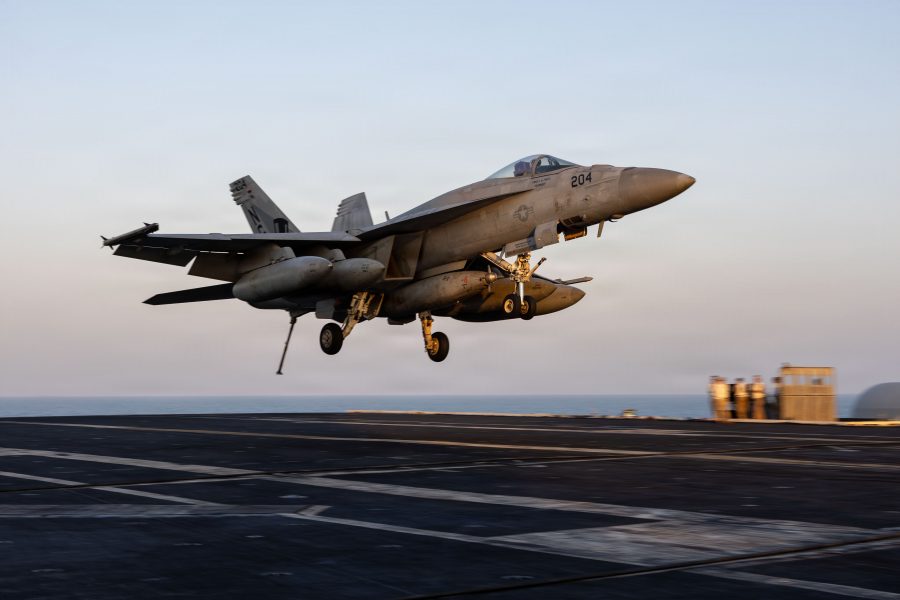
Defense specialists’ stock prices jumped March 2, the first day of trading since the United States and Israel launched attacks on Iran, led by the makers of munitions, high-tech defense specialists, and major prime contractors.
But the gains for munitions suppliers could be short-lived if the war neutralizes Iran as a threat in the Middle East, according to long-time defense analyst Byron Callan, managing director at Capital Alpha Partners LLC, which offers strategic policy research and political forecasting.
Northrop Grumman closed up 6 percent; RTX, which owns Raytheon, Collins, and Pratt & Whitney, closed up 4.7 percent; L3Harris closed up 3.8 percent; while prime giants Lockheed Martin closed up 3.3 percent and Boeing closed up 2 percent. High-tech data analytics specialist Palantir Technologies rose 5.8 percent. Lockheed, RTX, and Northrop hit 52-week highs.
By contrast, the Dow Jones Industrial and S&P 500 both started the day with dips before closing essentially flat.
“I’m not surprised by the reaction today,” Callan said. But “I’d be really careful with it. We don’t know where this war is going to go, when it’s going to end.”
A few months from now, Callan said, the war might affect weapons stockpiles that need to be replaced. But if Iran is “defanged,” that will likely factor into future weapons procurement decisions.
“There are a whole range of warplans that included Iran,” Callan said. And those plans will change because of this war.
Investors like stable, predictable, steady multiyear contracts, Callan said. While purchases of some of the weapons needed to replenish stocks will surge in 2027 or 2028, history shows U.S. acquisitions tend to plateau after surges. Defense Secretary Pete Hegseth has acknowledged that the Pentagon buying patterns are responsible in part for the lack of munition manufacturing capacity, and that changes are necessary.
But Callan said investors will be watching to see if munitions purchases go back to the “boom and bust cycle” typical of the past.
“In general, investors are looking to this as an area of positive, sustained growth,” Callan said.
Iran’s barrage of drones and cruise missiles has driven heavy use of interceptors like Lockheed Martin’s Terminal High Altitude Area Defense, or THAAD interceptors, and the Patriot Advanced Capability-3.
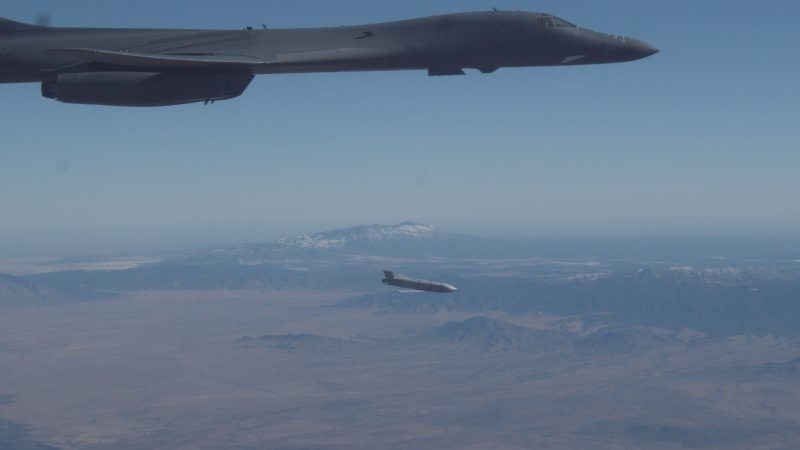
The Pentagon has yet to detail exactly what munitions were used to strike Iran, other than to say B-2s used 2,000-pound bombs. But the biggest defense primes all account for something in the Air Force arsenal. Boeing manufactures the widely used Joint Direct Attack Munition; Northrop Grumman produces the Advanced Anti-Radiation Guided Missile-Extended Range, or AARGM-ER; and RTX builds the Advanced Medium-Range Air-to-Air Missile, or AMRAAM.
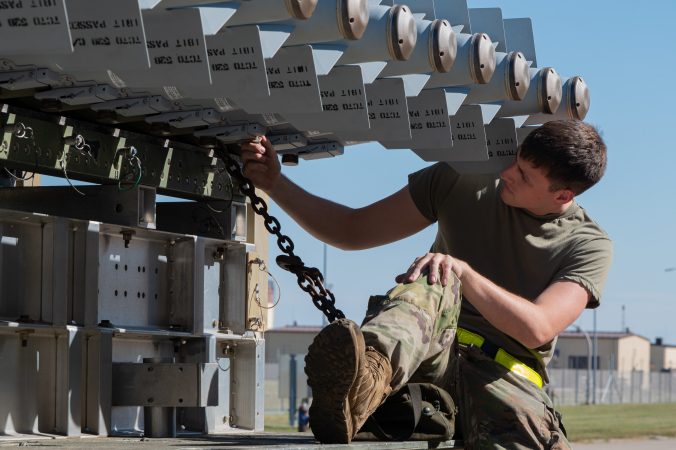
Drawing down munitions stockpiles is a major concern for military planners. The Center for Strategic and International Studies conducted 12 iterations of a wargame in which China invaded Taiwan; it found the United States would likely run out of key munitions within a week, according to a 2023 CSIS report. Long-range weapons were especially dear. The report projected using up 4,000 Joint Air-to-Surface Standoff Missile, 450 Long-Range Anti-Ship Missiles, 400 Harpoons, and 400 Tomahawk land-attack missiles in the space of three weeks.
Tomahawks are the only munition known to be used against Iran at this point.
Many munitions have long-lead-time items. LRASM, for example, takes nearly two years from order to delivery.
Beginning with the fiscal 2023 budget, the Pentagon began establishing more multiyear contracts for some of the munitions either being used in Iran or likely needed for a Taiwan scenario, according to the report. Those include the PAC-3, AMRAAMs, LRASMs, JASSMs, and AIM-9Xs.
The fiscal 2026 budget proposals included $20.4 billion to boost munition stockpiles and improve the weapons supply chain, Air and Space Forces Magazine previously reported.
Programs specific to Air Force munitions included $780 million for development, procurement, and expanded production of Lockheed’s LRASM, used by both the Navy and Air Force.
The Air Force, Navy, and Marine Corps would split another $585 million for work on long-range air-to-surface missiles.
RTX’s AIM-120 Advanced Medium Range Air-to-Air Missile would expand with $250 million in procurement, $225 million to expand the production base and $50 million to mitigate manufacturing sources for such medium range missiles.
The company also saw a $50 million investment to boost the production capacity of short-range air-to-air missiles such as the AIM-9X Sidewinder.
Northrop’s AARGM-ER received additional funding as part of a $325 million investment package to improve production capacity for air-launched anti-radiation missiles.