


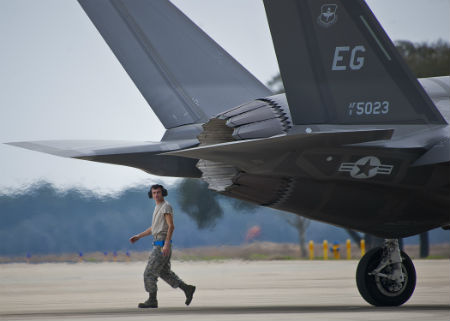
 The F135 propulsion system, which powers the F-35 strike fighter, stood up well against ballistic damage during a series of live fire tests, performing, in many cases, “better than predicted,” according to a report by the Joint Aircraft Survivability Program Office. A total of three F135 tests were conducted, including “short takeoff vertical landing propulsion system tests, dynamic and static engine ballistic tests, and total fuel ingestion tests,” announced manufacturer Pratt & Whitney in a May 20 release. The testing team found that “damage to blades and vanes in both the lift fan and main engine did not result in the catastrophic corn-cobbing often seen when gas path components are damaged,” states the report. In addition, “the control system is very capable in accommodating damage and providing information to the pilot.” The series of tests were designed to “mimic battlefield damage,” said Cheryl Lobo, director of Pratt & Whitney F135 programs. “The F135 is an amazing propulsion system that has proved its durability through this very rigorous testing … These tests should provide confidence in the capabilities of the propulsion system for our operations,” said Lobo.
The Pentagon has concluded a new agreement to buy laser-guidance kits that turn rockets into drone-killing weapons. BAE Systems and the Defense Department announced a framework deal of up to seven years for 25,000 Advanced Precision Kill Weapon System guidance kits annually for the U.S. military.