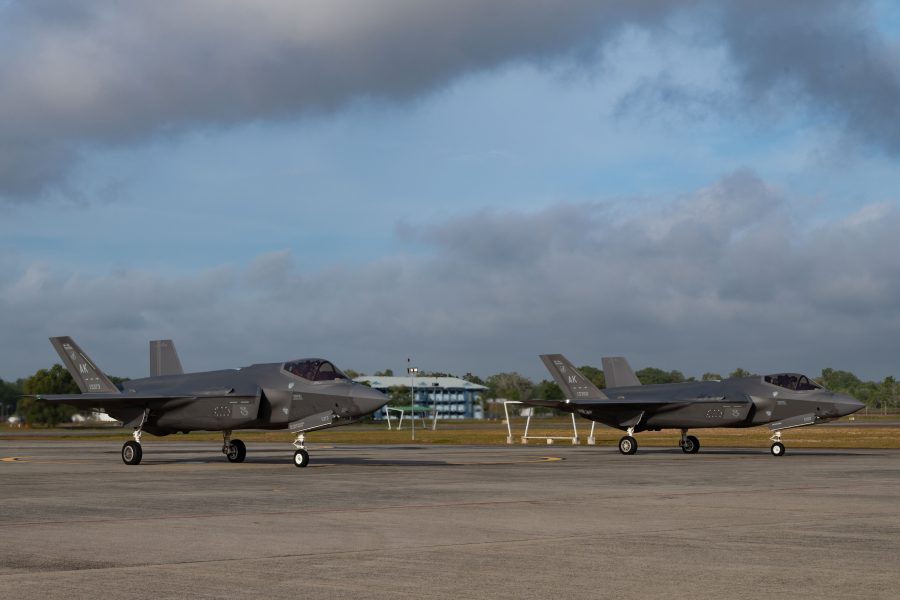
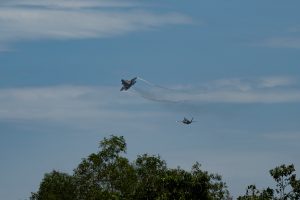
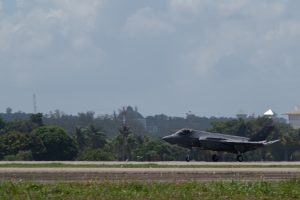
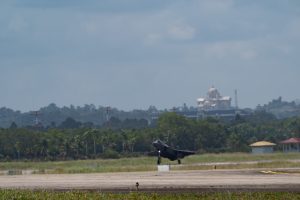
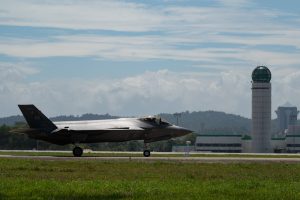
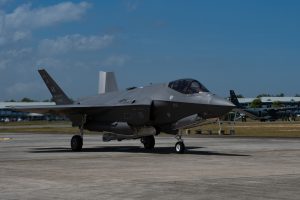
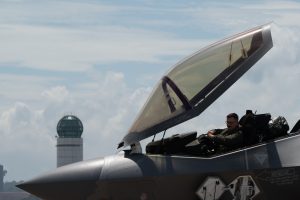
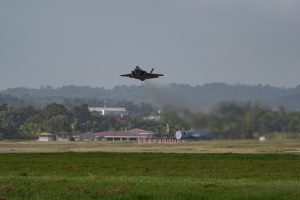
Two U.S. Air Force F-35 Lightning II pilots, assigned to Eielson Air Force Base Alaska, prepare aircraft for departure from Royal Brunei Air Force Base Rimba, Brunei, March 2, 2024. This was the first time a U.S. fighter aircraft landed in Brunei and represents a new model of international cooperation, ensuring U.S. and Coalition partner security well into the 21st Century. U.S. Air Force photo by Tech. Sgt. Eric Summers Jr.
Audio of this article is brought to you by the Air & Space Forces Association, honoring and supporting our Airmen, Guardians, and their families. Find out more at afa.org
U.S. Air Force F-35 fighters landed in Brunei on March 1, the first time U.S. stealth jets have landed on the small Pacific Island nation.
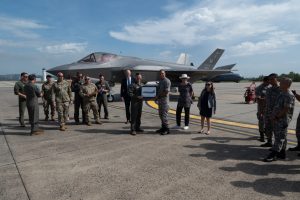
Two F-35s made the trek from Eielson Air Force Base, Alaska, to Rimba Air Base, Brunei, a visit that coincided with a diplomatic visit by Principal Deputy Assistant Secretary of Defense for Indo-Pacific Security Affairs Jedidiah Royal. Also making the trip was Maj. Gen. Mark Weber, Air National Guard assistant to the commander of PACAF.
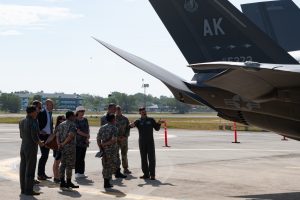
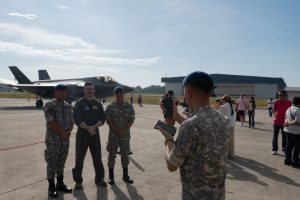
Members of the Royal Brunei Air Force, including commander Brig. Gen. Dato Sharif, viewed the aircraft, which was on static display, and asked questions of USAF Airmen. The aircraft departed March 2.
The F-35s’ visit came 40 years after the U.S. officially recognized Brunei, following its independence from the United Kingdom, which assumed control after World War II, when the nation was occupied by Japanese Imperial forces. The visit comes as the United States aims to bolster cooperation with a broad array of allies in the Indo-Pacific.
Brunei and the U.S. signed a defense cooperation memorandum of understanding in 1994 and have regularly exercised together since then. The two countries’ air forces worked together in September 2023 as part of the exercise Pacific Angel 23-3, focused on humanitarian assistance and disaster relief. As part of that exercise, the U.S. Air Force deployed a HC130-J Combat King II, HH-60G Pave Hawk, and C-17 Globemaster III to Brunei.
In December 2023, U.S. Indo-Pacific Command hosted Bruneian officials for bilateral talks that included the signing of a “Section 505 agreement,” a prerequisite to granting military training or equipment to a foreign nation.
Though only 5,765 square kilometers—slightly smaller than the state of Delaware—Brunei lays claim to a slice of the South China Sea that is less than 1,000 miles from China. With China as its largest trading partner and foreign investor, according to the U.S. Insitute of Peace, Brunei has sought to “hedge” its dependence on China by building a stronger relationship with the U.S., researcher Sufrizul Husseini wrote.
In the growing great power competition between the two, however, the U.S. wants to build ties with countries across the region and has used vists by Air Force fighters and bombers as one of the ways it demonstrates its commitment to allies.
These strategic visits send a message about security cooperation and partnership intended to dissuade China from risking a wider conflict through expansion into neighboring territory.
Audio of this article is brought to you by the Air & Space Forces Association, honoring and supporting our Airmen, Guardians, and their families. Find out more at afa.org
The Air Force will field operational prototypes for an autonomous drone to replace its MQ-9 Reaper in 2028, Secretary of the Air Force Troy Meink said Oct. 14.
One of the Air Force’s critical B-2 Spirit stealth bombers has returned to Whiteman Air Force Base, Mo., after an extensive course of maintenance to restore its stealth coating and preserve its structural integrity.
BAE Systems has received a contract from Lockheed Martin to install an upgraded Block 4 electronic warfare system into new F-35 Joint Strike Fighters, as well as to retrofit some older jets.
The Air Force has figured out a way for maintainers to inspect what had been a “blind spot” in F-16 engines, after problems in that area led to the catastrophic crashes of two jets in recent years.
The Air Force has begun evacuating stealth fighters, gunships, and special operations planes ahead of Hurricane Isaias expected landfall over the Gulf Coast this weekend.
The Air Force’s B-52 bomber may soon be able to carry up to 20 stealthy long-range anti-ship missiles to strike moving targets at sea, a key capability in a potential fight with China.
A reported surge of MQ-9 Reaper drones to Latin America could widen the scope of intelligence gathering and free up more strike options against cartels in the region, experts tell Air & Space Forces Magazine.
Northrop Grumman has broken ground on a major new production facility for the B-21 Raider, the company and the Air Force announced Oct. 6. The construction comes as a top service official said testing on the bomber is going well in the lead up to its planned introduction into the…